Pre-orders sound good in theory. You list your book before it’s finished, build anticipation, and launch with momentum.
But here’s the reality: for most self-published authors, pre-orders don’t work the way you think they do. And in some cases, they actively hurt your launch.
Let’s break down when pre-orders make sense — and when you should skip them and publish immediately instead.
How Amazon Pre-Orders Actually Work
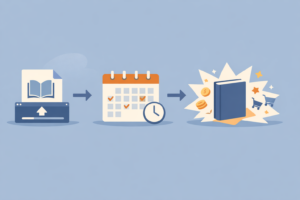
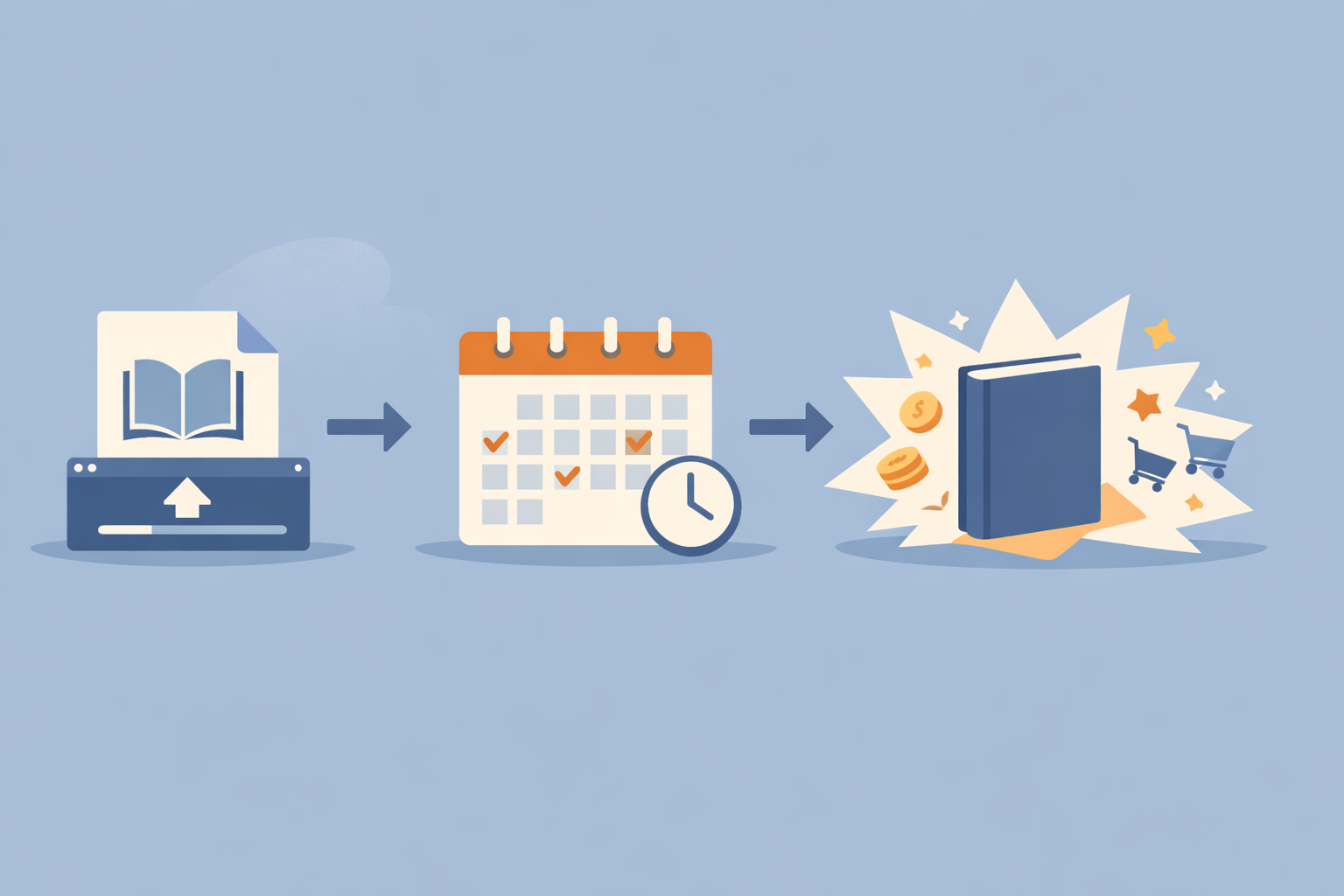
When you set up a pre-order on Amazon KDP, your book goes live for sale before your official release date. Readers can buy it, but they don’t get the file until launch day.
Here’s what happens behind the scenes:
- You upload your book listing (cover, description, price)
- Amazon gives you up to 90 days before your release date
- Readers can pre-order during that window
- All pre-order sales count toward your bestseller rank on launch day
- Amazon charges readers and delivers the book on release day
That last part — all sales counting on launch day — is the main reason authors use pre-orders. A big spike in sales on day one can push your book up the bestseller charts, which creates visibility and drives more sales.
Sounds great. But it only works if you can actually generate pre-orders.
The Problem With Pre-Orders for New Authors
If you have an audience — email list, social media following, previous readers — pre-orders can work. You tell your audience the book’s coming, they pre-order, and you launch with momentum.
But if you don’t have an audience yet, pre-orders are a waste of time.
Here’s why:
1. No one’s looking for your book before it exists
Browsers on Amazon don’t pre-order books from unknown authors. They buy books they can read today. Pre-order listings get less visibility in search and browsing because Amazon prioritizes books that are ready to ship.
2. You can’t run ads on pre-orders (effectively)
Amazon Ads work better when readers can buy and download immediately. Running ads to a pre-order page means paying for clicks that don’t convert as well.
3. You lose 90 days of selling time
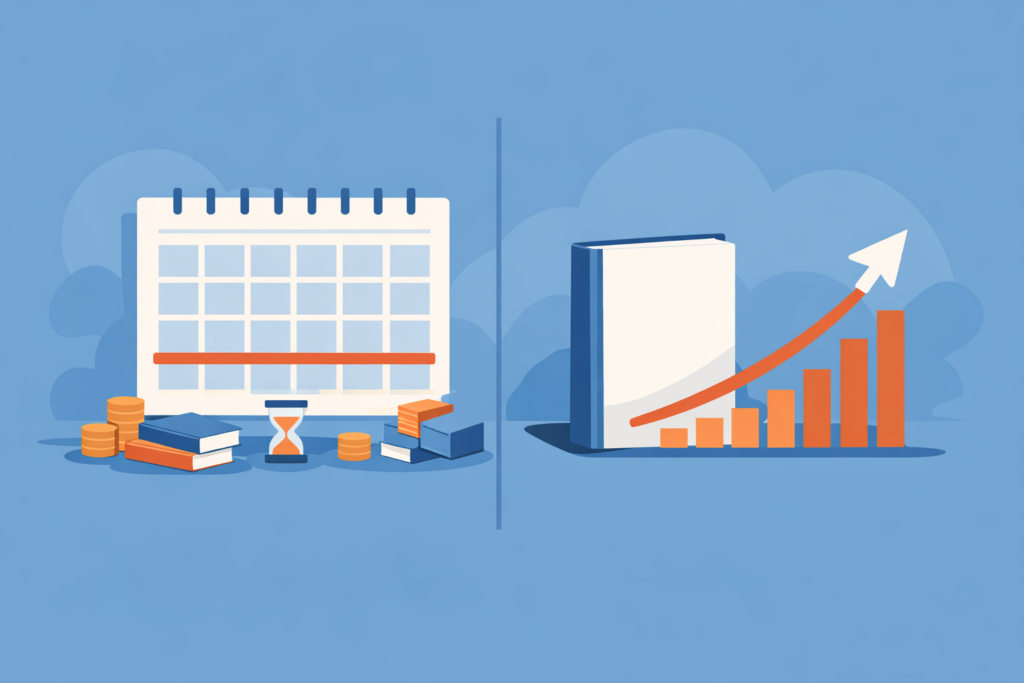
If you set up a 90-day pre-order window and only get 5 pre-orders, you’ve spent three months waiting instead of selling. You would’ve been better off launching immediately.
4. The “launch day spike” doesn’t matter if it’s small
Ten pre-orders all releasing on day one won’t move your bestseller rank enough to matter. You’d get the same result by launching immediately and selling ten copies over the first week.
When Pre-Orders Actually Make Sense
Pre-orders work in specific situations:
You have an email list of 1,000+ readers
If you can drive 50-100 pre-orders from your own audience, the launch day spike will boost your rank meaningfully.
You’re launching book 2 (or 3, or 4) in a series
Readers who loved book 1 will pre-order book 2. This is where pre-orders shine — you’re selling to existing fans, not cold traffic.
You have a major promotion lined up for launch day
If you’ve secured a BookBub feature, podcast interview, or media coverage timed to release day, pre-orders let you capture that traffic all at once.
You’re traditionally published (or hybrid)
Traditional publishers use pre-orders to build buzz and secure retailer orders. If you’re working with a publisher, they’ll handle this strategy.
If none of those apply to you, skip pre-orders.
What to Do Instead: The Immediate Launch Strategy
For most self-published authors, launching immediately is smarter.
Here’s why:
1. You start selling right away
No 90-day wait. The day your book is live, readers can buy it and download it. You’re making money and building reviews from day one.
2. You can run ads immediately
Amazon Ads, Facebook Ads, BookBub Ads — all work better when readers can buy and read your book today.
3. You can adjust quickly
If your cover isn’t converting, you can change it. If your description isn’t working, you can rewrite it. With pre-orders, you’re locked in until launch day.
4. You build momentum gradually
Instead of hoping for a big launch day spike, you build sales week by week. That’s more sustainable and less stressful.
Launch immediately. Promote consistently. Build over time. That’s the strategy that works for most authors.
The Hybrid Approach: Short Pre-Order Window
If you want the benefits of pre-orders without the downsides, use a short window — 7 to 14 days.
Here’s how it works:
- Finish your book completely (manuscript, cover, formatting)
- Set up a 1-2 week pre-order window
- Announce it to your email list and social media
- Launch with whatever pre-orders you get
This approach works because:
- You’re not waiting 90 days
- You can promote immediately (the book is coming soon, not “coming in three months”)
- If you only get a few pre-orders, you’re not stuck in limbo
It’s a middle ground that reduces risk while still giving you a small launch day boost.
Pre-Orders and Kindle Unlimited: A Complication
If your book is enrolled in Kindle Unlimited, pre-orders get more complicated.
Here’s the issue: KU readers can’t borrow pre-orders. They have to wait until launch day. That means if you’re in KU, your pre-order listings won’t show the “Read for Free” button that drives KU borrows.
You’re effectively asking readers to buy your book instead of borrowing it. That reduces conversions.
If you’re in KU, short pre-order windows (or no pre-orders at all) make even more sense.
And if you’re trying to decide whether Kindle Unlimited is worth it, factor this into your thinking. Pre-orders work better for wide distribution than for KU-focused strategies.

How to Maximize a Pre-Order Campaign (If You Do It)
If you decide to run pre-orders, here’s how to make them work:
1. Build an email list first
Pre-orders only work if you have people to tell. Start collecting emails 6-12 months before launch.
2. Offer an incentive
Give pre-order buyers something extra — a bonus chapter, companion guide, or early access to book 2. Make it worth buying now instead of waiting.
3. Promote consistently
Don’t just announce once. Email your list weekly. Post on social. Remind people the book’s coming.
4. Time your launch strategically
Avoid launching on major holidays or during busy industry events. Pick a date when your audience is paying attention.
5. Line up reviews
Send advance review copies (ARCs) to beta readers, bloggers, and reviewers. You want reviews live on launch day.
If you can’t do all of this, skip pre-orders. They only work if you commit to the promotion.
Real Example: Pre-Order vs. Immediate Launch
Author A: Pre-Order Strategy
- Sets 90-day pre-order window
- Has no email list
- Gets 8 pre-orders over 3 months
- Launches on day 90 with a BSR spike to #45,000
- BSR climbs back to #200,000 within 48 hours
- Total sales in first 90 days: 8
Author B: Immediate Launch Strategy
- Publishes immediately
- Runs Amazon Ads starting day 1
- Sells 3 copies in week 1, 5 in week 2, 7 in week 3
- By day 90, has sold 60 copies
- BSR steady around #80,000-120,000
- Has 8 reviews and steady sales momentum
Author B wins. Same effort, better results.
Common Myths About Pre-Orders
Myth 1: “You need pre-orders to be successful”
No. Plenty of bestselling self-published authors never use pre-orders. Consistent promotion beats a single launch day spike.
Myth 2: “Pre-orders guarantee a bestseller rank boost”
Only if you get enough of them. Ten pre-orders won’t move the needle. One hundred might.
Myth 3: “Amazon favors books with pre-orders”
Amazon favors books that sell consistently. A book with steady daily sales outperforms a book with one big spike and then nothing.
Myth 4: “Pre-orders build buzz”
Pre-orders build buzz if you have an audience to create that buzz. Without an audience, they do nothing.
How This Fits Into Your Overall Launch Plan
Whether you use pre-orders or not, you still need:
- A strong cover
- A compelling book description
- Good categories (if you need help with this, here’s how to pick them)
- A review strategy
- A promotion plan
Pre-orders are a tactic, not a strategy. They don’t replace the fundamentals.
If you have an audience and can drive meaningful pre-orders, use them. If you don’t, launch immediately and focus on building sales over time.
And if you’re still figuring out how much you’ll earn per sale, that might influence your decision too. Pre-orders delay revenue — immediate launches start generating income right away.

Don’t Let Pre-Orders Delay Your Launch
The biggest mistake authors make with pre-orders is waiting.
They set up a 90-day window, get a handful of orders, and waste three months they could’ve spent selling and building reviews.
If you’re not sure pre-orders will work, don’t do them. Launch immediately. Start selling. Build momentum.
You can always use pre-orders for book 2 once you’ve proven your first book can sell.
Launch now. Optimize later. That’s how most successful self-published authors do it.