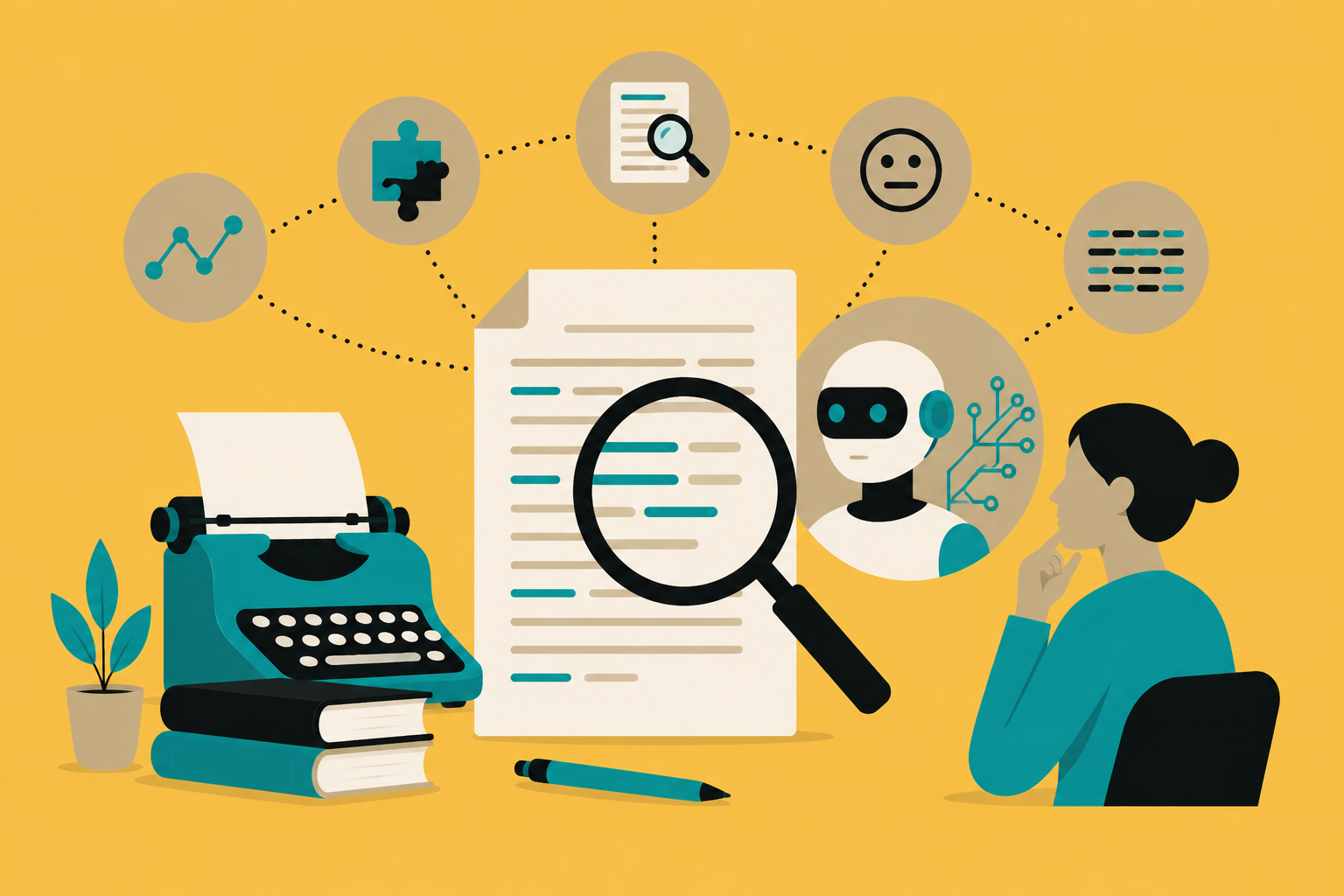
AI-generated content is showing up everywhere these days—on blogs, in product reviews, even in full-length books. And while tools like ChatGPT and others have made writing faster and more accessible, not all AI writing is thoughtful or accurate. That’s why it’s worth knowing how to spot AI writing—especially when truth, tone, and trust matter.
This guide will walk you through some clear, practical ways to figure out whether a piece of content was written by a human—or by a machine.
Why It Matters
Using AI as a writing assistant isn’t a bad thing. Many solid creators use it to brainstorm ideas, rephrase clunky sentences, or check grammar. The issue comes when AI-generated content is passed off as thoughtful writing—without any editing or insight layered in.
When that happens, the results are often:
- Wrong (or misleading)
- Wordy and repetitive
- Emotionally flat
- Designed to manipulate or fake authority
If you’re an editor, content creator, or just someone who wants to read smart, trustworthy writing, knowing how to spot AI-generated content can help you separate useful information from fluff, misinformation, or low-quality filler.
1. Repetition That Feels Lazy
AI often loops the same point in different words. You might see three sentences in a row that all say the same thing with slight tweaks. For example:
“AI tools make writing easier. These platforms help people write faster. With AI, the writing process speeds up.”
That kind of circular wording is a red flag. People—especially skilled writers—don’t usually echo themselves that way.
2. Stiff or Overused Phrasing
AI tends to play it safe. You’ll see lots of generic phrases like:
- “In today’s fast-paced world…”
- “It is important to note that…”
- “This article will explore…”
It’s not that people never write this way—but when the tone feels flat and overly tidy, it’s often a clue that AI was involved. If the writing sounds okay but doesn’t make you feel anything, that’s worth noticing.
3. No Real Insight or Storytelling
One of the easiest ways to spot AI writing? It lacks lived experience.
AI can’t talk about the time someone missed a deadline and what they learned from it. It can’t reflect on a client conversation that changed how they think. So when content reads like a summary with zero personal flavor or perspective, that’s a giveaway.
Good writing feels real. It draws on memory, mistakes, and actual moments.
4. Spotless Grammar—but Strange Thinking
AI gets grammar right most of the time. But it struggles with meaning.
You might read a paragraph that looks fine but feels off. It contradicts itself. Or the example doesn’t fit. Or the conclusion doesn’t follow from the argument. If something sounds clean but confusing, check the logic. AI is great at form, not always at flow.
5. No Author Voice
Every human writer has a fingerprint—favorite words, a natural rhythm, a point of view. AI-generated content often reads like it could’ve come from anyone (or anything). It doesn’t sound like a person you can picture talking.
If you’ve read someone’s work before and a new piece feels oddly bland or unlike them, it might’ve been written—or rewritten—by a machine.
Try AI Detection Tools (But Don’t Rely on Them)
There are tools like Quillbot that can help flag possible AI writing. It’s not perfect, but it can be handy when combined with the signs above. Use it as part of your process—not your only check.
Knowing how to spot AI generated content isn’t about rejecting all AI use. It’s about staying sharp when it counts—especially if you care about quality, clarity, and connection. Wondering how others have successfully used AI-generated content? Check out this list of 8 real-life case studies where people used AI tools in smart, thoughtful ways.