

You’ve been searching Amazon categories for hours, clicking through endless subcategories and jotting down bestseller rankings on sticky notes. There’s got to be a better way to research your book’s market potential.
That’s where BookBeam steps in as a compelling Publisher Rocket alternative. This Chrome extension helps authors analyze Amazon’s book market directly while browsing.
Let’s examine what makes BookBeam different and whether it deserves a spot in your author toolkit.
Do Book Analysis While Browsing on Amazon with BookBeam
Most book research tools require you to jump between platforms. You search for keywords in one tab, check categories in another, then manually cross-reference everything.
BookBeam reduces much of that friction.
The Chrome extension overlays additional data directly onto Amazon product pages. When you visit a book listing, BookBeam displays metrics and research insights within a sidebar panel.
Depending on the available data, you may see estimated sales figures, category information, keyword-related insights, and competitive indicators without leaving the page.
The browser integration allows research to happen naturally while browsing. You can move through categories, explore books that catch your attention, and evaluate opportunities as you go.
This workflow mirrors how many authors actually research — by exploring Amazon organically rather than beginning with rigid keyword lists.
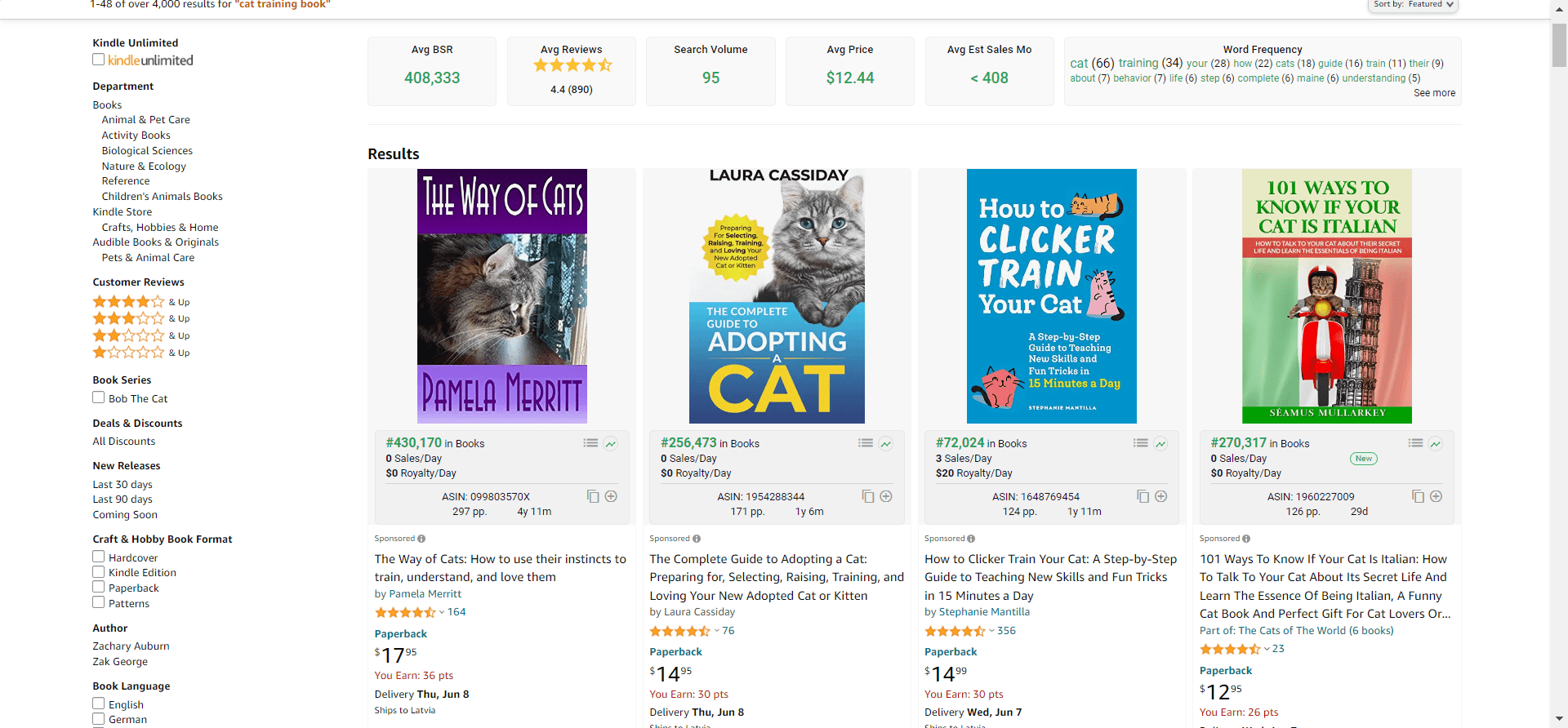
Book analysis while browsing on Amazon
Amazon KDP Keyword Research Tool
BookBeam’s keyword research works somewhat differently from traditional tools like Publisher Rocket.
Alongside standard keyword research features, BookBeam also allows authors to analyze successful books and identify keyword opportunities connected to competing titles.
The tool can provide information such as:
• Estimated search volume
• Competition indicators
• Keyword opportunities
• Competitor keyword insights
One useful feature is understanding which terms successful books appear to rank for.
For example, rather than targeting a broad phrase like “cozy mystery,” you might uncover more specific keyword opportunities with lower competition.
BookBeam also includes keyword-related insights and historical data that can help authors identify trends and market opportunities.
This approach works particularly well for authors who prefer researching successful books instead of brainstorming keywords in isolation.
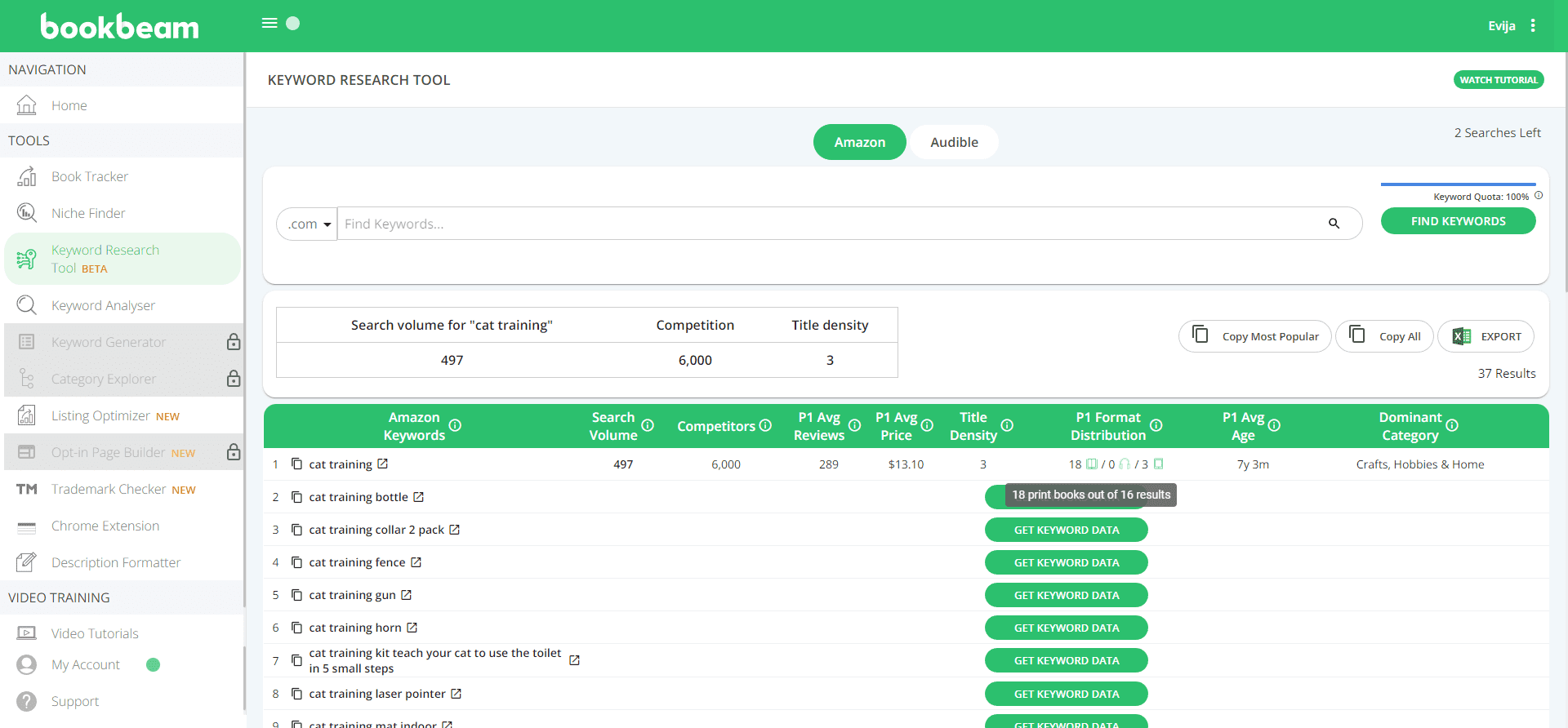
Book keyword research with BookBeam
Amazon Book Category Explorer
Finding profitable book categories often means navigating Amazon’s complex category structure. BookBeam helps simplify this process.
The platform allows authors to explore category relationships and review useful market data.
You can examine:
• Competition levels
• Bestseller activity
• Category relationships
• Market characteristics
This intelligence can help with strategic category selection. Instead of guessing where your book fits, you can evaluate how similar books perform within different niches.
BookBeam may also help uncover category opportunities that are less competitive than broader categories.
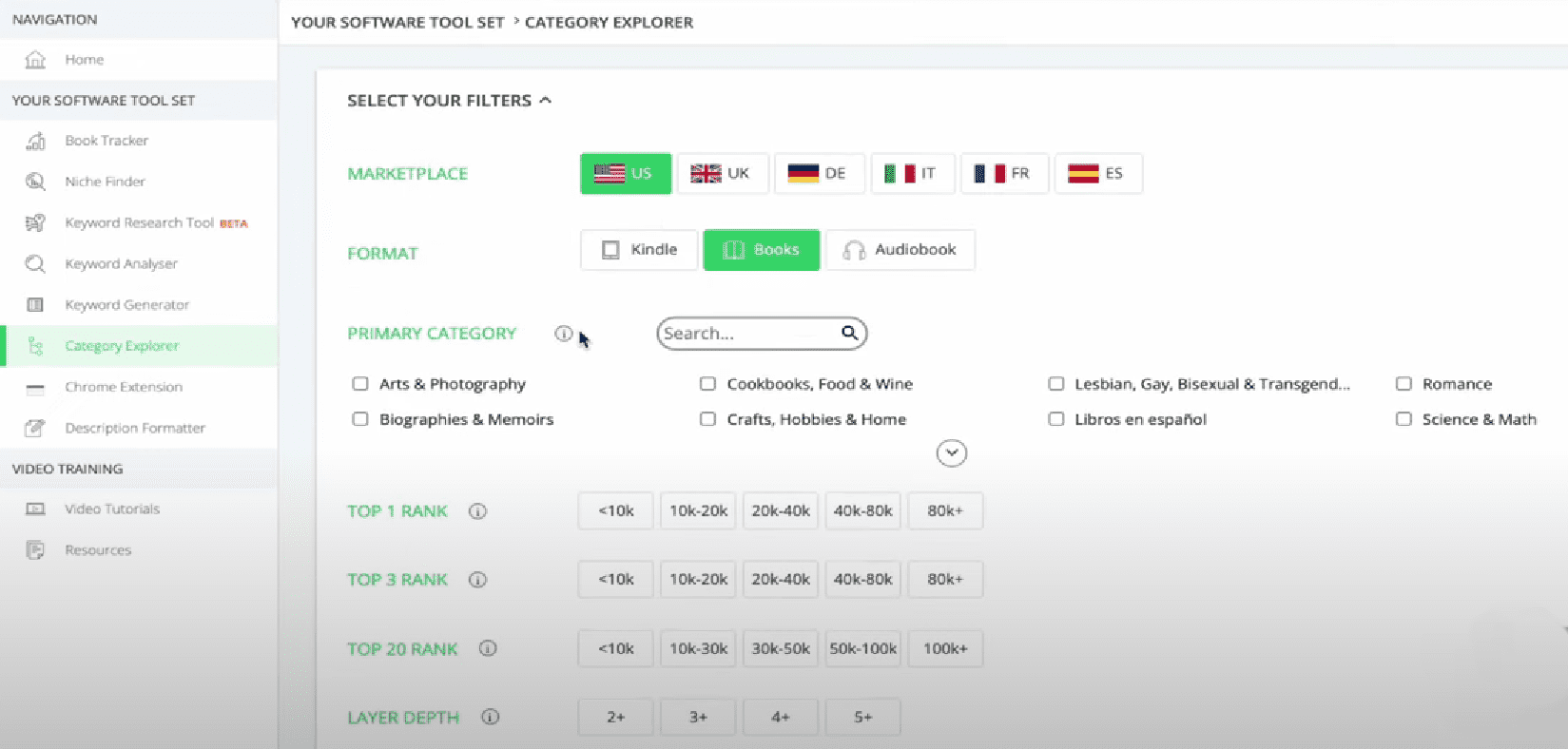
BookBeam category explorer
Amazon KDP Niche Finder
Book niche research with BookBeam relies on combining multiple market signals rather than focusing only on keyword volume.
The tool can help authors evaluate broader patterns such as:
• Sales trends
• Pricing behavior
• Competitive activity
• Historical performance data
Looking at these patterns can reveal useful insights.
You might notice categories dominated by older titles, pricing differences between markets, or areas where new content may have opportunities.
Rather than relying on a single metric, BookBeam provides a broader picture of how a market behaves.
This context can help authors evaluate whether a topic may have long-term publishing potential.
BookBeam vs Publisher Rocket: Key Differences
The comparison between BookBeam and Publisher Rocket reveals two distinct research philosophies.
Publisher Rocket focuses more heavily on structured keyword research and Amazon advertising opportunities. BookBeam emphasizes integrated browsing and competitor research directly inside Amazon.
Your choice largely depends on workflow preference.
Authors who enjoy exploring Amazon naturally often prefer BookBeam’s browser integration, while those wanting a structured keyword-first process frequently lean toward Publisher Rocket.
BookBeam Pricing and Value Proposition
BookBeam uses a subscription-based pricing model.
| Plan | Best For |
|---|---|
| Basic | Individual authors and lighter research usage |
| Publisher | Authors managing multiple projects |
| Publisher Pro | High-volume users and publishers |
BookBeam pricing and plan structures may change over time, so checking the official pricing page for current information is recommended.
The value proposition focuses less on feature quantity and more on efficiency. BookBeam helps reduce context switching by keeping research directly within Amazon.
Who Should Use BookBeam?
BookBeam works best for specific author profiles and research styles.
Ideal candidates include:
• Authors who prefer browsing Amazon naturally during research
• Publishers managing multiple titles
• Authors conducting competitor research
• Users comfortable with Chrome extensions
Less suitable for:
• Authors who prefer offline desktop tools
• Users looking for one-time purchase options
• Authors conducting extensive non-Amazon research
• Researchers who work primarily on mobile devices
BookBeam complements rather than replaces comprehensive research tools. Many authors use it alongside broader market analysis resources and publishing tools.
Getting Started with BookBeam
Setting up BookBeam takes only a few minutes.
Install the Chrome extension from the official website. Create your account and select an appropriate subscription plan for your research needs.
The extension activates automatically on Amazon book pages and displays additional research insights while browsing.
Start with broad category exploration rather than analyzing individual books immediately.
Browse bestseller lists in your genre and look for patterns in:
• Recurring keywords
• Pricing trends
• Category similarities
• Unexpected market opportunities
Pay attention to books showing unusual performance. These sometimes reveal overlooked opportunities.
You can then use these findings to guide title ideas, descriptions, categories, and marketing decisions.
Combine BookBeam research with your existing author toolkit.
BookBeam Limitations and Considerations
Like any research tool, BookBeam has constraints worth understanding.
The Chrome extension requirement may not suit authors using other browsers or primarily working on mobile devices.
BookBeam’s subscription model creates ongoing costs that can accumulate over time. Authors who prefer one-time purchases may find this less appealing.
The tool focuses heavily on Amazon data, which means authors planning broader publishing strategies may need additional research resources.
Estimated metrics should also be viewed as directional guidance rather than exact marketplace numbers.
BookBeam works best as part of a broader research process rather than a standalone solution.
The Future of Browser-Based Book Research
BookBeam represents a broader movement toward integrated research workflows.
Authors increasingly prefer tools that fit naturally into existing browsing habits instead of requiring separate applications.
For authors, this means spending less time moving between tools and more time making informed publishing decisions.
BookBeam’s approach — bringing data directly into the browsing experience — reflects that larger trend.
Whether this Publisher Rocket alternative fits your workflow depends on your research style and how you approach market analysis.