

You’ve just published your book on Amazon and watched the sales dashboard stay frustratingly flat. Zero downloads. Zero reviews. Zero momentum.
The problem might not be your book — it might be that readers can’t find it among millions of other titles.
Understanding how does Publisher Rocket work becomes critical here. This desktop software promises to help authors discover profitable keywords, categories, and Amazon advertising opportunities that may improve book visibility.
But does it deliver? Let’s break down exactly how Publisher Rocket works, what it does well, and where it falls short.
What Publisher Rocket Actually Does
Publisher Rocket is desktop software built built specifically for Amazon book research. Unlike browser extensions that offer quick insights, this tool focuses on dedicated research sessions inside the application.
The core idea is simple: enter a topic or keyword and receive estimated data on search demand, competition levels, and potential opportunities for that market.
But here’s an important distinction many reviews gloss over — Publisher Rocket does not provide direct access to Amazon’s internal search or sales data. Instead, it uses publicly available marketplace signals and proprietary methods to generate estimates.
That doesn’t make it ineffective. It simply means it should be used as a research aid rather than a prediction engine.
The Five Main Research Modules
Publisher Rocket divides book research into five distinct areas:
- Keyword Research — Find search terms readers actually use
- Category Research — Identify categories with favorable opportunity-to-competition ratios
- Amazon Ads Research — Discover keywords for advertising campaigns
- Competition Research — Analyze what keywords competitors rank for
- Reverse ASIN Lookup — See which keywords drive traffic to specific books
Each module generates reports you can save and export as CSV files for deeper analysis.
How Does Publisher Rocket Work Behind the Scenes?
Here’s where things become more nuanced.
Publisher Rocket does not publicly disclose its complete methodology. Based on available information and observed behavior, it appears to combine publicly available Amazon marketplace signals with proprietary calculations to estimate search demand and competition metrics.
These signals may include:
- Amazon autocomplete suggestions
- Marketplace listing information
- Competition indicators such as rankings and reviews
- Keyword analysis methods and proprietary calculations
When you run a keyword search, Publisher Rocket processes this information to generate metrics such as opportunity scores, competition ratings, and estimated search activity.
The results can appear highly precise — for example: “Estimated Searches: 1,247”
However, these figures should be viewed as directional estimates rather than exact numbers.
The Research Workflow
Using Publisher Rocket generally follows this process:
Step 1: Enter your seed keyword or topic
Step 2: Choose your research type (keywords, categories, or ads)
Step 3: Allow the software to generate results
Step 4: Analyze opportunity and competition metrics
Step 5: Export useful findings for additional research
This process can take time. Unlike browser-based tools designed for quick checks, Publisher Rocket encourages more structured research sessions.
Publisher Rocket’s Strongest Features

After extensive testing, three features stand out as genuinely useful:
Amazon Ads Keyword Discovery
The Amazon Ads module excels at finding advertising keywords you wouldn’t discover manually. It suggests broad and long-tail keywords and provides metrics intended to help guide Amazon Ads decisions.
For authors running Amazon KDP advertising campaigns, this feature alone justifies the software cost.
Category Analysis With Opportunity Scores
Publisher Rocket’s category research goes beyond simple browsing. It calculates opportunity scores based on average reviews, rankings, and estimated revenue in each category.
This helps identify categories where a well-optimized book might actually rank on the first page.
Reverse ASIN Research
Enter a book ASIN and Publisher Rocket attempts to estimate which keywords may be associated with that book’s visibility and ranking. This competitive intelligence helps you understand what’s working for successful books in your niche.
The feature works best with books that have consistent sales and rankings.
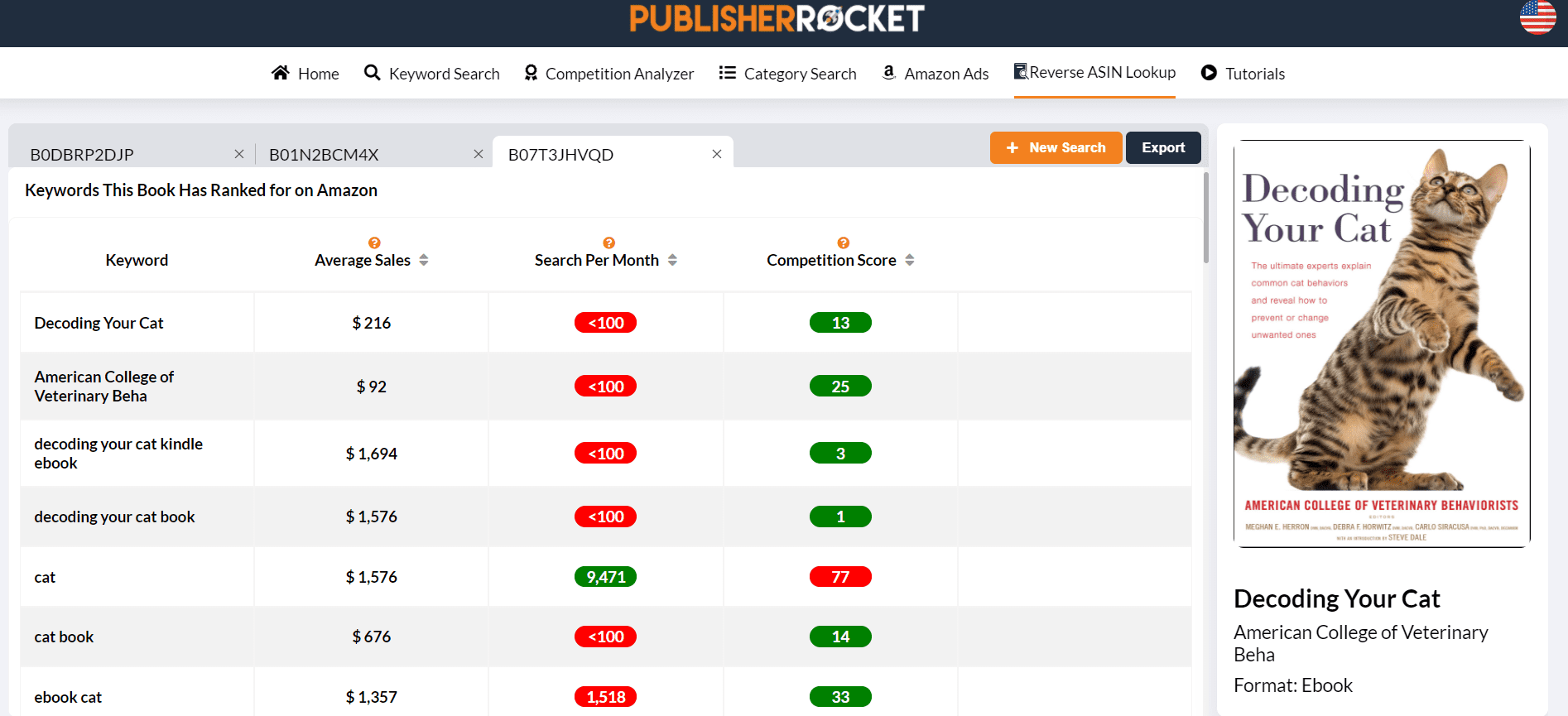
Publisher Rocket Reverse ASIN
Where Publisher Rocket Falls Short
No tool is perfect. Publisher Rocket has three significant limitations:
Estimated Data, Not Real Metrics
The biggest limitation is also the most hidden — these aren’t Amazon’s actual search numbers and precise book sales data. They’re estimates that can vary significantly from reality. Use Publisher Rocket for market direction, not precise targeting.
Desktop-Only Workflow
While browsing Amazon, you can’t quickly check a keyword or category without switching to Publisher Rocket, running a search, and waiting for results.
This breaks the natural research flow that many authors prefer.
Publisher Rocket vs. Free Alternatives
Before spending $199, consider what free tools offer:
Free alternatives work well for basic research. Publisher Rocket adds value when you need systematic analysis across multiple books or advertising campaigns.
Who Should Actually Buy Publisher Rocket?
Publisher Rocket makes sense for specific author types:
Amazon Advertising Users
If you run Amazon ads, the keyword discovery and bid estimation features provide value that free tools can’t match.
Series and Multi-Book Authors
Authors planning multiple book launches benefit from Publisher Rocket’s systematic approach to market research. The one-time cost amortizes across several projects.
Data-Driven Publishers
Publishers who base decisions on metrics rather than intuition appreciate Publisher Rocket’s structured reporting and CSV export capabilities.
Nonfiction Authors
Nonfiction markets often have clearer keyword patterns than fiction. Publisher Rocket’s keyword research works well for “how to,” business, and educational topics.
How Publisher Rocket Pricing Compares
Publisher Rocket costs approximately $199 as a one-time purchase. This includes:
- Lifetime software access
- Free updates
- 30-day money-back guarantee
- Training videos and tutorials
Compared to monthly subscription tools, this one-time fee appeals to authors who prefer ownership over ongoing costs.
However, consider alternatives like BookBeam, which offers similar functionality at different price points and workflow styles.
Getting Started With Publisher Rocket
If you decide Publisher Rocket fits your research needs, here’s how to maximize your first month:
Cross-Reference Results
Never rely solely on Publisher Rocket’s estimates. Use Book Topic Validator and manual Amazon research to verify promising opportunities.
Export and Organize Data
Publisher Rocket’s CSV export feature lets you build comprehensive market research databases. Create spreadsheets organized by genre, keyword difficulty, and opportunity scores.
Test Keywords in Real Campaigns
The software’s value becomes clear when you test its keyword suggestions in actual Amazon advertising campaigns or book optimization efforts.
I’m researching [YOUR BOOK TOPIC/GENRE] and have Publisher Rocket results showing these top keywords: [LIST YOUR TOP 10 KEYWORDS WITH THEIR OPPORTUNITY SCORES].
Please help me:
1. Identify the 3 most promising keywords based on opportunity vs. competition
2. Suggest 5 additional keyword variations I should research
3. Recommend 2-3 Amazon categories that align with these keywords
4. Create a simple keyword targeting strategy for Amazon ads
Consider that I’m a [BEGINNER/INTERMEDIATE/EXPERIENCED] author with a [BUDGET RANGE] advertising budget.
Format your response as actionable steps I can implement this week.
The Bottom Line on Publisher Rocket
Publisher Rocket works as advertised — it provides systematic keyword and category research for Amazon books. The software delivers comprehensive reports, useful Amazon Ads insights, and organized data export. But it’s not magic.
Publisher Rocket makes sense if you publish multiple books, run Amazon advertising campaigns, or need structured market research workflows. For authors testing their first book or working with limited budgets, start with free tools and Publisher Rocket alternatives.
The 30-day guarantee removes most purchase risk. Try it on your current project and decide whether the workflow fits your research style.
Remember — no keyword tool guarantees book sales. Publisher Rocket helps you research markets more systematically. Actually writing and marketing books that readers want remains your responsibility.