
Self-publishing with AI doesn’t mean handing your book over to a robot — it means getting practical support at every stage. From the rough first draft to the final polished manuscript, the process takes time and energy. But with the right tools, you don’t have to do it all the hard way. Think of AI as your behind-the-scenes teammate: helping you think more clearly, write with less friction, and move through the publishing process more smoothly.
Whether you’re working on your first book or your fifth, here’s how to use AI publishing tools to make each stage of self-publishing with AI more efficient (and way less overwhelming).
1. Outline Smarter: Use AI for Brainstorming and Planning
Instead of wrestling with blank pages, ask AI to brainstorm chapter ideas based on your topic. Want to write a nonfiction book about freelancing? Ask it to suggest chapter titles. Try this: Ask ChatGPT, “What are 10 chapter ideas for a book about burnout recovery?” Then follow up with, “Add three bullet points under each chapter idea.”
You don’t have to follow everything the AI suggests, but it’ll help you move faster from concept to structure.
2. Draft Quickly: Let AI Help You Write the First Pass
Once your outline is solid, AI can help you turn it into a first draft. YouBooks is designed specifically for authors and book creators, offering structured writing flows and prompts that guide you through each section of your manuscript. It helps keep your voice consistent while moving your project forward.
You’re still the writer. But instead of typing every word from scratch, you’re shaping and refining. Think of the AI-generated draft as clay — something to sculpt into your voice.
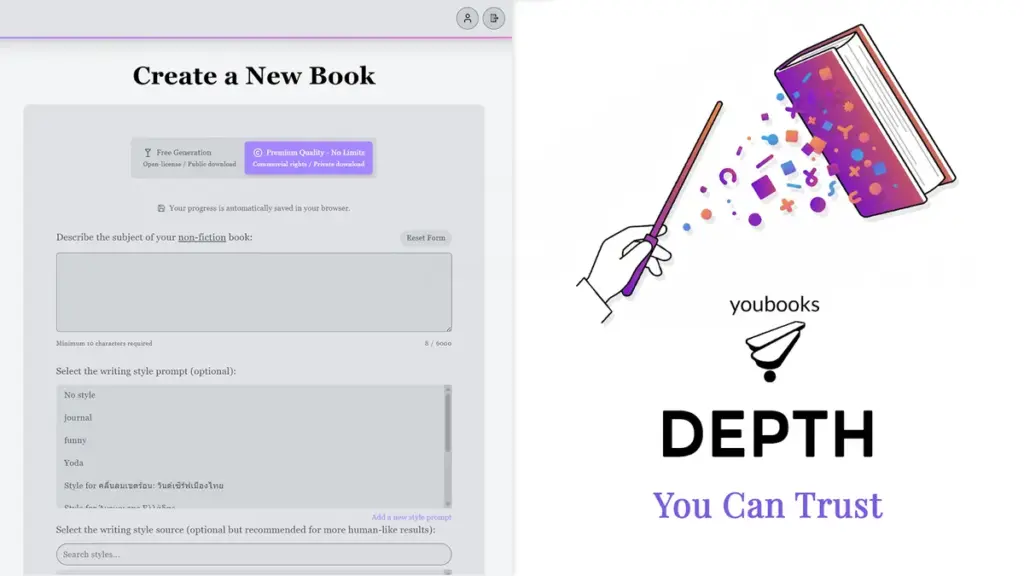
Pro tip: Alternate between a structured tool like Youbooks and a general chatbot like ChatGPT. The combo can speed up your process without sacrificing quality.
3. Edit Faster: Use AI Tools to Catch Errors and Improve Flow
When it’s time to polish, AI book editing tools like Quillbot and ProWritingAid can catch spelling, grammar, and style issues fast. They’ll suggest clearer sentences, flag overused words, and highlight awkward phrasing.
No tool replaces a human editor, but they make your draft cleaner before you hand it off. Plus, they’re great for a quick pass when you’re low on time.
4. Format Without the Headache: Use AI-Friendly Layout Tools
Formatting a book is tedious. But tools like Atticus make it simple to turn your manuscript into a clean, professional-looking file for print or digital. You just import your text, choose a template, and the tool handles the rest.
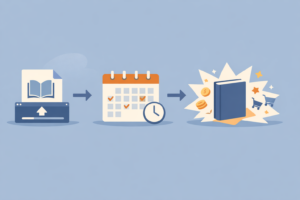
Another solid option is Designrr, a tool that lets you import content from blogs, Google Docs, PDFs, or even old newsletters and turn it into a formatted eBook with just a few clicks. It’s especially helpful for repurposing existing content into lead magnets or quick publications.
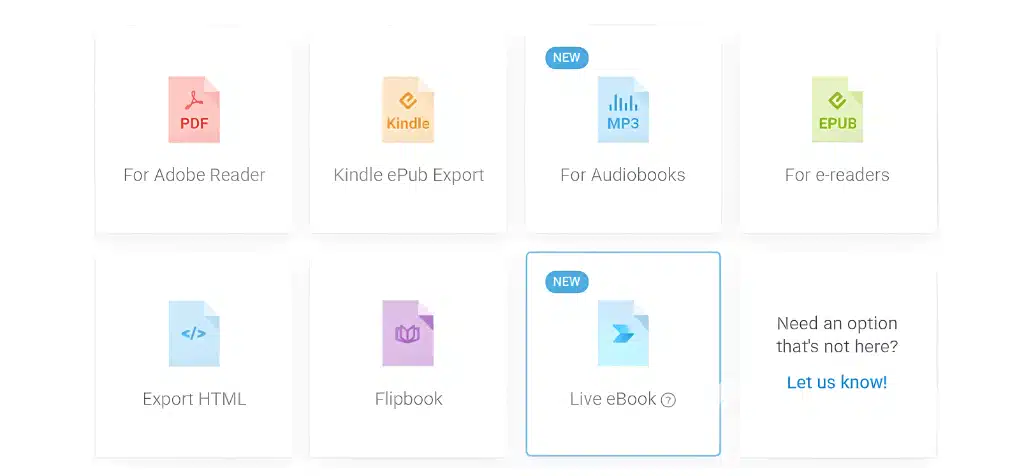
These AI book formatting tools help automate book publishing so you can spend more time writing and less time tinkering with margins.
5. Design Your Cover with AI-Powered Tools
Cover design doesn’t have to be expensive or time-consuming. With MidJourney or DALL-E, you can generate stunning images from simple prompts. Pair that with Canva’s templates or BookBrush’s layout options, and you can build a professional-looking cover without hiring a designer.
Just remember to disclose AI-generated art when uploading to platforms like Amazon KDP. It’s a quick checkbox during publishing.
AI book cover design has come a long way — and using tools like these can save hundreds of dollars and weeks of time.
6. Write Your Marketing Copy (and More) with AI
From book blurbs to social media posts, AI book marketing tools can help you write faster and smarter. Nichesss, Rytr, and Blotato all offer templates for promotional content. You can plug in your genre, theme, or target reader and get polished blurbs in seconds.
Need keyword help for your Amazon listing? Try Publisher Rocket to find terms readers are actually searching for. Want help writing SEO-friendly blog posts or newsletters? ChatGPT is your go-to.
And if you’re sending email campaigns, GetResponse’s AI features will suggest subject lines and send times. All of this adds up to a huge time-saver for busy authors.
AI won’t replace your creativity. But it will cut down the tedious stuff so you can focus on the work only you can do. You’ll go from idea to finished book faster, with less burnout and more energy left for storytelling.
Start small. Try one tool. See how much time you save. Then build from there.
Self-publishing with AI just got a whole lot easier.