

You sit at your desk with a brilliant idea for a book. The words flow, chapters take shape, and months later you hit publish on Amazon. Then nothing. Your masterpiece disappears into the void of millions of books, generating maybe a handful of sales to friends and family.
Most authors approach book creation backwards.
They write first, then hope readers will find them. But finding a profitable book topic on Amazon requires the opposite approach — validating demand before you write a single word.
Start With What Readers Are Already Buying
The biggest mistake new authors make is writing about what interests them without checking if it interests anyone else.
Smart authors start with proven demand.
Amazon provides a treasure trove of data about what readers want. Every search, every purchase, every review tells you something about market demand. The key is knowing where to look and how to interpret what you find.
Browse Amazon Best Sellers by Category
Amazon’s Best Seller lists reveal what’s working right now.
Navigate to any category related to your interests. Look for patterns in the top 20 books. Do you see the same topics appearing repeatedly? Multiple successful books on similar subjects indicate healthy demand.
Pay attention to publication dates. Books that maintain strong rankings months or years after publication suggest evergreen topics with lasting appeal.
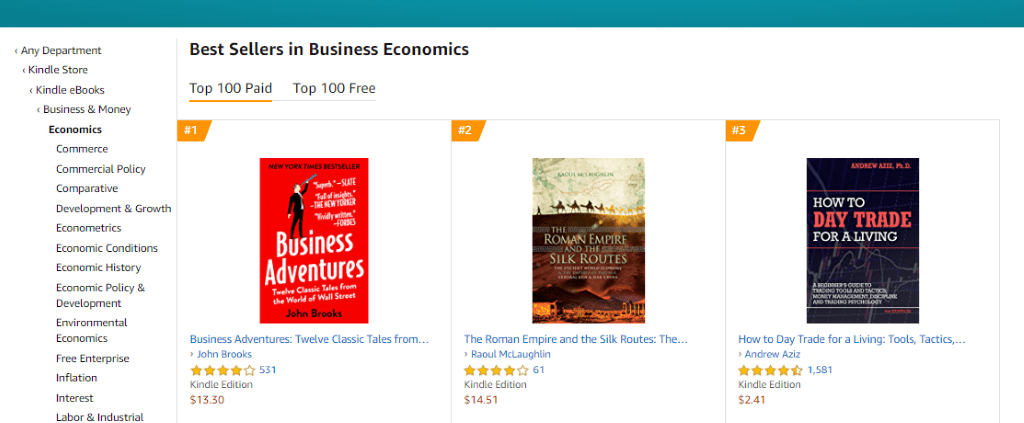
Best Seller lists on Amazon
Use Amazon’s Search Suggestions
Amazon’s autocomplete feature is powered by real user searches.
Start typing a broad keyword into Amazon’s search bar. The suggestions that appear represent what thousands of readers are actively searching for.
Type “productivity” and you might see:
- productivity for students
- productivity planner
- productivity habits
- productivity at work
Each suggestion represents a potential book angle with proven search demand.
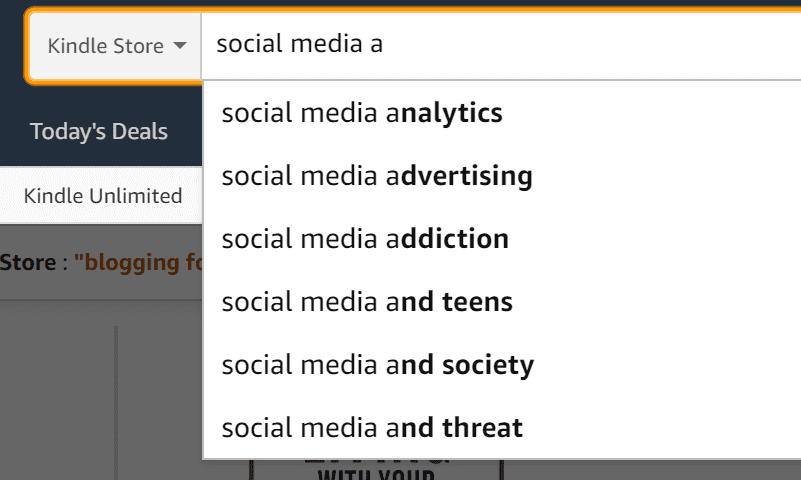
Amazon keyword search suggestions
Study Reader Reviews for Hidden Opportunities
Reader reviews often reveal what’s missing from existing books.
Look for common complaints like “this book didn’t cover…” or “I wish the author had included…” These gaps represent opportunities for your book. Three-star reviews are particularly valuable. They often contain specific feedback about what readers wanted but didn’t get.
Rather than reading hundreds of reviews one by one, consider using AI to analyze them. Tools like ChatGPT can help you identify recurring themes, unanswered questions, and content gaps in minutes. I cover this process in more detail in my article on using AI for book review analysis.
Analyze Competition the Smart Way

Demand without competition doesn’t exist. Competition without opportunity to succeed isn’t worth pursuing.
The goal isn’t to find topics with no competition — it’s to find manageable competition where you can realistically rank and be discovered.
Search Your Topic on Amazon
Enter your potential topic as a search term and study the first page of results.
Look for these signals:
- How many books appear in results?
- Are they dominated by major publishers or do independent authors succeed?
- What’s the overall quality of covers and titles?
- How many reviews do the top books have?
A healthy niche often shows a mix of established books and newer titles that are gaining traction.
Look for Sub-Niche Opportunities
Broad topics like “fitness” or “business” are extremely competitive.
Specific angles are easier to rank for:
- Instead of “fitness” → “fitness for busy moms”
- Instead of “investing” → “investing for teachers”
- Instead of “productivity” → “productivity for creative professionals”
Specificity often leads to better discoverability and more engaged readers.
Validate Before You Write
Before investing months in writing, confirm the opportunity is worth pursuing.
Check for Multiple Success Stories
One bestseller doesn’t prove market demand — it might just be an outlier.
Look for 3-5 books on similar topics that show consistent sales success. This indicates a stable market rather than a temporary trend.
Confirm Evergreen Potential
Some topics have lasting appeal. Others burn out quickly.
Evergreen topics that consistently perform well include:
- Personal finance and investing
- Health and fitness fundamentals
- Self-improvement and productivity
- Parenting challenges
- Career development
- Small business and entrepreneurship
These subjects address ongoing human needs rather than temporary trends.
Look Beyond Amazon
Strong book topics usually have thriving ecosystems elsewhere.
Check if your topic has:
- Active Reddit communities
- Popular YouTube channels
- Successful online courses
- Engaged Facebook groups
- Regular podcast coverage
Multiple platforms discussing the same topic indicate sustained interest.
Free Tools for Amazon Book Research
You don’t need expensive software to research profitable book topics on Amazon effectively.
Amazon’s Built-in Research Tools
Amazon Best Sellers: Identify trending topics and successful categories
Amazon Search Autocomplete: Discover what readers are searching for
Amazon Reviews: Find gaps in existing books and reader pain points
External Free Tools
Google Trends: Compare search interest over time for different topics
Reddit: Find active communities discussing your potential topics
Goodreads: See what readers recommend and discuss
YouTube: Check if there’s video content demand for your topic
Using AI to Speed Up Research
AI tools can accelerate your research process, but they shouldn’t replace market validation.
ChatGPT and similar tools excel at:
- Generating topic variations and subtopics
- Identifying potential reader personas
- Analyzing review themes when fed review text
- Brainstorming unique angles for common topics
- Creating research checklists and workflows
However, AI can’t tell you what’s actually selling on Amazon. Always verify AI suggestions with real market data.
Analyze this book topic for market potential: [YOUR TOPIC]
Please help me:
1. Generate 5 specific sub-niches for this topic
2. Identify 3 potential reader personas who would buy this book
3. Suggest 10 related keywords I should research on Amazon
4. List 5 potential pain points this book could solve
5. Recommend 3 platforms where I should check for community interest
Be specific and actionable in your suggestions.
Red Flags to Avoid
Not every topic with demand is worth pursuing.
Oversaturated Markets
If Amazon’s first page shows only books from major publishers with thousands of reviews, independent authors will struggle to break through.
Trending Topics Without Substance
Topics tied to current events or temporary trends can spike quickly but disappear just as fast.
Unless you can publish extremely quickly, avoid topics that depend on timing.
Topics You Can’t Contribute To
Passion alone doesn’t create good books.
Ask yourself: Do I have expertise, experience, or a unique perspective that adds value? Can I research this topic thoroughly enough to help readers?
If the answer is no, keep looking.
A Profitable Book Topic Checklist
Before committing to a topic, ensure it meets these criteria:
✓ Proven demand: Multiple successful books exist in this space
✓ Manageable competition: Independent authors can succeed alongside established titles
✓ Specific angle: Your book has a clear, focused approach
✓ Reader pain points: You’ve identified specific problems to solve
✓ Evergreen potential: The topic has lasting appeal beyond current trends
✓ Personal connection: You can contribute meaningfully to the conversation
✓ Cross-platform interest: The topic generates discussion beyond Amazon
If your topic checks most of these boxes, you’re likely looking at a profitable opportunity.
From Research to Action
Finding a profitable book topic on Amazon isn’t about discovering hidden niches.
It’s about identifying proven demand, analyzing realistic competition, and finding your unique angle within existing markets.
The process is straightforward: start with Amazon data, validate with external signals, and ensure you can contribute something valuable to the conversation.
Do this research before you write, not after.
Your future self — and your book sales — will thank you.