
Imagine finishing your favorite fantasy novel.
Instead of putting the book back on the shelf, you ask the protagonist what happened after the final chapter.
You interview the villain.
You explore places that never appeared in the story.
You discover forgotten legends, hidden kingdoms, and conversations readers were never supposed to hear.
That’s the opportunity artificial intelligence creates for fiction authors.
AI doesn’t just help you promote your novel.
It helps readers stay inside your world.
Unlike nonfiction books, fiction isn’t sold by information. It’s sold by emotion, curiosity, unforgettable characters, and immersive storytelling. The best marketing ideas for fiction authors don’t interrupt that experience—they extend it.
Instead of creating another promotional post, imagine letting readers chat with your characters, explore an interactive world map, uncover secret lore, generate personalized book recommendations, or receive bonus scenes written from the villain’s perspective.
Those experiences create curiosity.
Curiosity creates loyal fans.
And loyal fans recommend books.
This guide contains more than 95 creative marketing ideas for fiction authors that combine storytelling with artificial intelligence. Some can be built in less than an hour using ChatGPT or Claude. Others can be developed with AI coding tools like Claude Code, Codex, Cursor, Lovable, or Bolt.new.
You certainly don’t need to implement every idea.
But if one of them keeps readers talking about your fictional world long after they finish your novel, it has already become one of your most effective book marketing tools.
The best marketing ideas for fiction authors don’t feel like marketing. They invite readers to spend more time with your characters, your world, and your story.
Turn Your Novel Into an Interactive Experience
One of the most effective book marketing ideas for fiction authors is surprisingly simple:
Don’t let the story end when readers reach the final page.
Instead, turn your novel into an experience they can continue exploring.
Artificial intelligence makes this possible by transforming your manuscript into interactive tools that answer questions, reveal hidden details, and deepen readers’ connection with your fictional universe.
Whether you write fantasy, romance, mystery, thriller, historical fiction, science fiction, or young adult novels, these AI-powered experiences can help readers stay engaged between books while giving them compelling reasons to return to your website.
Let Readers Chat With Your Characters
Readers don’t always want to talk to the author.
Sometimes they’d rather ask the villain why they betrayed the kingdom.
Or ask the detective what clue they almost missed.
Or ask the heroine what happened after the final chapter.
An AI-powered character assistant allows readers to have those conversations while staying true to each character’s personality, motivations, and knowledge.
Why it works
Readers form emotional connections with characters long before they remember plot details.
Giving readers another opportunity to interact with those characters transforms your novel into an ongoing experience instead of a one-time read.
It’s one of the most engaging AI book marketing ideas available to fiction authors today.
How to build it
Simple version
Create a Claude Project or Custom GPT for each major character.
Upload:
- character biography
- personality traits
- dialogue style
- relationships
- timeline
- important story events
Advanced version
Use Claude Code, Codex, Cursor, or Lovable to build a character chat page directly on your website.
Genre: [genre] Character: [name] Personality: Role in the story: Create: The assistant should never contradict established events in the novel.
You are helping me create an AI-powered character assistant for my novel.
[describe personality]
[describe]
Build an AI Story Companion
Complex novels often contain dozens of characters, locations, timelines, and subplots.
Readers don’t always remember every detail—especially in a long series.
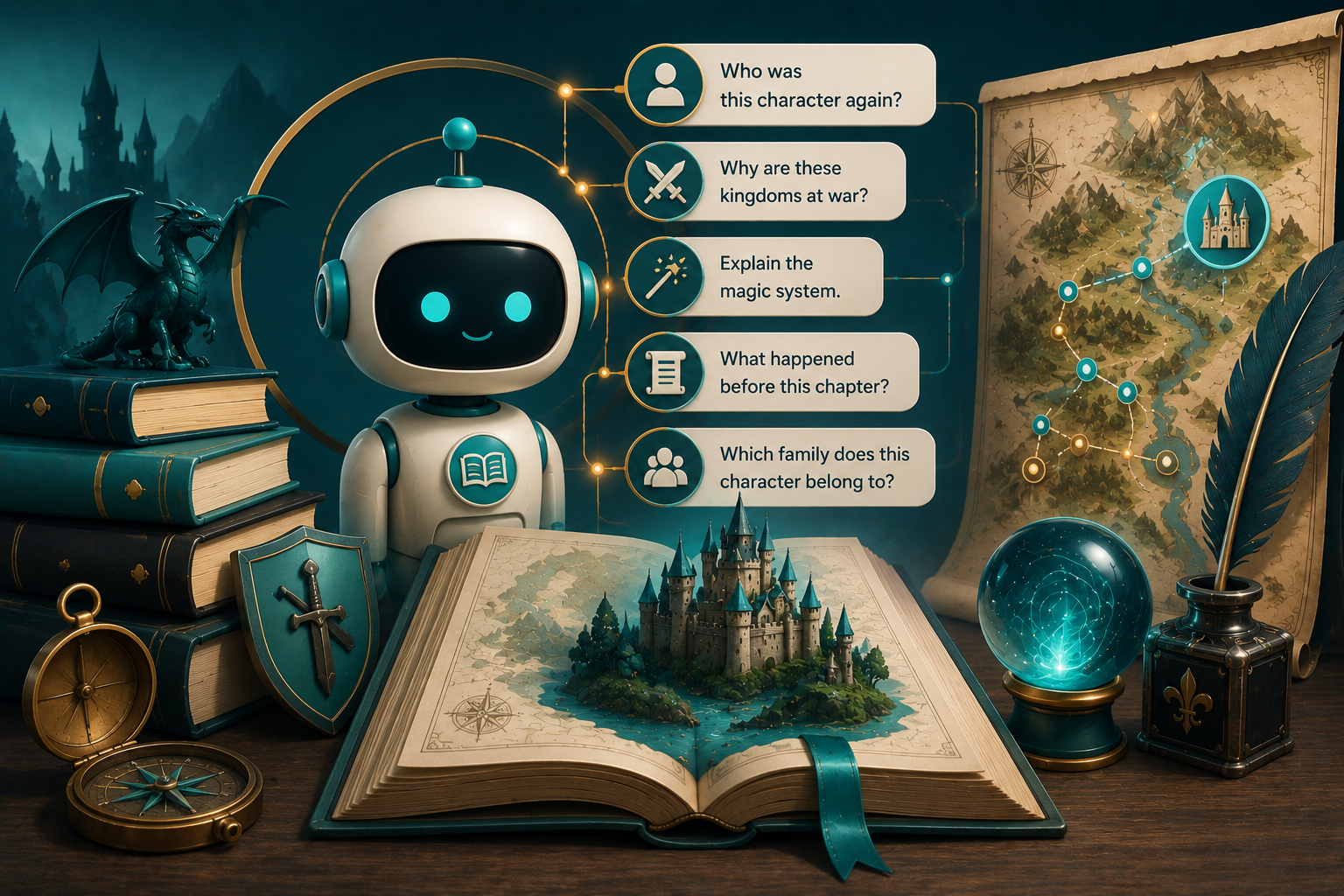
Instead of searching through previous books or fan wikis, they can ask an AI story companion questions like:
- Who was this character again?
- Why are these kingdoms at war?
- Explain the magic system.
- What happened before this chapter?
- Which family does this character belong to?
The assistant answers using information from your books while avoiding spoilers for readers who haven’t finished the series.
Why it works
One of the biggest reasons readers abandon long series is confusion.
An AI companion helps them re-enter your fictional world quickly, making it easier to continue reading future books.
How to build it
Upload your world bible, character profiles, and series notes into Claude.
For a more advanced experience, ask Claude Code or Codex to build a searchable AI knowledge base with spoiler controls.
Create an Interactive World Guide
Fantasy and science fiction readers love exploring fictional worlds.
Instead of publishing a static glossary or encyclopedia, let readers ask questions naturally.
Examples include:
- Tell me about the Northern Kingdom.
- Which creatures live in the Black Forest?
- Explain the royal succession.
- How does magic actually work?
- Why did the Great War begin?
Every answer encourages readers to spend more time inside your universe.
Why it works
Readers who invest time exploring your world are much more likely to recommend your books, join your newsletter, and buy the next installment.
Turn Your Timeline Into an Interactive Explorer
Every fictional universe has a history.
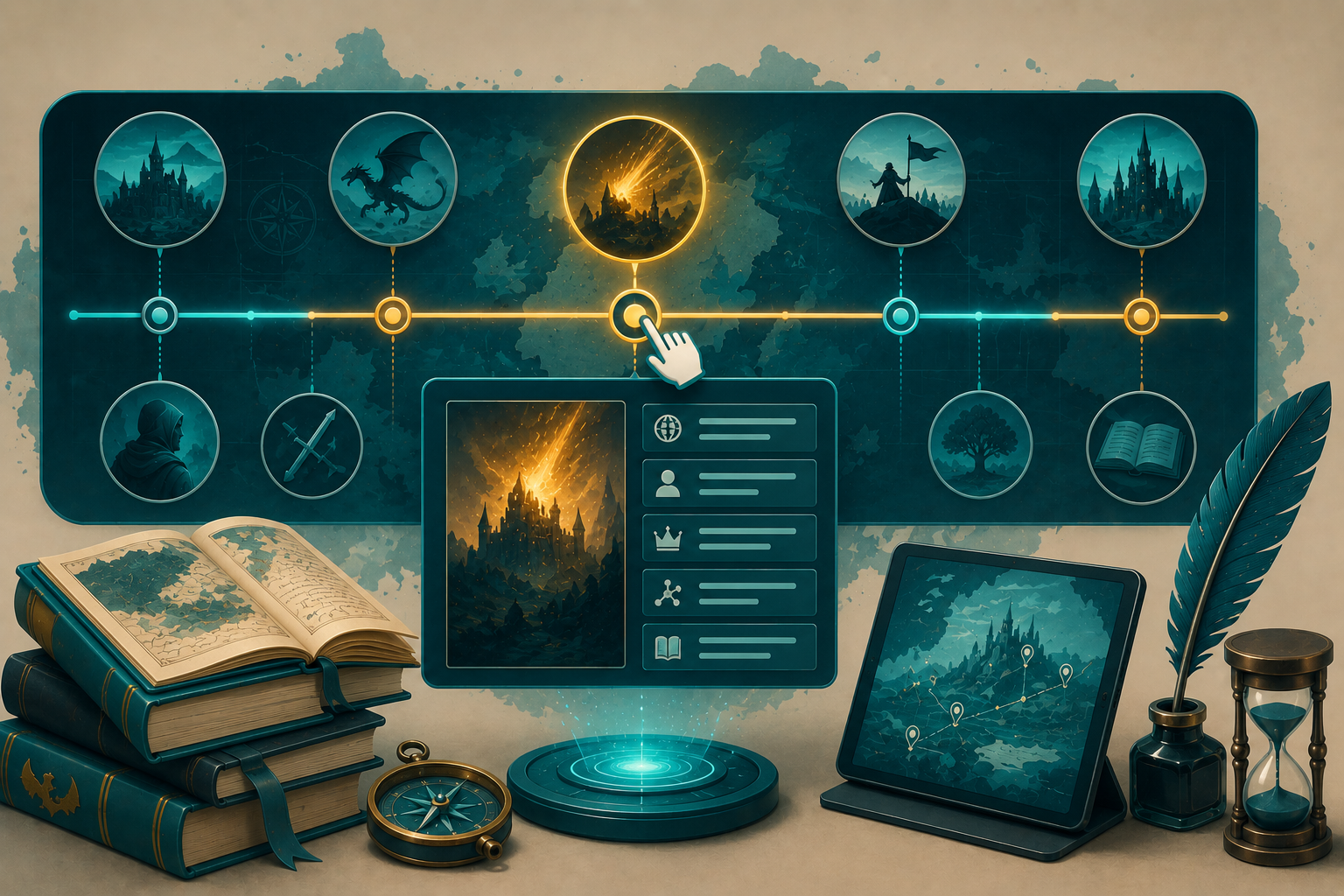
Instead of presenting a static timeline, let readers explore it interactively.
Clicking on an event could reveal:
- historical context
- important characters
- consequences
- hidden connections
- related chapters
The timeline becomes another way readers experience your world between books.
How to build it
Claude Code, Cursor, or Codex can generate an interactive timeline using your world-building notes and series bible.
Even a simple version creates a much richer experience than a downloadable PDF.
Build an AI Lore Encyclopedia
Years of world-building shouldn’t remain hidden inside your writing documents.
Turn your notes into an AI-powered encyclopedia covering:
- kingdoms
- races
- creatures
- mythology
- artifacts
- religions
- languages
- famous battles
Readers explore your universe at their own pace instead of searching scattered fan websites.
Why it works
Deep lore is one of the strongest drivers of reader engagement, especially for fantasy and science fiction authors.
It encourages discussion, fan theories, repeat visits, and long-term loyalty—making it one of the most effective marketing ideas for fiction authors building a series.
Your novel doesn’t have to end with the final chapter. Some of the best marketing ideas for fiction authors simply give readers new ways to experience the world they’ve already fallen in love with.
Turn Your Characters Into Your Best Marketing Team
Readers rarely recommend a novel because of its chapter structure.
They recommend unforgettable characters.
Long after they forget specific plot twists, they’ll remember the detective who always noticed the smallest clue, the morally gray villain they secretly rooted for, or the side character who stole every scene.
One of the most effective marketing ideas for fiction authors is to let those characters continue telling stories outside the pages of the book.
Instead of constantly promoting your novel yourself, let your fictional cast become your marketing team.
Publish Character Diaries

Imagine discovering your protagonist’s private journal.
Or the villain’s notebook.
Or letters exchanged years before Chapter One begins.
These stories don’t need to reveal major plot points.
Instead, they expand your world while rewarding loyal readers with exclusive content.
Character diaries can be published as:
- newsletter exclusives
- website bonus content
- subscriber rewards
- social media series
- downloadable PDFs
Why it works
Readers feel like they’re uncovering hidden parts of the story rather than consuming marketing.
That makes them far more likely to share the content with other fans.
How to build it
Ask Claude to write diary entries using only the information already established in your novel.
Upload your character profile and timeline to ensure every detail remains consistent with your canon.
Create AI Character Interviews
What would happen if readers became journalists inside your fictional world?
Instead of interviewing you, they interview your characters.
Questions might include:
- What are you most afraid of?
- What’s your biggest regret?
- Who do you trust the least?
- What would readers misunderstand about you?
- What happened after the final chapter?
Each interview becomes another opportunity to reveal personality without rewriting the novel.
Why it works
Character interviews work particularly well on YouTube, newsletters, and author websites because they feel entertaining instead of promotional.
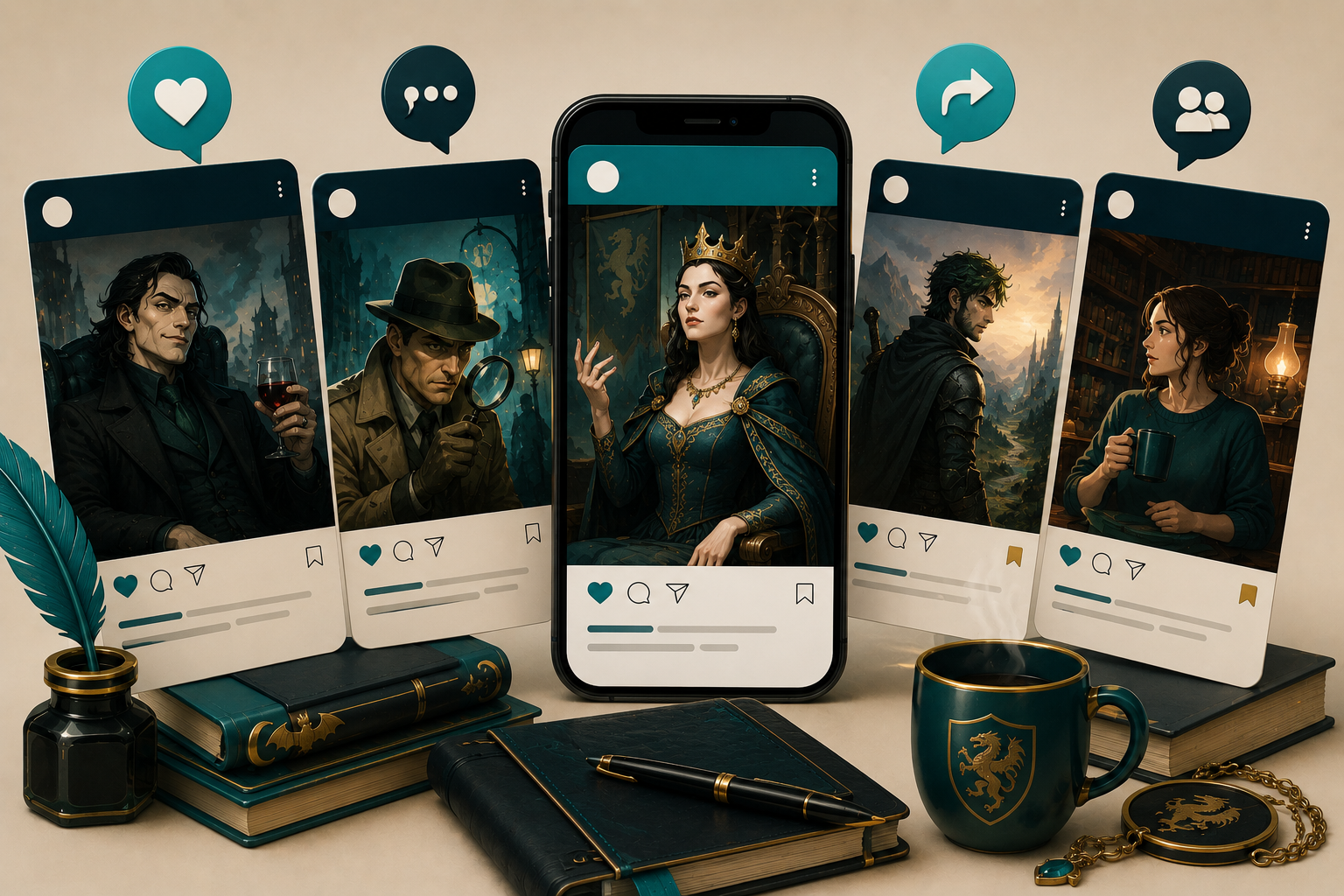
Turn Characters Into Social Media Creators
Instead of posting as yourself every day, occasionally let your characters take over.
Imagine your villain commenting on current events.
Or your detective explaining how they would solve famous fictional crimes.
Or your fantasy queen sharing “royal decrees.”
The content becomes memorable because readers immediately recognize the voice behind it.
How to build it
Create a Claude Project for each major character.
Save:
- personality
- vocabulary
- humor
- worldview
- speech patterns
- recurring phrases
Now AI can generate content that sounds remarkably consistent.
Build a “Choose Your Ally” Quiz
Personality quizzes remain one of the most shareable marketing tools.
Instead of asking:
“Which character are you?”
Ask:
“Which character would choose you as their ally?”
The result feels more personal and often sparks discussion among readers.
Examples include:
- Which dragon would bond with you?
- Which detective would recruit you?
- Which magical academy would accept you?
- Which royal house would trust you?
Why it works
Readers naturally compare results with friends, generating organic visibility for your book.
Create Personalized Character Letters
Imagine someone subscribing to your newsletter.
Instead of receiving a welcome email from the author…
They receive a handwritten letter from the protagonist.
Or a warning from the villain.
Or an invitation from the queen.
Every subscriber receives a different message depending on the choices they made during signup.
This transforms a routine email sequence into the beginning of another story.
How to build it
Use your email platform to segment subscribers based on quiz answers or reader preferences.
Claude can then generate personalized welcome sequences that stay true to each character’s voice.
Let Readers Ask Characters for Advice
People love asking fictional characters:
“What would you do?”
Imagine readers asking:
- How would you handle betrayal?
- Should I trust this person?
- What’s the biggest mistake you’ve ever made?
- How would you prepare for battle?
The advice reflects each character’s personality—not necessarily good advice.
That’s what makes it entertaining.
Build an AI Relationship Explorer
Complex novels often include dozens of interconnected relationships.
Instead of showing a static family tree, let readers ask:
- Why do these two characters hate each other?
- When did they first meet?
- Who betrayed whom?
- Which alliances changed during the war?
AI explains each relationship while avoiding spoilers based on the reader’s progress through the series.
Why it works
This becomes particularly valuable for epic fantasy, historical fiction, and multi-book series with large casts.
Your characters are some of your most valuable marketing assets. The more opportunities readers have to spend time with them, the stronger their emotional connection to your stories becomes.
You are helping me create AI-powered marketing centered around my fictional characters.
Novel genre: [genre]
Main characters:
[list]
Generate:
- 15 bonus experiences readers can have with these characters
- 10 interactive website features
- 10 newsletter ideas written in character
- 10 social media content ideas for each major character
- 5 premium subscriber experiences that deepen reader immersion without changing the original story.
Keep every idea consistent with the established personalities and timeline.
Turn Your Fictional World Into a Destination
The best fictional worlds feel like real places.
Readers don’t simply visit them while reading.
They want to return.
Artificial intelligence makes that easier than ever.
Instead of publishing static maps and glossaries, you can create interactive experiences that invite readers to explore your universe long after they finish the novel.
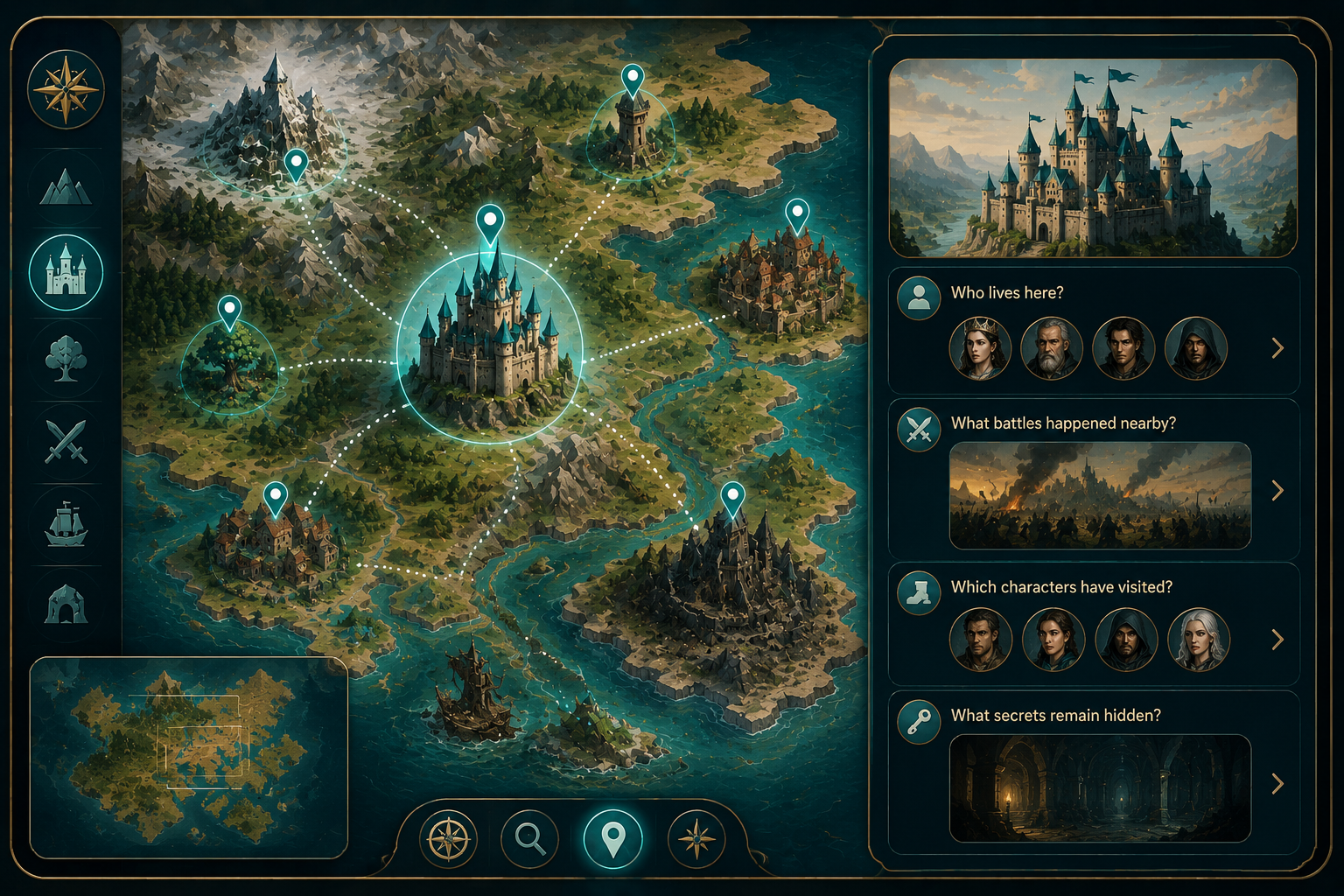
Build Interactive Maps
Maps become much more engaging when readers can explore them.
Imagine clicking on a castle and asking:
- Who lives here?
- What battles happened nearby?
- Which characters have visited?
- What secrets remain hidden?
Every location becomes a story waiting to be discovered.
Why it works
Interactive maps encourage repeat visits to your website and naturally introduce readers to places they may have overlooked while reading.
Create an AI Travel Guide
Instead of describing your world like an encyclopedia, present it like a travel guide.
Visitors ask:
- Where should I stay?
- Which cities are safest?
- What food should I try?
- Which festivals are worth visiting?
AI answers entirely in the context of your fictional universe.
Fantasy readers especially love this type of immersive world-building.
Generate Personalized Adventures
Ask readers a few questions:
- Which weapon would you carry?
- What’s your greatest strength?
- Which kingdom do you trust?
- What’s your biggest fear?
AI creates a short adventure where they’re the protagonist.
The story introduces locations, creatures, and characters from your novels while encouraging readers to explore the full series.
Build an AI Lore Librarian
Instead of searching dozens of pages, readers simply ask questions.
Examples include:
- Explain the history of the Empire.
- Why was the Crystal War fought?
- Tell me about the ancient dragons.
- Who founded the capital city?
The AI responds using your world-building documents while remaining faithful to established canon.
Create Dynamic Family Trees
Large fantasy and historical fiction series often include complicated royal families.
Instead of publishing a static chart, allow readers to click on individuals and explore:
- marriages
- rivalries
- heirs
- betrayals
- historical significance
This makes even complex stories much easier to follow.
Build a Creature Encyclopedia
Readers love discovering:
- dragons
- monsters
- magical beasts
- mythical creatures
- alien species
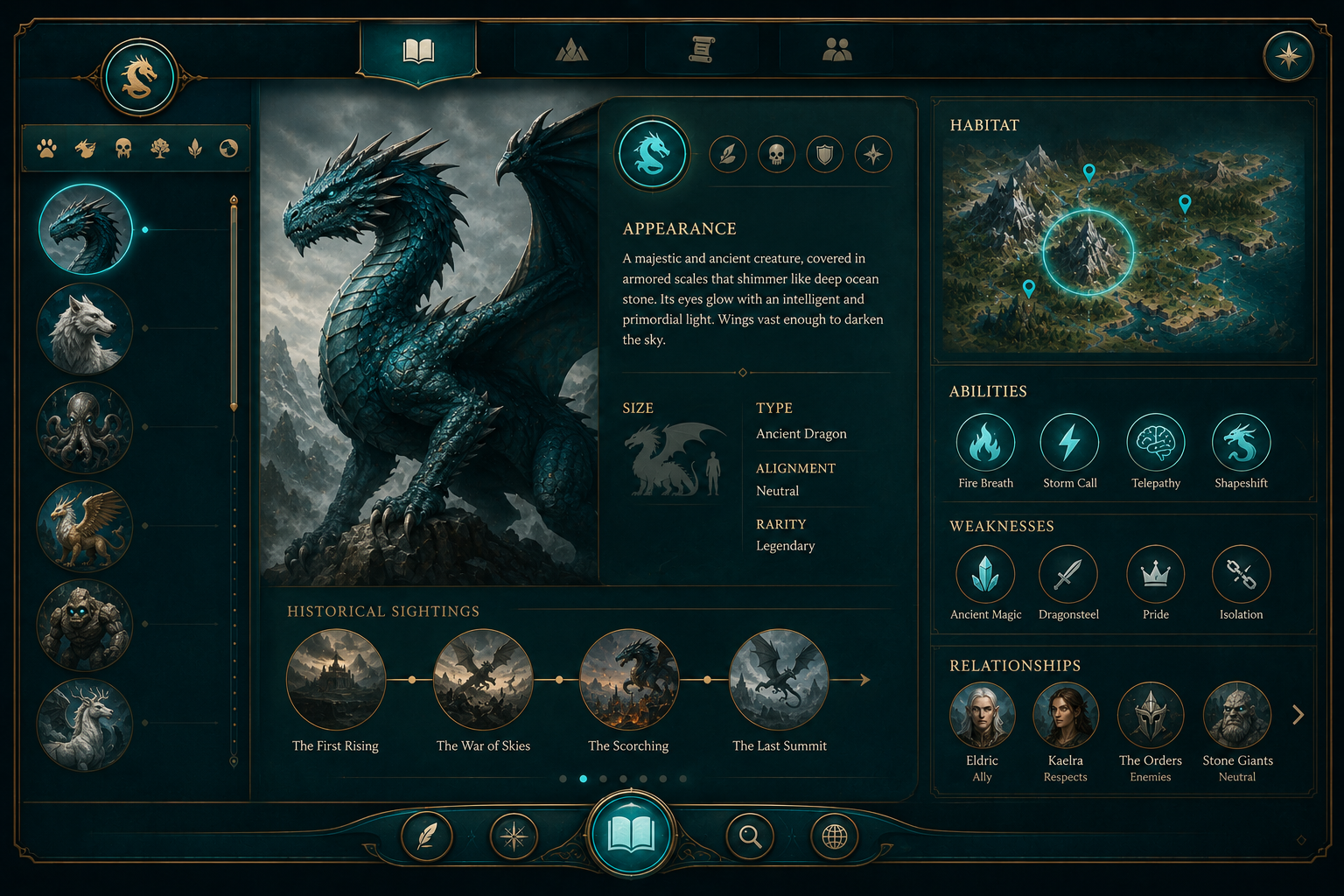
Each entry can include:
- appearance
- habitat
- abilities
- weaknesses
- historical sightings
- relationships with characters
Over time, your encyclopedia becomes one of the richest resources for fans of your fictional world.
One of the best marketing ideas for fiction authors is to make readers feel like they’re visiting a real place instead of reading about an imaginary one.
You are an AI experience designer for fiction authors.
My fictional world includes:
[describe the world]
Generate 20 interactive experiences readers could enjoy after finishing the novel.
Include ideas such as:
- interactive maps
- travel guides
- lore databases
- creature encyclopedias
- magical artifacts
- historical timelines
- family trees
- AI-guided adventures
Explain how each experience encourages readers to continue exploring my fictional universe.
Create AI Experiences Readers Will Want to Share
The best fiction book marketing doesn’t always look like marketing.
Sometimes it’s a quiz readers post on social media.
Sometimes it’s an AI-generated scene they send to a friend.
Sometimes it’s an interactive experience so entertaining that people share it without realizing they’re promoting your novel.
These AI-powered marketing ideas for fiction authors are designed to create exactly that kind of organic engagement.
Build a “Which Character Are You?” Quiz
Personality quizzes have been popular for years because people love learning something about themselves.
Instead of a generic quiz, build one around your fictional universe.
Ask questions about:
- values
- fears
- decision-making
- leadership style
- courage
- loyalty
AI analyzes the answers and reveals:
- the character they’re most like
- why they match
- their strengths
- their weaknesses
- which scenes they would probably survive
Why it works
Readers naturally compare results with friends, creating free word-of-mouth marketing for your book.
How to build it
Create the quiz in Typeform, Fillout, or Tally, then use ChatGPT or Claude to generate personalized results.
For an even richer experience, use Claude Code or Codex to build a fully interactive version on your website.
Create an AI Story Generator
What if readers became characters in your world?
Ask them for:
- their name
- profession
- greatest strength
- biggest fear
AI then generates a short adventure set inside your fictional universe.
The story might include familiar locations, creatures, or supporting characters while remaining separate from your novel’s main plot.
Why it works
Readers love becoming part of the story.
They’re also much more likely to share a personalized adventure than a traditional book trailer.
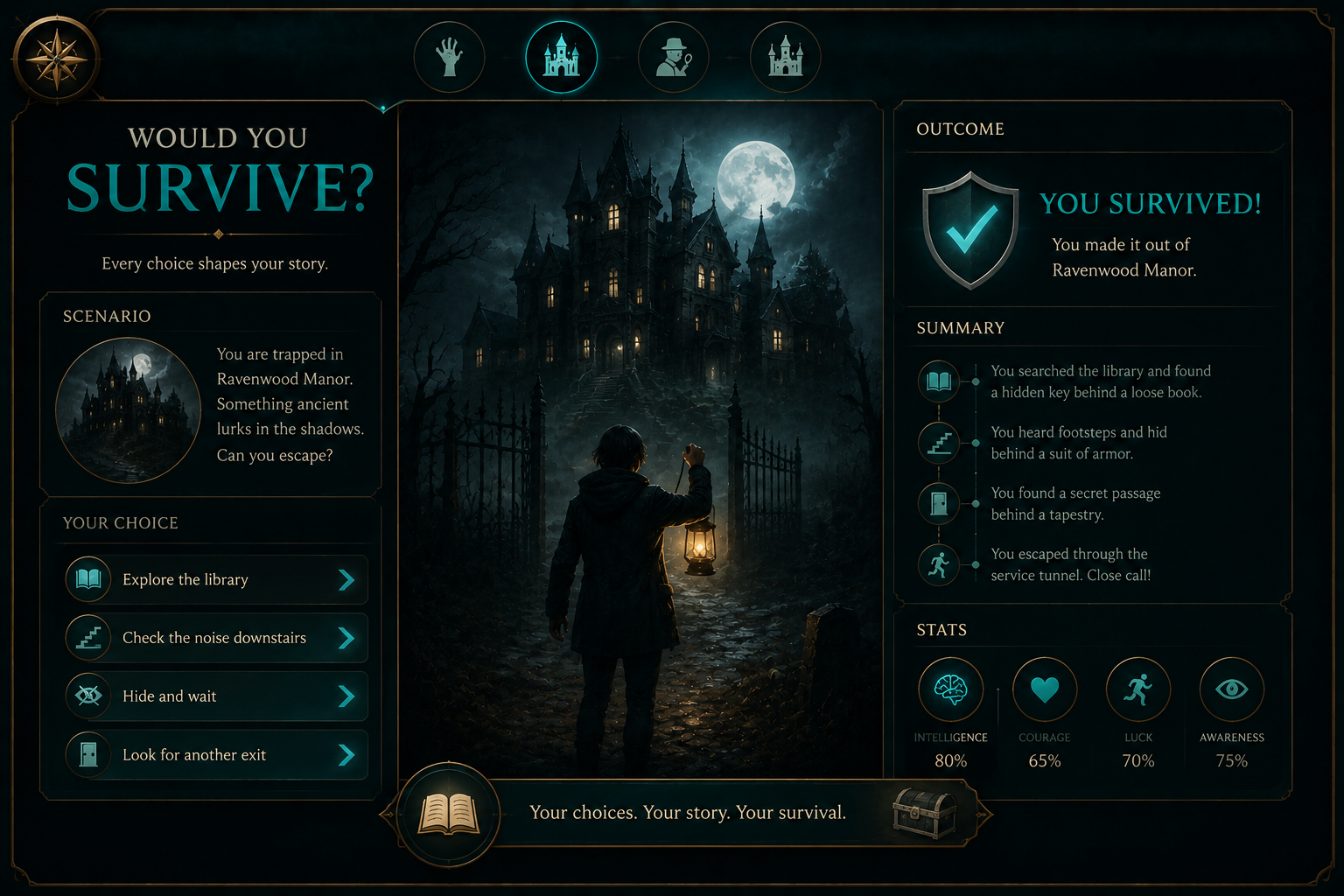
Build a “Would You Survive?” Simulator
Many fictional worlds are dangerous.
Let readers find out how they’d fare.
Examples:
- Would you survive the zombie outbreak?
- Would you escape the haunted mansion?
- Could you solve the mystery before the detective?
- Would you survive your fantasy kingdom?
AI evaluates their decisions and explains what happens next.
Why it works
Interactive storytelling encourages repeat visits because readers want to try different choices.
Let Readers Rewrite Small Moments
Choose a short, non-essential scene from your novel.
Ask readers:
“What would you do differently?”
AI continues the scene based on their decision.
The result isn’t canon.
It’s simply a fun way to explore alternate possibilities while keeping readers engaged.
How to build it
Clearly label every generated scene as an alternate storyline so readers don’t confuse it with the official narrative.
Generate Personalized Book Recommendations
When readers finish your novel, don’t simply recommend the next book in the series.
Instead, ask AI to recommend:
- the next book
- bonus stories
- blog articles
- world-building resources
- playlists
- downloadable content
based on what the reader enjoyed most.
The recommendations feel personal instead of promotional.
Build an AI Mystery Solver
Perfect for mystery and thriller authors.
Readers review evidence, question suspects, and propose theories.
AI responds without revealing spoilers while encouraging them to continue reading.
When they finish the novel, they can compare their theories with the actual ending.
Why it works
Readers become active participants instead of passive observers.
Create Interactive Moral Dilemmas
Present readers with impossible choices inspired by your novel.
Examples:
- Save your best friend or save the kingdom?
- Tell the truth or protect someone you love?
- Destroy the magical artifact or use it?
AI explains how different characters from your novel would respond—and why.
These dilemmas often generate lively discussions in comments and online communities.
The most memorable marketing ideas for fiction authors invite readers to participate in the story instead of simply reading about it.
You are designing interactive marketing experiences for a fiction author.
Novel genre: [genre]
Story summary:
[summary]
Generate 20 highly shareable AI experiences readers can enjoy before and after reading the book.
Include:
- quizzes
- interactive stories
- simulators
- decision games
- mystery-solving experiences
- character matching
- alternate endings
- personalized adventures
Prioritize experiences that encourage readers to share their results online.
Use AI to Create Stunning Visual Marketing
People often discover novels through visuals before they ever read a single sentence.
Cover art captures attention.
But it doesn’t have to stop there.
Artificial intelligence makes it possible to create an entire visual identity around your fictional world.
Turn Every Chapter Into Concept Art
Every chapter contains memorable moments.
Instead of describing them only with words, create cinematic illustrations inspired by key scenes.
Examples include:
- dramatic confrontations
- magical landscapes
- mysterious locations
- emotional reunions
- epic battles
Publish them gradually to build anticipation without revealing major spoilers.
Why it works
Readers love imagining what your world looks like.
Visuals also perform exceptionally well on Pinterest, Instagram, and Facebook.
Create Character Portrait Collections
Instead of showing readers only the protagonist, gradually reveal your cast.
Generate consistent portraits of:
- heroes
- villains
- side characters
- mythical creatures
- historical figures
As your series grows, your readers begin recognizing characters instantly.
Generate AI Book Trailers
Traditional book trailers are often expensive.
AI video generators make it much easier to create short cinematic teasers.
Instead of summarizing the plot, focus on atmosphere.
Show:
- mysterious landscapes
- dramatic lighting
- iconic objects
- emotional dialogue
- memorable quotes
Leave readers wanting answers.
How to build it
Generate concept images with your preferred AI image model, then animate them using tools such as Kling, Runway, Pika, or Veo.
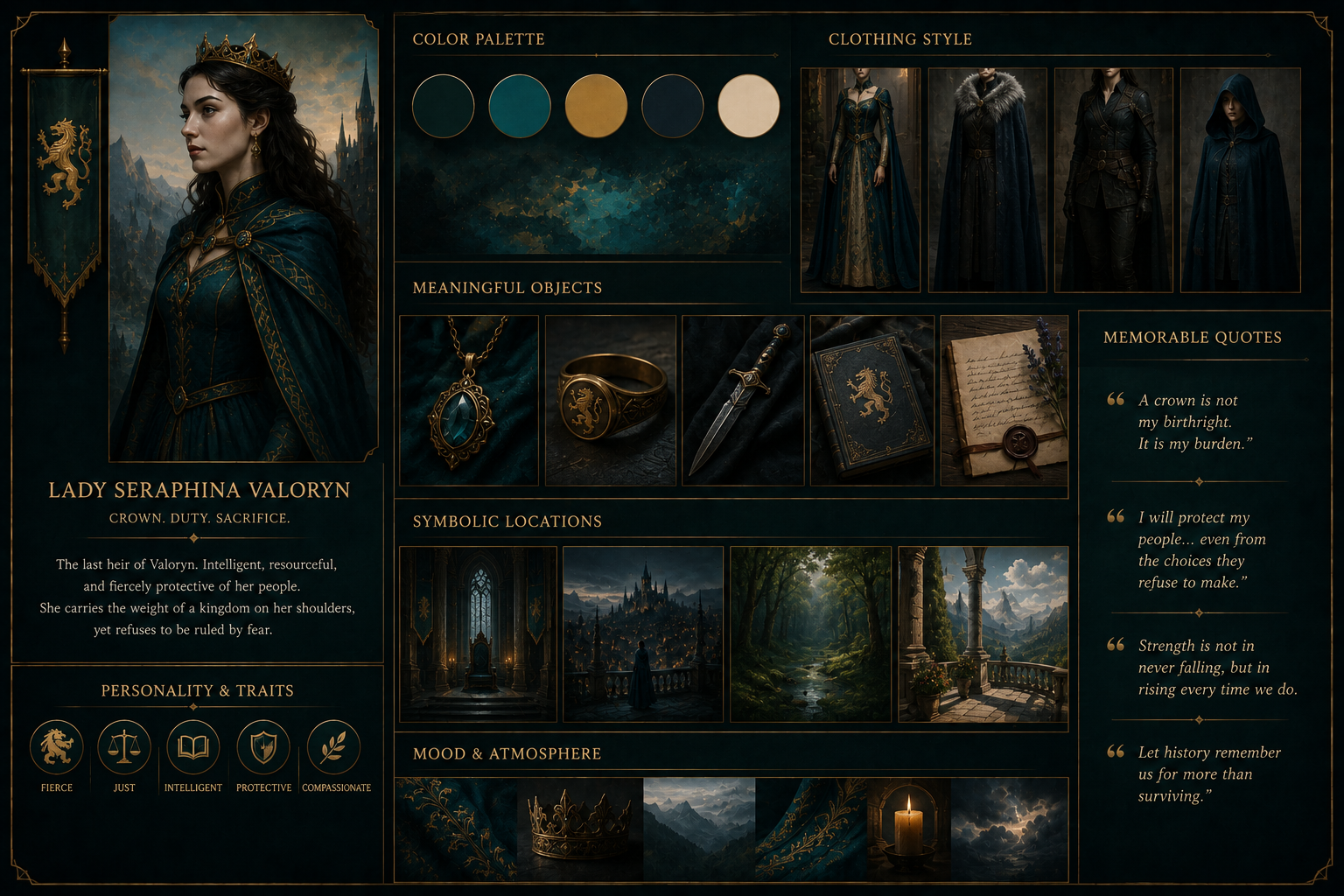
Create Character Mood Boards
Every major character has:
- favorite colors
- clothing style
- meaningful objects
- symbolic locations
- memorable quotes
Turn those elements into visual mood boards.
Fans enjoy studying the details and discussing hidden symbolism.
Build Interactive Scene Galleries
Instead of publishing a static gallery, allow readers to click on an illustration and ask:
- What’s happening here?
- Which chapter is this from?
- Why is this object important?
- What happened immediately before this scene?
AI answers without revealing unnecessary spoilers.
Generate Fantasy Travel Posters
Imagine vintage-style travel posters promoting places from your novel.
Examples:
- Visit the Floating Kingdom
- Explore the Forgotten Forest
- Spend Winter in Frosthaven
- Welcome to Ravenport
These illustrations look like collectible artwork while quietly introducing readers to your fictional world.
Why it works
Travel posters are highly shareable and can even become printable merchandise.
Create AI Wallpapers
Offer free wallpapers featuring:
- landscapes
- castles
- spaceships
- magical forests
- favorite characters
- iconic symbols
Readers keep your world on their desktop or phone long after finishing the novel.
Beautiful visuals don’t replace great storytelling—but they often become the first invitation into your fictional world.
You are an AI creative director helping fiction authors build a visual marketing campaign.
Novel genre: [genre]
Describe 25 visual assets that could promote my novel without revealing major spoilers.
Include:
- cinematic illustrations
- chapter artwork
- travel posters
- wallpapers
- character portraits
- collectible cards
- social media graphics
- AI-generated book trailers
- printable artwork
For each idea, explain where it should be used and why readers would share it.
Build a Fan Community That Markets Your Books for You
The most successful fiction authors don’t just build readership.
They build fandoms.
Fans create theories, discuss characters, design artwork, recommend books to friends, and eagerly anticipate the next release.
Artificial intelligence makes it much easier to nurture that kind of community without spending hours every day creating new content.
Launch an AI Book Club
Traditional book clubs often lose momentum after readers finish discussing the final chapter.
An AI-powered book club keeps the conversation going.
Each week, AI can generate:
- discussion questions
- character debates
- hidden clue analysis
- symbolism discussions
- predictions for future books
- writing prompts inspired by your novel
Every discussion encourages readers to revisit your world.
Why it works
Readers enjoy hearing different interpretations of the same story.
The longer those conversations continue, the more invested they become in your series.
How to build it
Upload your novel into a Claude Project and ask it to generate weekly discussion guides.
You can publish them automatically in your Facebook Group, Discord server, Circle community, or newsletter.
Create AI Fan Theory Challenges
Readers love solving mysteries.
Instead of confirming every detail yourself, invite AI to help generate discussion.
Ask readers:
- Why did this character disappear?
- What really happened before Chapter One?
- Which prophecy is still unfulfilled?
- Which clues did everyone overlook?
AI can present multiple plausible theories without claiming any of them are correct.
Why it works
Speculation keeps readers engaged between book releases.
It also encourages rereads as fans search for overlooked clues.
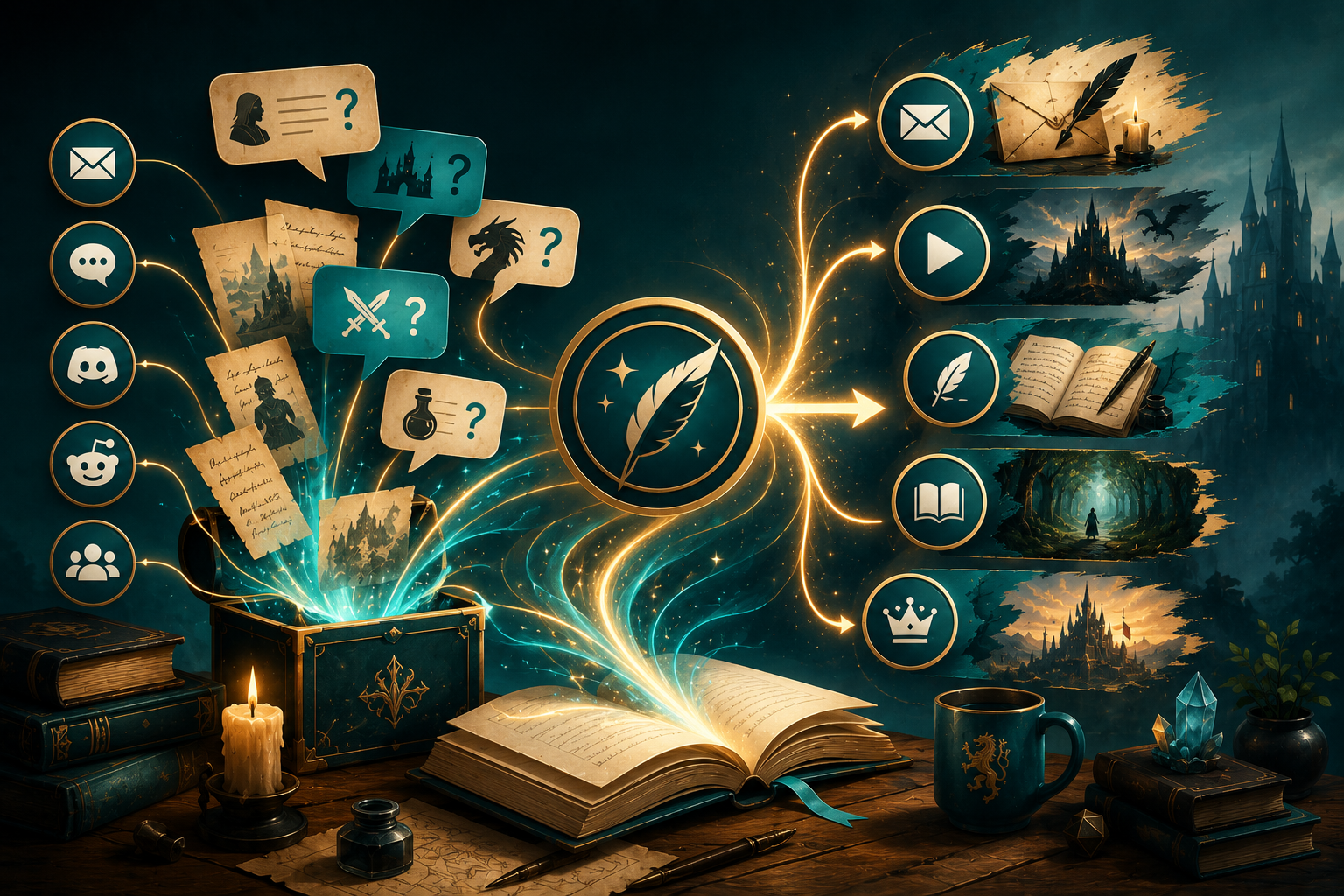
Turn Fan Questions Into New Content
Every question readers ask is a content opportunity.
Collect questions from:
- emails
- social media
- Discord
- book clubs
Then ask AI to group similar questions and suggest:
- newsletter topics
- YouTube videos
- blog posts
- bonus stories
- future novels
Instead of wondering what your audience wants, let them tell you.
Build a Reader Achievement System
Gamification encourages repeat engagement.
Readers could unlock badges such as:
- Completed Book One
- Solved the Mystery
- Lore Master
- Dragon Expert
- Royal Historian
- Character Collector
Each achievement unlocks bonus content or exclusive AI experiences.
Why it works
Readers naturally want to complete collections and compare achievements with other fans.
Create AI Reading Challenges
Instead of simply asking readers to finish your novel, guide them through a themed challenge.
Examples include:
- Seven Days in the Kingdom
- Thirty Days of Fantasy
- Detective Training Week
- Romance Reading Challenge
Each day includes:
- a reading assignment
- discussion question
- AI activity
- bonus content
Build a Community Lore Wiki
Instead of maintaining a traditional wiki yourself, allow AI to organize information contributed by readers.
Fans submit:
- theories
- timelines
- character analyses
- maps
- family trees
AI organizes everything into a searchable knowledge base while clearly separating confirmed canon from fan speculation.
Why it works
Readers enjoy contributing to something larger than themselves.
The wiki becomes another reason to revisit your website.
Generate Monthly Reader Recaps
Every month AI summarizes:
- favorite discussions
- popular theories
- fan art highlights
- interesting questions
- upcoming events
This keeps inactive readers connected without requiring them to follow every conversation.
Communities grow when readers feel like participants instead of spectators. AI helps create conversations that continue long after the final page.
You are a community strategist for fiction authors.
My novel genre: [genre]
My fictional world:
[description]
Generate a one-year engagement plan that includes:
- weekly discussion topics
- fan theory challenges
- reading challenges
- achievement badges
- AI activities
- community events
- subscriber-exclusive content
The goal is to keep readers engaged between book releases and encourage organic word-of-mouth marketing.
Turn Your Story Into Collectible Digital Experiences
Readers collect more than books.
They collect memories, artwork, favorite quotes, maps, cards, and keepsakes connected to stories they love.
Artificial intelligence makes it easier than ever to create digital collectibles that deepen emotional attachment to your fictional world.
Create AI Character Cards
Imagine beautifully illustrated collectible cards featuring:
- character portraits
- biographies
- special abilities
- memorable quotes
- hidden facts
Release them gradually throughout your series.
Fans will naturally want to collect the entire set.
Why it works
Collectibles encourage repeat visits and create anticipation for future releases.
Build a Magical Artifact Collection
Fantasy authors can showcase:
- enchanted swords
- ancient books
- magical rings
- legendary armor
- mysterious relics
Readers click an item to discover:
- its origin
- powers
- previous owners
- historical significance
The collection becomes an interactive museum.
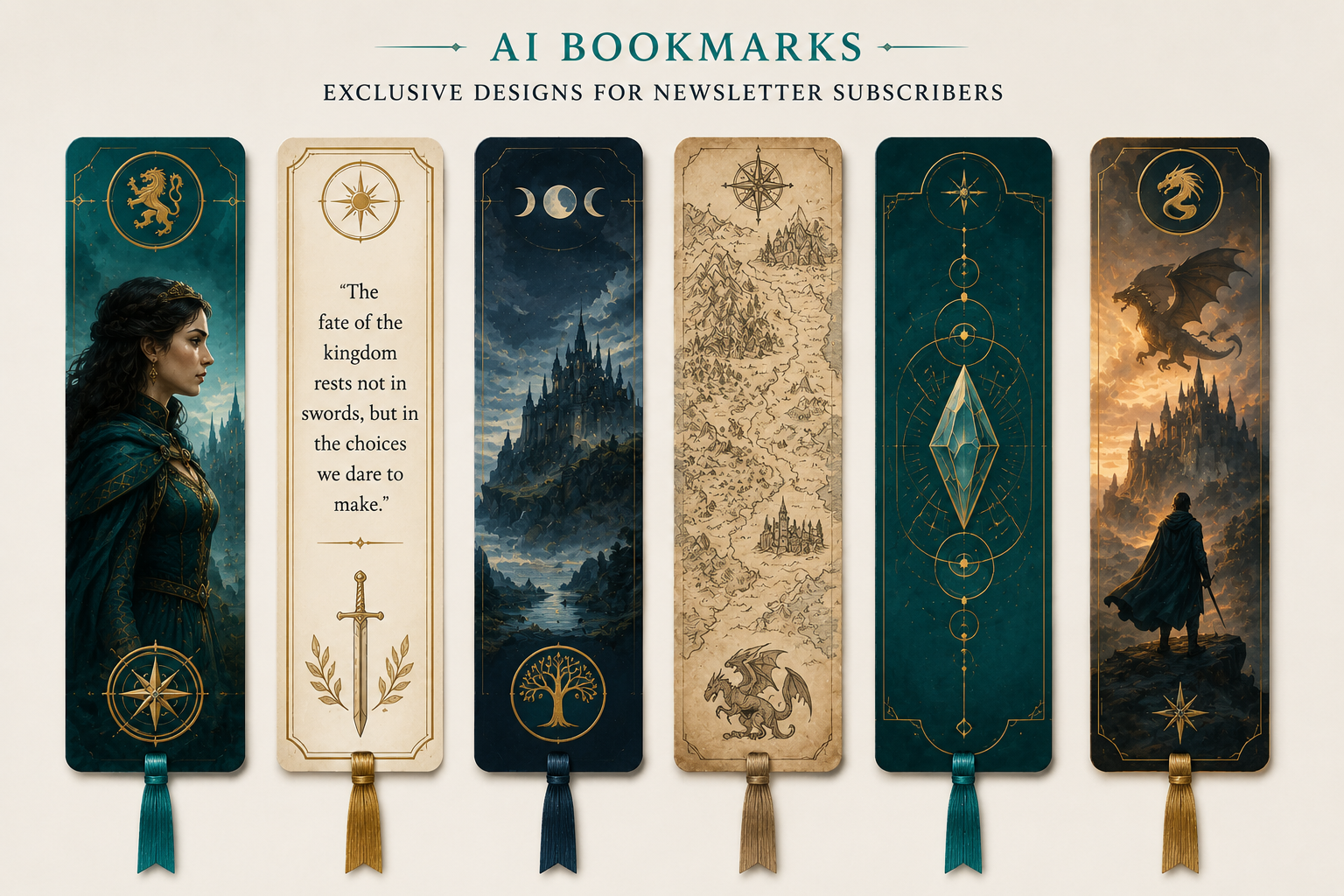
Generate AI Bookmarks
Instead of generic printable bookmarks, create personalized designs featuring:
- favorite characters
- memorable quotes
- fantasy maps
- magical symbols
- chapter artwork
Offer different versions to newsletter subscribers throughout the year.
Create Virtual Postcards
Imagine receiving a postcard from your fictional capital city.
Or a seaside village.
Or a haunted castle.
Each postcard includes:
- artwork
- local history
- weather
- traditions
- greetings from fictional residents
They feel like souvenirs from another world.
Build a Soundtrack Explorer
Music helps readers reconnect emotionally with stories.
Create playlists for:
- individual characters
- kingdoms
- relationships
- important scenes
- dramatic battles
- emotional endings
Ask AI to explain why each piece fits the atmosphere.
Offer AI Wallpaper Packs
Instead of one wallpaper, release seasonal collections.
Examples include:
- winter kingdom
- enchanted forest
- royal palace
- space station
- haunted manor
Each download reminds readers of your series every time they unlock their phone or computer.
Create AI Fortune Messages
Inspired by your fictional universe, visitors receive:
- prophecy cards
- magical fortunes
- mysterious warnings
- guild assignments
- kingdom invitations
Every result feels unique while introducing another aspect of your world.
Why it works
These bite-sized experiences are quick to share on social media and encourage repeat visits.
The most successful fictional worlds don’t exist only inside books. They spill into artwork, collectibles, conversations, and memorable experiences readers enjoy long after finishing the story.
You are an experience designer for fiction authors.
Based on my novel, generate 25 collectible digital experiences readers would love.
Include:
- character cards
- magical artifacts
- virtual postcards
- bookmarks
- wallpapers
- soundtrack ideas
- collectible maps
- fortune generators
- digital souvenirs
Explain how each collectible can help grow my audience and encourage readers to recommend the series.
Launch Your Fiction Book With AI
Book launches don’t have to begin on release day.
Some of the most successful fiction book launches start months earlier by inviting readers into the story long before the book becomes available.
Instead of repeatedly posting “My book is coming soon,” use AI to create experiences that gradually build curiosity and anticipation.
Reveal Your Characters One by One
Instead of announcing your entire cast at once, introduce them gradually.
Each reveal could include:
- an AI-generated portrait
- a short biography
- favorite quote
- personality profile
- strengths and flaws
- a question readers can ask the character
Every reveal gives readers another reason to follow your launch.
Why it works
Readers become emotionally invested in the characters before they even begin reading.
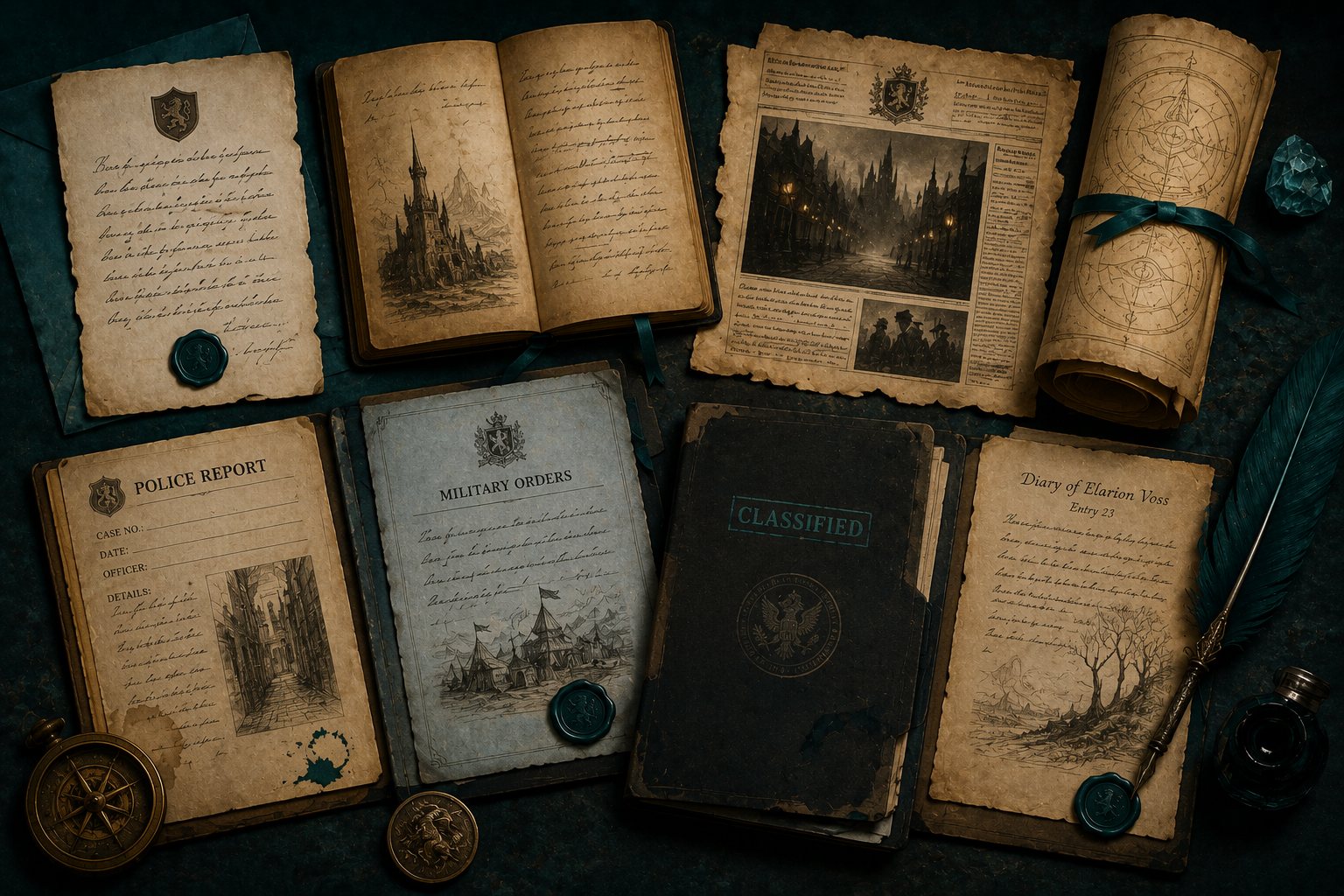
Release Hidden Documents
Every fictional world contains information readers never see.
Examples include:
- ancient letters
- diary entries
- newspaper articles
- police reports
- military orders
- magical scrolls
- classified government files
Publish one document every week before launch.
Each one hints at the story without giving away the plot.
How to build it
Use Claude to generate believable supporting documents based on your world-building notes.
Review everything carefully to ensure it remains consistent with your novel.
Let Readers Explore Chapter One With AI
Instead of offering a standard sample chapter, create an interactive version.
Readers can ask:
- Who is this character?
- Why is this place important?
- What’s the significance of this symbol?
- Should I pay attention to this conversation?
The AI answers without spoiling future chapters.
Why it works
Readers become more engaged with the sample and are more likely to continue reading.
Build a Countdown Story
Instead of posting a daily countdown graphic, publish one new piece of your fictional world every day before launch.
Examples include:
- character introductions
- location artwork
- mysterious objects
- world history
- magical creatures
- newspaper headlines
- clues
- prophecies
Each post becomes another piece of the puzzle.
Turn ARC Readers Into Detectives
Instead of simply asking advance readers to leave reviews, invite them to solve exclusive mysteries hidden throughout the novel.
Examples:
- Find five hidden symbols.
- Identify every clue about the villain.
- Spot historical references.
- Discover secret messages.
Readers become much more engaged and often produce richer reviews.
Why it works
People remember experiences more than instructions.
Turning your ARC campaign into a game encourages deeper reading.
Create an AI Launch Assistant
Imagine a chatbot that helps visitors decide:
- which book to start with
- reading order
- whether your series fits their interests
- which characters they’ll probably enjoy
- whether the book contains tropes they like
The assistant quietly recommends your novels without sounding like a salesperson.
Generate Personalized Reading Guides
Not every reader enjoys fiction in the same way.
Some love romance.
Others enjoy political intrigue.
Others read mainly for world-building.
Ask readers what they enjoy most.
AI recommends:
- which chapters deserve closer attention
- recurring themes
- hidden details
- bonus content
- companion resources
Every reader receives a slightly different experience.
The best fiction book launches don’t simply announce a new novel. They invite readers to step into a new world before publication day ever arrives.
You are an AI launch strategist specializing in fiction books.
I’m launching a [genre] novel titled “[Book Title]” in [number] days.
Create a complete launch campaign that builds anticipation through storytelling rather than traditional advertising.
Include:
- weekly teaser ideas
- AI-powered reader experiences
- social media campaigns
- interactive website features
- newsletter content
- ARC reader engagement ideas
- launch week activities
- post-launch reader retention strategies
Focus on creating excitement without revealing major spoilers.
Automate Your Fiction Book Marketing With AI
Marketing your novel shouldn’t stop because you’re busy writing the next one.
Artificial intelligence can automate many repetitive marketing tasks while allowing you to focus on creating new stories.
The goal isn’t to remove yourself from the process.
It’s to eliminate work that doesn’t require your creativity.
Turn Every Blog Post Into Weeks of Content
Whenever you publish a new article, AI can automatically generate:
- Instagram captions
- Facebook posts
- Pinterest descriptions
- LinkedIn updates
- X threads
- newsletter summaries
One article becomes content for multiple platforms.
Why it works
Readers discover books in different places.
Repurposing content increases your visibility without multiplying your workload.
Monitor Book Trends Automatically
Instead of checking dozens of websites every morning, create an AI workflow that monitors:
- publishing news
- BookTok trends
- popular tropes
- genre discussions
- bestseller movements
- new releases
- competitor launches
AI summarizes the updates and suggests ways to connect them to your books.
How to build it
Create Google Alerts or subscribe to RSS feeds for your genre, popular tropes, competitor authors, and publishing news. Then use Zapier or Make to send new articles to ChatGPT or Claude, which can summarize the news and suggest content ideas related to your books. Instead of checking dozens of websites every day, you’ll receive a curated digest with actionable marketing ideas in your inbox.
Generate Social Media Ideas Automatically
Many authors struggle with consistency.
AI can monitor your:
- website
- newsletter
- book launches
- blog posts
- reader questions
Then generate fresh social media ideas every week based on your existing content.
Analyze Reader Reviews
Reviews contain valuable information beyond star ratings.
Ask AI to identify:
- favorite characters
- emotional moments
- recurring complaints
- unanswered questions
- frequently quoted scenes
Use those insights to improve future books and marketing campaigns.
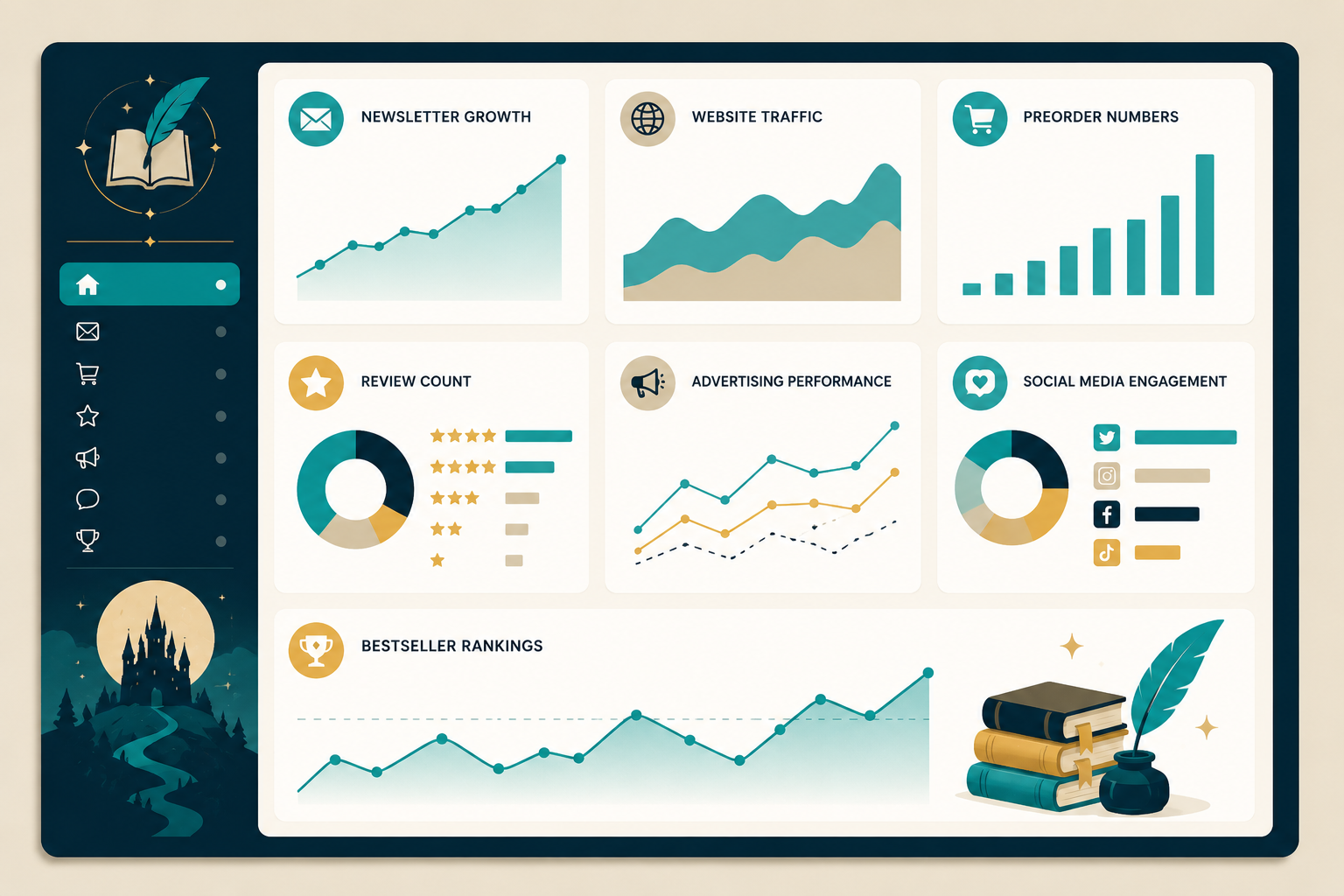
Build a Fiction Marketing Dashboard
Instead of opening ten different websites, create one dashboard displaying:
- newsletter growth
- website traffic
- preorder numbers
- review count
- advertising performance
- social media engagement
- bestseller rankings
Review everything from one place before deciding what to do next.
How to build it
Claude Code, Cursor, Codex, or Lovable can help build a simple dashboard that combines information from your website, newsletter, analytics, and advertising platforms.
Start small.
You can always expand it later.
Create Your Own AI Marketing Assistant
Imagine beginning every morning by asking:
“What should I work on today?”
Your assistant reviews:
- your content calendar
- launch schedule
- unfinished marketing tasks
- website traffic
- newsletter performance
- upcoming events
Then recommends the highest-impact activity for the day.
Instead of replacing your judgment, AI helps you focus on what matters most.
One of the best marketing ideas for fiction authors is to automate repetitive tasks so you can spend more time writing stories readers will love.
You are an AI automation consultant for fiction authors.
I market my novels using:
- website
- newsletter
- TikTok
- Amazon
- Goodreads
Design automated workflows that save time while increasing reader engagement.
Include:
- content automation
- reader segmentation
- review analysis
- trend monitoring
- launch automation
- newsletter workflows
- AI assistants
- dashboard ideas
Recommend beginner-friendly tools first, followed by more advanced solutions for growing author businesses.
The Future of AI Marketing for Fiction Authors
Artificial intelligence is changing much more than how authors write.
It’s changing how readers experience stories.
In the next few years, fiction marketing will become increasingly interactive, personalized, and conversational.
Instead of promoting books with static advertisements, authors will build living story worlds that readers can explore long after the final page.
AI companions will remember favorite characters.
Interactive maps will respond to questions.
Voice assistants will tell stories from different perspectives.
Readers won’t simply consume novels.
They’ll participate in them.
Perhaps the biggest opportunity is that independent authors now have access to technologies that were once available only to major publishers and game studios.
You don’t need a large team to build memorable reader experiences.
You simply need a compelling story and the willingness to experiment.
The future of fiction book marketing isn’t about creating more advertisements. It’s about creating richer worlds that readers never want to leave.
Conclusion
Great fiction has always been immersive.
Artificial intelligence simply gives authors new ways to extend that immersion beyond the final page.
Instead of thinking about AI as another content creation tool, think about it as a bridge between your readers and your fictional world.
Your characters can answer questions.
Your kingdoms can be explored.
Your maps can become interactive.
Your readers can receive personalized adventures, quizzes, collectibles, and story companions that keep them engaged between books.
Not every idea in this guide requires custom software.
Many can be created using tools you already know, including ChatGPT, Claude, AI image generators, and no-code platforms.
Start with one experiment.
Watch how your readers respond.
Then build the next experience.
The authors who stand out over the next decade won’t necessarily publish the fastest.
They’ll create fictional worlds readers never want to leave.
The best marketing ideas for fiction authors don’t interrupt the story—they continue it.