Most articles about AI book marketing focus on helping you create content faster.
They’ll tell you to use AI to write social media posts, blog articles, email newsletters, or ad copy.
That’s useful—but it’s also becoming the norm.
The real opportunity isn’t using AI to produce more content.
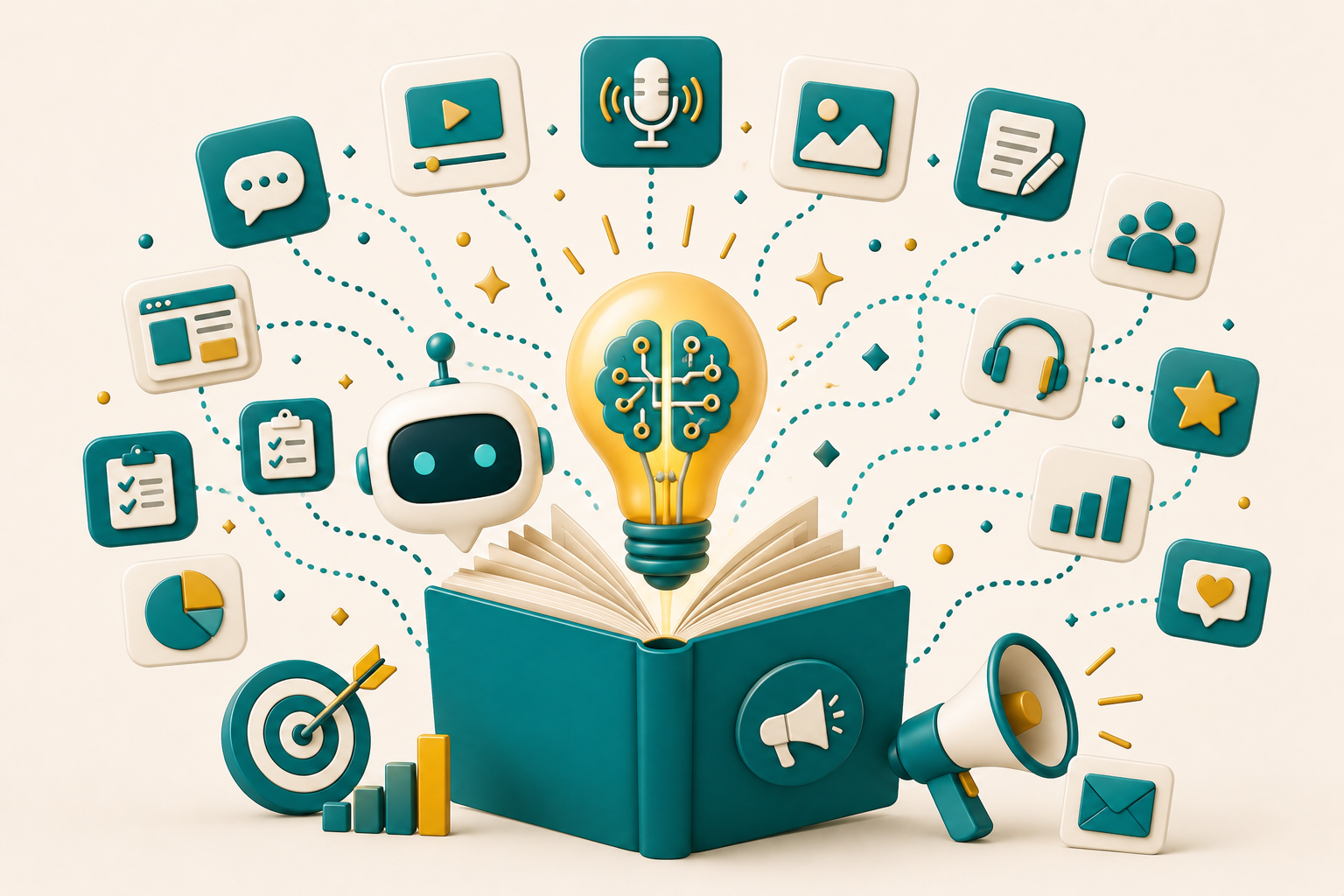
It’s using AI to create experiences that make your book more valuable, more memorable, and more useful long after readers finish the final chapter.
Imagine letting readers chat with your book instead of downloading a PDF.
Imagine generating a personalized implementation plan based on their goals.
Imagine creating an AI coach, a diagnostic quiz, or an interactive workbook built around your framework.
These aren’t futuristic ideas.
Most of them can be built today using existing AI tools—often without writing much code.
Some ideas in this guide take less than an hour to prototype. Others could become premium lead magnets, paid products, or even standalone SaaS businesses built around your book.
Don’t think of this as a checklist. Think of it as an idea library. You don’t need all ideas. You only need one that makes your book stand out from thousands of others.
The authors who benefit most from AI won’t be the ones who publish the most content. They’ll be the ones who create the most valuable experiences around their books.
Turn Your Book Into an Interactive Experience
Most nonfiction books solve problems only while readers are actively reading them.
Once the book goes back onto the shelf, it’s easy to forget frameworks, exercises, and action steps.
AI changes that.
Instead of treating your book as the final product, treat it as the knowledge base behind a collection of interactive tools that help readers continue applying your ideas.
Every interaction becomes another reason to revisit your website instead of ending the relationship on Amazon.
Let Readers Chat With Your Book
Instead of searching through the table of contents, readers simply ask questions.
Examples:
- Which chapter is most relevant if I’m just getting started?
- How would this framework apply to my business?
- Can you summarize the process from Chapter 6?
- Which exercise should I complete first?
The assistant answers using your own frameworks while pointing readers back to relevant chapters for deeper context.
Why it works
Readers rarely remember every detail after reading a book once. A conversational assistant makes your expertise available exactly when they need it.
How to build it
Simple version
Upload your manuscript into a Claude Project or create a Custom GPT using your book as its knowledge base.
Website version
Ask Claude Code, Codex, Cursor or Lovable to build a searchable AI chat connected to your manuscript.
Start simple. You can always add more functionality later.
You are an AI product designer specializing in educational tools for authors.
Help me design an AI assistant that lets readers chat with my nonfiction book.
Book topic: [topic]
Target audience: [audience]
The assistant should:
- answer questions using only the information contained in my book
- recommend relevant chapters for further reading
- provide practical examples without inventing new frameworks
- encourage readers to continue reading instead of replacing the book
Also suggest:
- the minimum viable version I could build this weekend
- recommended tools (Claude Projects, Claude Code, Codex, Cursor, Lovable, Bolt.new, etc.)
- possible premium features for future versions.
Replace Your PDF Workbook With an AI Workbook
Traditional worksheets ask every reader exactly the same questions.
AI can generate completely different exercises based on each person’s experience, goals, or current challenges.
A beginner receives simpler tasks.
An experienced reader receives more advanced exercises.
The workbook becomes personalized rather than static.
Why it works
Personalized guidance feels significantly more valuable than downloading another PDF that looks like every other workbook online.
How to build it
Start with a simple web form asking readers five to ten questions.
Send those answers to Claude or ChatGPT to generate customized worksheets based on your framework.
No-code automation tools can handle the first version. If demand grows, you can later build a dedicated web application.
Turn Your Book Into an AI Coach
Many readers know what they should do.
Their problem is staying consistent.
Instead of creating another online course, build an AI coach that checks in regularly, asks about progress, celebrates wins, and recommends the next exercise or chapter.
The goal isn’t to replace coaching.
It’s to make implementation easier.
Why it works
Readers buy nonfiction books because they want results—not information. A coaching assistant helps bridge the gap between learning and taking action.
How to build it
Create a Claude Project that remembers previous conversations or ask Claude Code to build a simple coaching dashboard where readers can track progress over time.
Recommend a Personalized Reading Path
Not everyone should read your book in the same order.
Someone already familiar with the basics might benefit from your advanced chapters first.
Someone struggling with a specific challenge may only need three chapters instead of reading the entire book immediately.
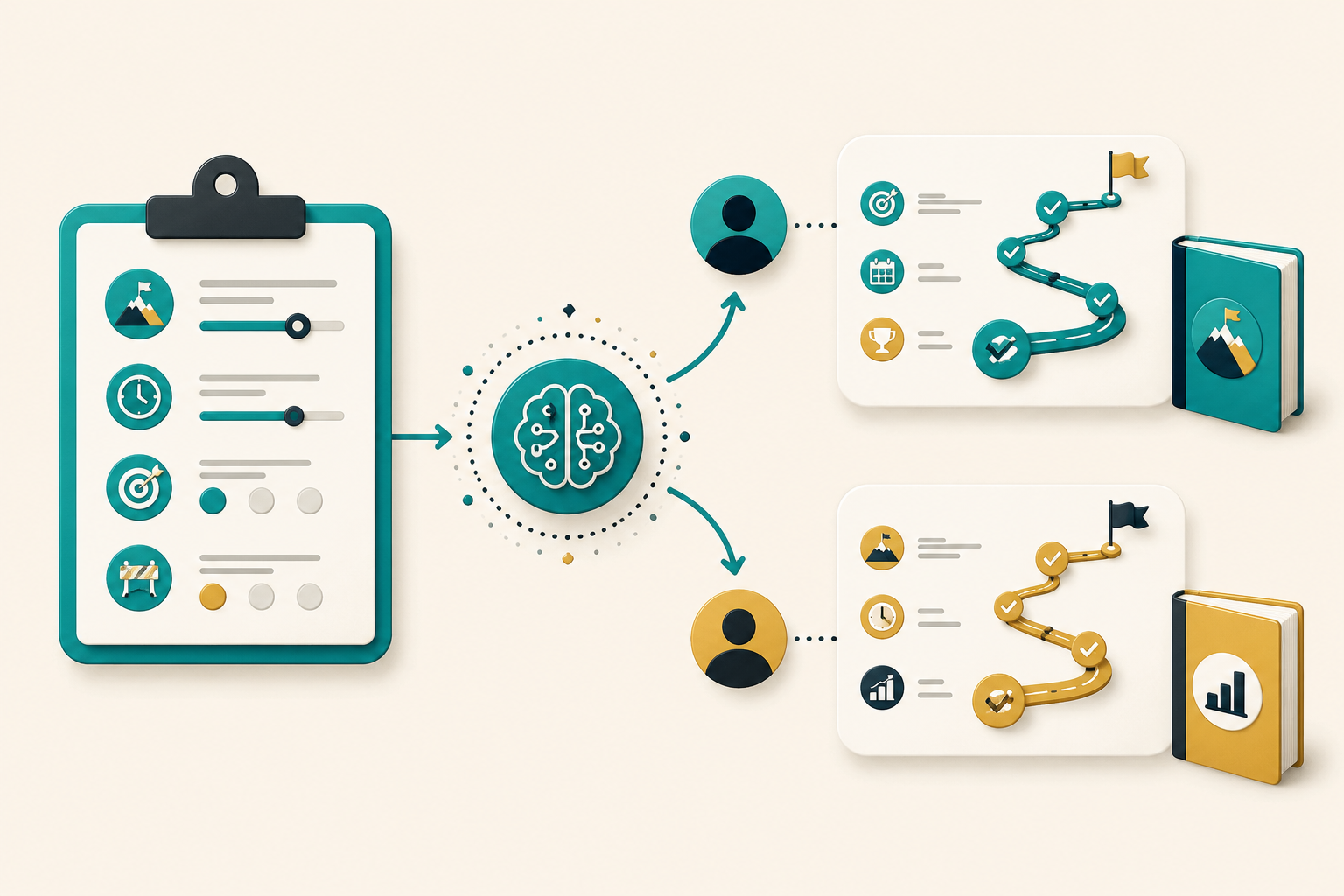
Ask readers a few diagnostic questions and generate a personalized roadmap through your content.
Why it works
Personalization reduces overwhelm and helps readers see faster results because they’re focusing on the sections most relevant to their situation.
How to build it
Create a short assessment using Typeform, Tally, or Fillout.
Use AI to analyze the responses and recommend:
- chapters
- worksheets
- bonus resources
- implementation order
Don’t ask yourself how AI can help readers consume your book. Ask how it can help them implement it.
Replace Traditional Lead Magnets With AI Tools
Most lead magnets look exactly the same.
Download the PDF.
Get the checklist.
Receive the workbook.
The problem is that everyone gets exactly the same resource, regardless of their experience, goals, or challenges.
AI allows you to replace static downloads with personalized tools that generate unique results for every visitor. These experiences are more engaging, more memorable, and give people a stronger reason to subscribe to your email list.
Create an AI Action Plan Generator
Instead of offering a generic “30-Day Action Plan” PDF, ask visitors a few questions about where they are today and where they want to be.
For example:
- What’s your biggest challenge?
- How much time can you dedicate each week?
- What’s your primary goal?
- What’s stopping you from making progress?
AI then generates a personalized action plan based on your book’s framework.
Two readers receive two different roadmaps.
Why it works
People are much more likely to follow a plan that feels written specifically for them.
Instead of becoming another forgotten download, the action plan immediately feels practical and relevant.
How to build it
You don’t need custom software.
An MVP can be built using:
- Typeform, Tally, or Fillout
- Make or Zapier
- Claude or ChatGPT
If you want a polished version for your website, ask Claude Code or Codex:
Build a web application that asks visitors five questions and generates a personalized 30-day implementation plan based on my nonfiction book. Include a PDF export, email delivery, and progress tracker.
Replace Quizzes With AI Assessments
Traditional quizzes end with something like:
“You scored 7 out of 10.”
That’s not particularly useful.
AI can explain why someone received that score and recommend exactly what they should do next.
Imagine finishing the assessment with:
Based on your answers, your biggest obstacle isn’t productivity—it’s prioritization. Start with Chapters 2 and 5, complete Worksheet 3, and focus on reducing context switching before introducing new productivity systems.
Suddenly, your assessment becomes coaching.
Why it works
Readers don’t care about a score.
They care about understanding themselves and discovering the fastest path to improvement.
How to build it
Start with any quiz platform.
Instead of displaying static results, send responses to Claude or ChatGPT for analysis and personalized recommendations.
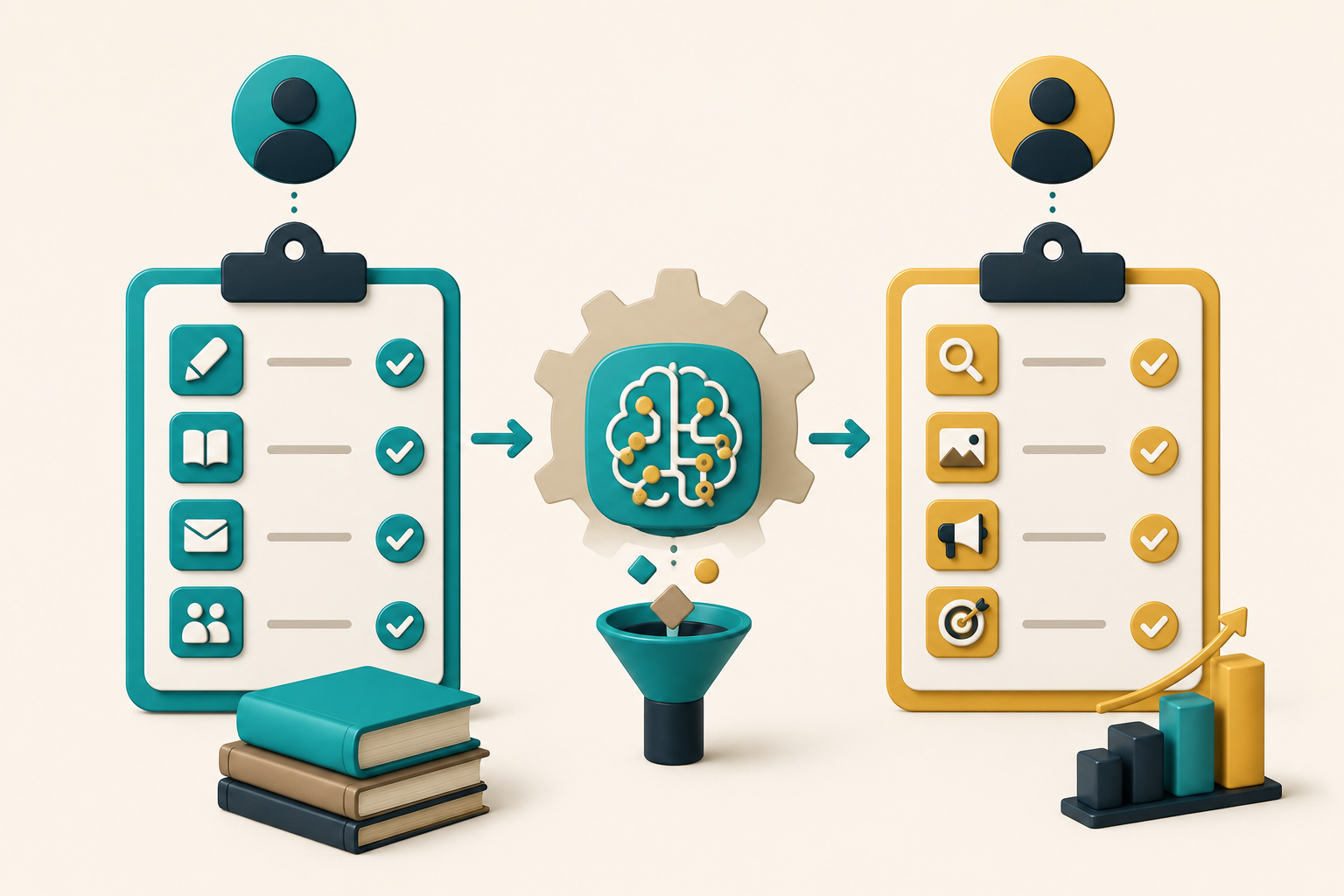
Generate Personalized Checklists
Most checklists contain the same steps for everyone.
AI can remove irrelevant tasks and add missing ones.
For example:
A first-time author might receive:
- Finish editing
- Order a proof copy
- Build an email list
- Recruit launch team
An experienced publisher might receive:
- Refresh keywords
- Update A+ Content
- Cross-promote backlist
- Relaunch Amazon Ads
The checklist becomes significantly more valuable because it reflects the reader’s situation.
Build an AI Resource Library
Instead of giving readers a page of links, let AI recommend resources based on their goals.
For example:
“I’m writing my first business book.”
AI recommends:
- three relevant chapters
- your best blog posts
- useful templates
- recommended software
- podcasts
- YouTube tutorials
Another reader interested in memoir writing receives an entirely different resource collection.
Why it works
Readers no longer have to search through dozens of articles.
The most relevant resources find them.
Create an AI Book Recommendation Engine
Most authors recommend the same five books to everyone.
AI can recommend different books depending on the visitor’s experience.
For example:
- A beginner entrepreneur receives introductory reading.
- An experienced founder receives advanced strategy books.
Every recommendation can include a short explanation of why it’s relevant.
Over time, this positions you as a curator of knowledge—not just the author of one book.
Turn Your Framework Into an AI Planner
Many nonfiction books introduce excellent systems but leave readers wondering:
“How do I actually fit this into my week?”
An AI planner can build a personalized schedule using your framework.
The reader enters:
- available hours
- priorities
- deadlines
- existing commitments
The planner generates a realistic weekly implementation plan.
How to build it
Prompt Claude Code or Codex:
Build a planner that combines calendar availability with my book framework to generate a realistic weekly action plan. Users should be able to adjust priorities and regenerate the schedule whenever circumstances change.
Build an AI Progress Tracker
Imagine readers returning every week to measure their progress.
Instead of simply ticking completed tasks, AI analyzes trends.
For example:
- consistency has improved
- motivation dropped during Week 3
- goal is likely to be achieved ahead of schedule
The tracker also recommends which chapter to revisit whenever progress stalls.
This transforms your book into an ongoing companion rather than a one-time purchase.
Create a Personalized Book Dashboard
Imagine a private dashboard every reader receives after downloading your lead magnet.
It could include:
- current progress
- completed exercises
- saved notes
- recommended chapters
- AI coach
- action plan
- weekly goals
Every return visit strengthens the relationship between the reader and your content.
The best lead magnets don’t simply collect email addresses—they solve an immediate problem so effectively that readers naturally want to come back for more.
I’m an author who wants to replace traditional lead magnets with AI-powered experiences.
My nonfiction book teaches: [topic]
My audience: [describe your readers]
Generate 10 interactive lead magnet ideas that provide personalized value instead of static PDFs.
For each idea, include:
- what information the visitor should provide
- what AI should generate
- recommended implementation tools
- whether it works best as a free lead magnet, premium bonus, or paid product
- one feature that would make readers return multiple times instead of using it once.
Turn One Chapter Into 50 Pieces of Marketing Content
One of the biggest myths in book marketing is that you constantly need fresh content.
You don’t.
Most authors already have hundreds of content ideas sitting inside their manuscript. They simply haven’t repurposed them yet.
Instead of asking AI to generate random social media posts, use it to extract, reorganize, and adapt the knowledge you’ve already created.
One well-written chapter can become months of marketing content.
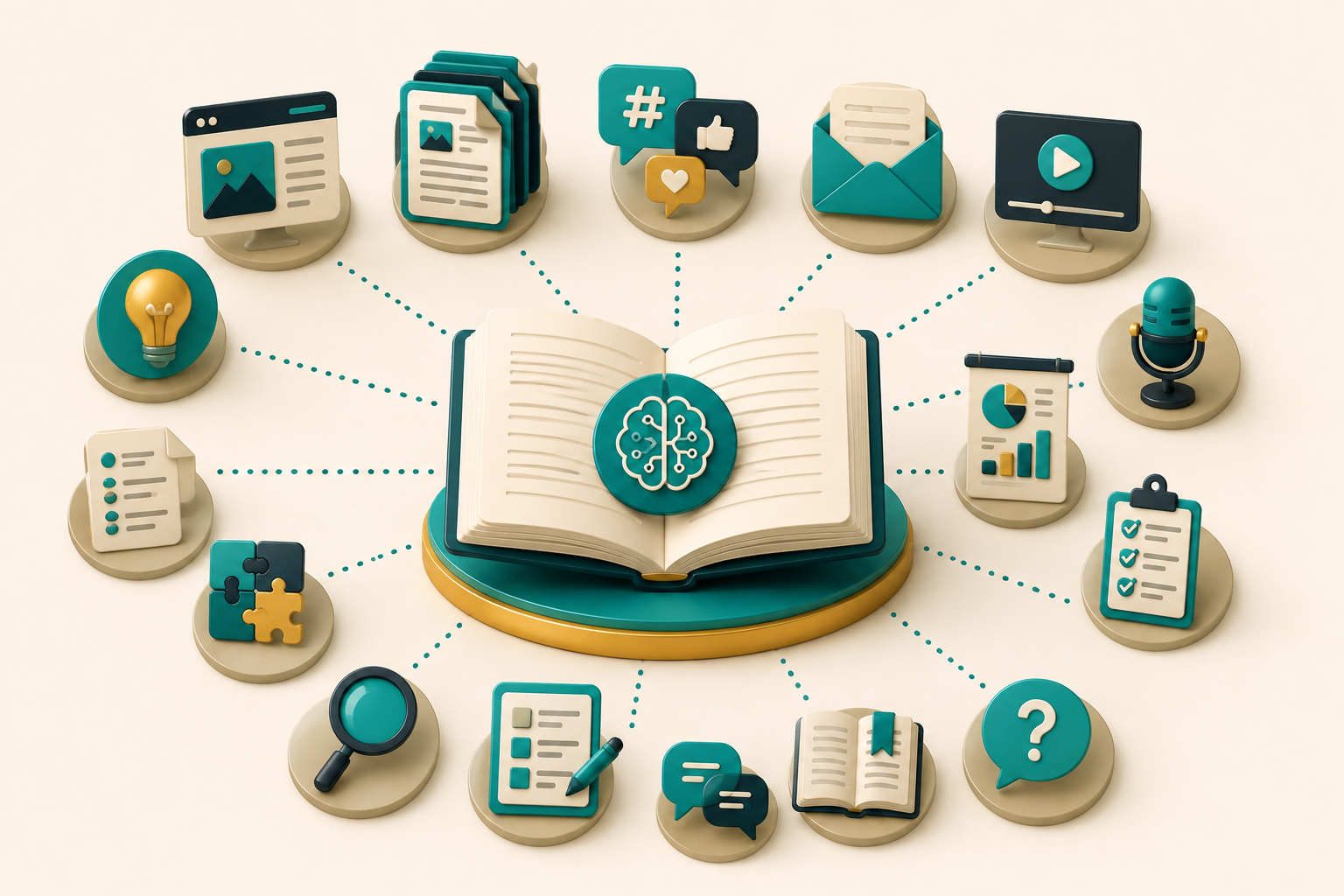
Turn Every Chapter Into a Complete Content Campaign
Instead of publishing one article about Chapter 4, ask AI to identify every piece of standalone value hidden inside it.
For example, one chapter could become:
- a long-form blog post
- five LinkedIn articles
- ten social media posts
- an email newsletter
- a YouTube script
- a podcast outline
- an infographic
- a webinar presentation
- a downloadable checklist
- five AI prompts
- a FAQ page
- a glossary
- a quiz
- discussion questions for a book club
- an interactive worksheet
The goal isn’t to repeat the same information.
It’s to present the same idea in formats that different people prefer to consume.
Why it works
Readers rarely discover your book through a single channel.
Someone may first encounter a LinkedIn post, then watch your YouTube video, subscribe to your newsletter, and finally buy your book several weeks later.
Repurposing increases the number of opportunities readers have to discover your work.
How to build it
Claude excels at breaking large chapters into multiple content assets because it can analyze long documents without losing context.
Simply upload your manuscript and ask Claude to identify every topic that could stand on its own.
For even faster workflows, create a Claude Project containing your entire book so every future prompt automatically understands your framework.
Generate Platform-Specific Content
The same post shouldn’t appear everywhere.
- LinkedIn readers expect professional insights.
- Instagram users prefer visuals.
- YouTube viewers expect demonstrations.
- Reddit communities value detailed discussions.
Instead of copying content across every platform, ask AI to adapt your ideas for the audience you’re trying to reach.
For example:
A chapter about productivity could become:
- a practical LinkedIn carousel
- a story-driven Facebook post
- a controversial X thread
- an educational YouTube video
- a Reddit discussion starter
- an infographic for Pinterest
The message stays the same.
Only the presentation changes.
Turn Stories Into Marketing Assets
Many nonfiction books contain stories that deserve a much longer life than a single chapter.
AI can help you identify stories suitable for:
- newsletter introductions
- keynote speeches
- podcast interviews
- social media posts
- YouTube videos
- landing pages
Personal stories usually outperform generic advice because they’re memorable and emotionally engaging.
Instead of asking AI to invent stories, ask it to identify the strongest stories you’ve already written.
Create Content Series Instead of Individual Posts
Most authors think one post at a time.
Think in series.
Instead of publishing:
“5 Productivity Tips”
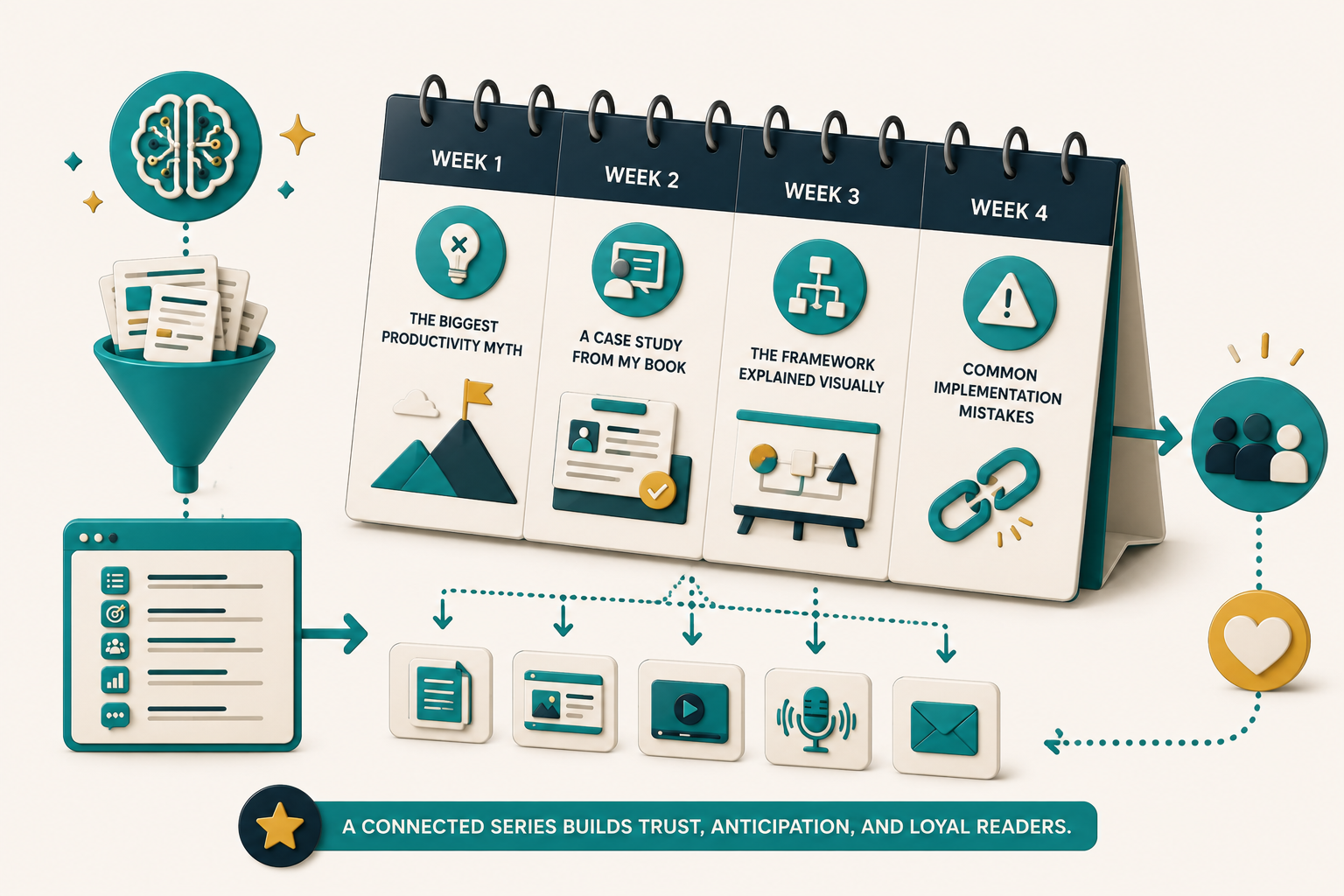
Create an entire month of connected content.
For example:
Week 1:
The biggest productivity myth.
Week 2:
A case study from your book.
Week 3:
The framework explained visually.
Week 4:
Common implementation mistakes.
Readers begin looking forward to the next installment.
AI can outline an entire series in minutes.
Let AI Discover Hidden Topics
Sometimes the best content ideas aren’t obvious.
Upload your manuscript and ask AI questions like:
- Which ideas deserve their own article?
- Which stories could become podcast episodes?
- Which sections would work well as YouTube tutorials?
- Which framework deserves a downloadable worksheet?
- Which concepts would generate discussion on LinkedIn?
You’ll often discover opportunities you overlooked while writing.
Generate Frequently Asked Questions
Every nonfiction book answers questions.
Many of those questions also make excellent marketing content.
AI can identify questions hidden inside your manuscript and rewrite them as:
- Google-friendly FAQs
- blog articles
- newsletter topics
- YouTube Q&A videos
- podcast episodes
This creates highly searchable content while reinforcing the ideas from your book.
Build a Year-Long Content Calendar
Instead of wondering what to post every week, let AI build an editorial calendar directly from your manuscript.
It can organize content by:
- season
- audience
- platform
- product launch
- holidays
- industry events
A single book often contains enough material for six to twelve months of consistent publishing.
How to build it
Upload your manuscript into Claude and ask it to organize your ideas into a 52-week publishing calendar.
For an even more automated workflow, ask Claude Code or Codex to build a simple dashboard where you can browse chapter ideas, schedule posts, and track what has already been published.
Create Interactive Versions of Your Best Frameworks
Lists become calculators.
Worksheets become planners.
Decision trees become interactive tools.
If your book introduces a framework that readers repeatedly apply, consider turning it into an AI-powered web application.
For example:
A marketing framework could become a strategy generator.
A budgeting method could become a financial planner.
A writing framework could become an AI writing assistant.
Interactive tools naturally attract backlinks, encourage sharing, and give readers a reason to revisit your website long after finishing the book.
Don’t ask AI to create more content. Ask it to extract every possible content asset from the expertise you’ve already written.
You are a content repurposing strategist for nonfiction authors.
Analyze the following book chapter and create a complete multi-platform content campaign.
Chapter topic: [describe the chapter]
Target audience: [audience]
Generate:
- 10 SEO blog article ideas
- 10 LinkedIn posts
- 10 X (Twitter) posts
- 5 newsletter topics
- 5 YouTube video ideas
- 3 podcast episode outlines
- 5 downloadable lead magnets
- 10 FAQ questions readers might search for on Google
- 5 interactive AI tool ideas based on the chapter
- a 30-day publishing schedule showing the best order to publish everything
Prioritize practical content that teaches first and naturally encourages readers to discover my book.
Create Personalized Marketing That Feels Like Magic
Most book marketing treats every visitor exactly the same.
The same landing page.
The same book description.
The same email.
The same lead magnet.
But your readers aren’t the same.
A first-time entrepreneur doesn’t have the same questions as someone running a seven-figure business. A new author has different concerns than someone publishing their tenth book.
AI makes it possible to personalize your marketing automatically.
Instead of asking, “How can I get more visitors?” ask, “How can I make every visitor feel like this book was written specifically for them?”
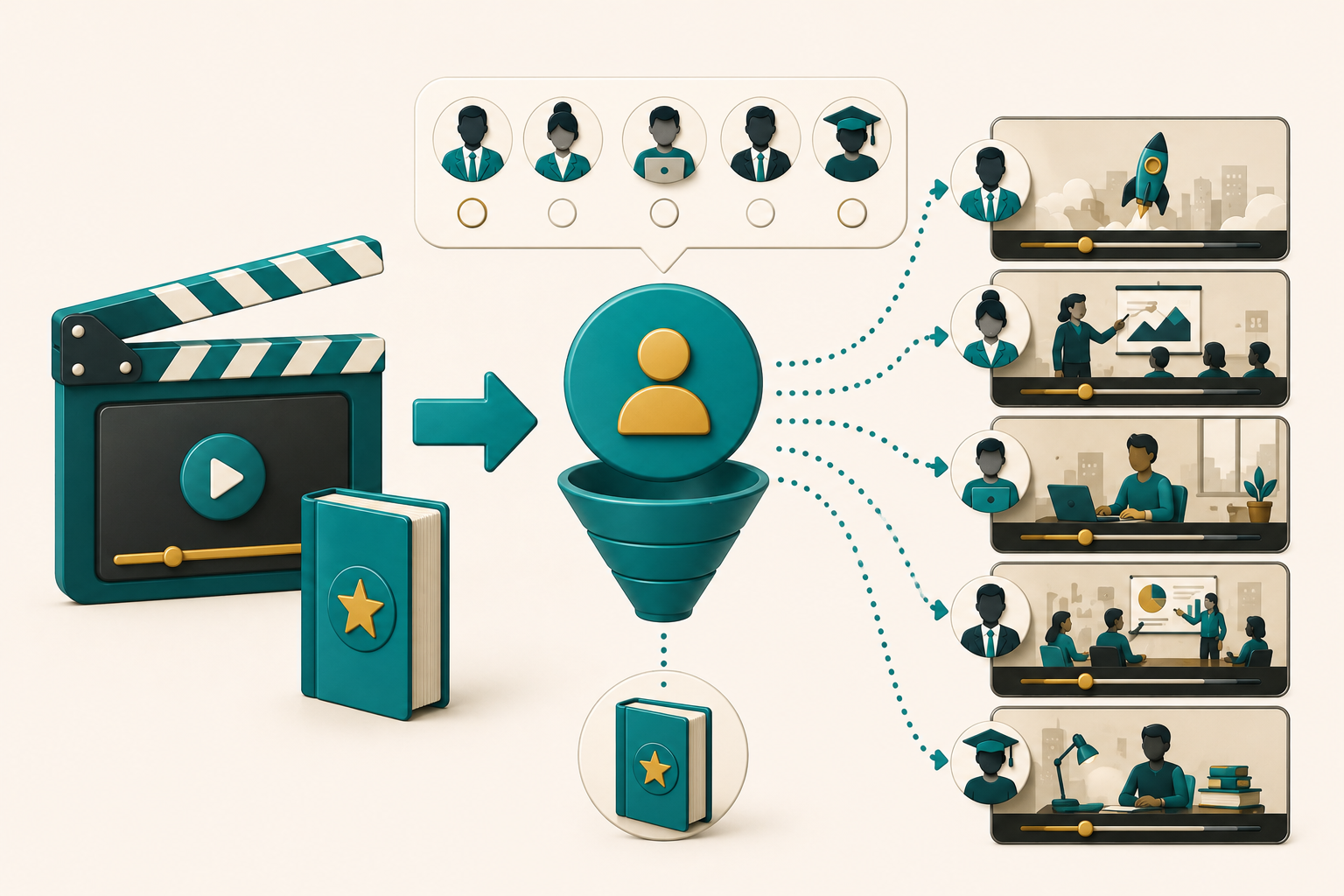
Generate Personalized Book Trailers
Most book trailers are identical for everyone.
Imagine something different.
When visitors arrive on your website, ask one simple question:
Who are you?
- Entrepreneur
- Coach
- Freelancer
- Manager
- Student
Each answer plays a different version of your book trailer.
The examples change.
The pain points change.
The success stories change.
The ending remains the same—your book.
Why it works
People immediately pay attention when they see themselves reflected in your marketing.
A personalized trailer feels far more relevant than a generic one.
How to build it
Create several AI-generated videos using tools like Veo, Runway, Pika, or Kling.
Then ask Claude Code or Codex to build a landing page that displays different videos based on the visitor’s selection.
Create Personalized Landing Pages
Why send everyone to exactly the same page?
Instead, create variations for different audiences.
For example:
For entrepreneurs
Focus on increasing revenue.
For consultants
Focus on attracting clients.
For coaches
Focus on building authority.
The book remains identical.
Only the messaging changes.
Even changing the headline, testimonials, and examples can dramatically improve conversion rates.
Let AI Rewrite Your Sales Copy
Your Amazon description isn’t the only version you should have.
Generate different versions for:
- LinkedIn visitors
- podcast listeners
- newsletter subscribers
- conference attendees
- cold traffic
- warm audiences
Each audience has different motivations.
AI can adapt your messaging without changing your core promise.
Recommend Different Bonuses
Not every reader values the same bonus.
Instead of giving everyone one downloadable PDF, let AI recommend bonuses based on their goals.
Examples:
Someone writing their first book receives:
- publishing checklist
- editing guide
- launch timeline
Someone already publishing regularly receives:
- AI workflow
- marketing templates
- automation ideas
The bonus becomes another personalized experience.
Create Personalized Email Sequences
Imagine two subscribers joining your newsletter.
One wants help writing a nonfiction book.
The other wants help marketing an existing one.
Should they receive exactly the same emails?
Probably not.
Instead, ask one or two onboarding questions.
AI can place subscribers into different educational journeys while keeping the experience personal.
How to build it
Most modern email platforms allow segmentation.
Combine that with Claude or ChatGPT to generate personalized email sequences for each audience segment.
Build an AI Recommendation Engine
Netflix recommends movies.
Spotify recommends music.
Your website can recommend content.
Based on a visitor’s interests, AI could suggest:
- blog articles
- podcast episodes
- YouTube videos
- worksheets
- AI tools
- book chapters
- lead magnets
The longer visitors stay on your website, the more likely they are to trust your expertise.
Personalize Case Studies
Suppose your book contains twenty success stories.
Instead of showing all twenty, let AI display the stories most relevant to the visitor.
- An HR manager sees HR examples.
- A startup founder sees startup stories.
- A teacher sees education examples.
The same book suddenly feels written specifically for them.
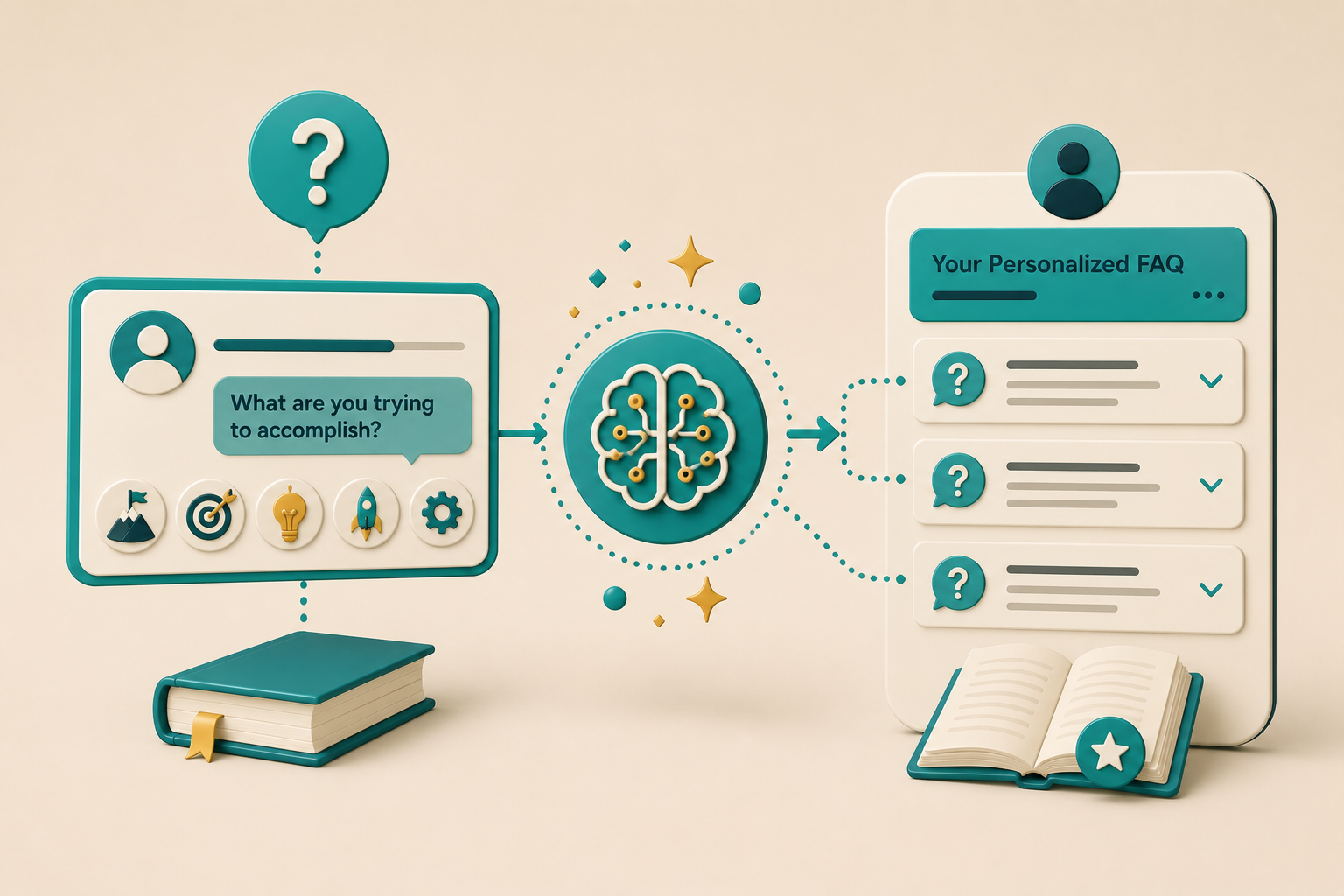
Create Dynamic FAQs
Most FAQ pages display twenty questions.
Readers usually need only three.
AI can ask:
“What are you trying to accomplish?”
Based on the answer, it generates a personalized FAQ using information from your book and website.
Visitors spend less time searching and more time taking action.
Turn Reader Data Into Better Marketing
Every interaction teaches you something.
Which questions appear most often?
Which chapters generate confusion?
Which frameworks excite readers?
AI can analyze thousands of conversations and identify:
- content gaps
- future article ideas
- common objections
- opportunities for a second book
- new lead magnets
- potential online courses
Your marketing continuously improves because readers are telling you exactly what they need.
Personalization isn’t about making people feel special. It’s about helping them find the advice that’s most relevant to their situation as quickly as possible.
You are a conversion optimization expert specializing in AI-powered personalization for authors.
My nonfiction book teaches: [topic]
My primary audience includes:
- [audience 1]
- [audience 2]
- [audience 3]
Design a personalized marketing funnel that adapts to each audience.
Include:
- personalized landing page ideas
- different headlines for each audience
- recommended lead magnets
- email sequence variations
- personalized book trailer concepts
- AI-powered bonus recommendations
- website personalization ideas
- tools that could be used to build the system with minimal development effort
Focus on increasing engagement rather than simply collecting email addresses.
Let AI Create Marketing Assets You Could Never Build Manually
Some marketing ideas simply weren’t realistic before AI.
Creating one infographic takes time.
Creating fifty takes days.
Producing a custom illustration for every chapter could cost thousands of dollars.
Today, many of those assets can be generated in hours instead of weeks.
The result isn’t just more content.
It’s richer marketing that helps readers understand your ideas before they buy the book.
Turn Every Chapter Into an Infographic
Many readers understand visual explanations faster than text.
Ask AI to identify:
- processes
- frameworks
- decision trees
- timelines
- comparisons
Then transform them into infographics suitable for:
- blog posts
- presentations
- downloadable PDFs
Complex ideas suddenly become highly shareable.
Create Illustrated Case Studies
Instead of publishing long success stories, visualize them.
Show:
- the challenge
- the solution
- the outcome
Readers can understand the transformation within seconds.
Generate Quote Graphics Automatically
Every nonfiction book contains memorable sentences.
Instead of manually selecting them, ask AI to identify:
- surprising insights
- motivational quotes
- controversial opinions
- statistics
- practical advice
Then generate branded graphics ready for social media.
Build Interactive Calculators
Some frameworks naturally become calculators.
Examples:
- pricing calculators
- ROI estimators
- publishing budget calculators
- writing time estimators
- habit scorecards
These tools attract backlinks because people find them genuinely useful—not because they’re promotional.
How to build it
Describe your framework to Claude Code or Codex and ask it to build a simple calculator with clear inputs, outputs, and explanations.
Most calculators require only basic web development and can often be completed in a single weekend.
Turn Frameworks Into Decision Trees
Many books teach readers how to make decisions.
Why not automate that process?
Visitors answer a series of questions.
AI guides them through your framework one decision at a time.
By the end, they receive a recommendation based entirely on the principles you’ve already explained in your book.
The most valuable marketing assets don’t always promote your book directly. Sometimes they solve a small problem so effectively that readers naturally want to learn more.
You are an AI product strategist helping nonfiction authors transform book content into interactive marketing assets.
My book topic: [topic]
Generate 20 visual or interactive assets based on my manuscript.
Include ideas such as:
- calculators
- quizzes
- infographics
- comparison tools
- decision trees
- planners
- dashboards
- visual explainers
- scorecards
- worksheets
For each idea, explain:
- what reader problem it solves
- why people would share it
- how difficult it is to build
- the best AI tools for creating a working MVP.
Build an AI Community Around Your Book
Many authors think their job is finished once someone buys the book.
The most successful nonfiction authors think differently.
They ask:
“How do I keep readers engaged for the next six months?”
That’s where AI becomes incredibly powerful.
Instead of creating another Facebook group that slowly dies from inactivity, use AI to keep conversations alive, encourage implementation, and help readers learn from one another.
Create Weekly AI Challenges
People rarely finish implementing a nonfiction book in one weekend.
Instead of asking readers to “go apply the ideas,” guide them one small step at a time.
Every Monday, AI could generate:
- one implementation challenge
- one reflection question
- one practical exercise
- one accountability task
By the end of the year, readers have completed 52 small improvements instead of abandoning your book after Chapter 2.
Why it works
Small actions feel achievable.
Readers are much more likely to stay engaged when they’re asked to complete one task rather than transform their entire life.
How to build it
Create a Claude Project containing your book and ask it to generate a unique weekly challenge every Monday.
For a more automated solution, use Claude Code or Codex to create a members-only dashboard that unlocks a new challenge each week.
Let AI Moderate Your Community
Most online communities fail because someone has to answer the same beginner questions repeatedly.
Instead, let AI answer common questions instantly while you focus on deeper discussions.
For example:
Instead of asking:
“Which chapter explains pricing?”
Members receive an immediate answer.
You only step in when a discussion requires your personal experience or opinion.
Why it works
Communities become much more active when members receive quick answers instead of waiting hours—or days—for a reply.
Generate Weekly Discussion Questions
Most book clubs eventually run out of things to discuss.
AI never does.
Generate questions like:
- Which idea surprised you most this week?
- Which recommendation was hardest to implement?
- How would you adapt this framework to your own business?
- Which advice would you challenge—and why?
The conversation naturally becomes deeper than simply asking whether people enjoyed the book.
Build an AI Book Club Facilitator
Instead of manually leading every discussion, let AI prepare:
- discussion agendas
- icebreakers
- reflection questions
- chapter summaries
- implementation exercises
You remain the expert while AI handles the administrative work.
Create Monthly Progress Reviews
Ask members to describe:
- what they implemented
- what worked
- what didn’t
- where they’re stuck
AI analyzes the responses and generates:
- personalized feedback
- suggested next steps
- recommended chapters
- new challenges
Instead of feeling judged, members feel supported.
Create Reader Accountability Groups
AI can automatically group readers with similar goals.
For example:
- aspiring authors
- consultants
- startup founders
- coaches
- marketers
People working toward similar outcomes often produce better discussions than completely mixed communities.
Turn Community Discussions Into New Content
Your community is one of the best research tools you’ll ever have.
Every question reveals:
- confusing chapters
- missing examples
- future article ideas
- podcast topics
- online course modules
- potential second books
AI can summarize weekly discussions and identify recurring themes automatically.
Instead of guessing what readers need next, you’ll know.
Communities thrive when people consistently have something meaningful to discuss. AI removes the pressure of constantly inventing new conversations from scratch.
You are a community strategist for nonfiction authors.
My book teaches: [topic]
Help me create a one-year AI-powered reader community.
Generate:
- 52 weekly implementation challenges
- 52 discussion questions
- 12 monthly reflection exercises
- onboarding messages for new members
- accountability activities
- book club discussion ideas
- ways AI can summarize conversations and recommend next actions
The goal is to help readers implement the book—not simply discuss it.
Turn Reader Feedback Into Your Best Marketing Asset
Most authors collect reviews.
Very few analyze them.
Reader feedback is one of the richest sources of marketing ideas you’ll ever have.
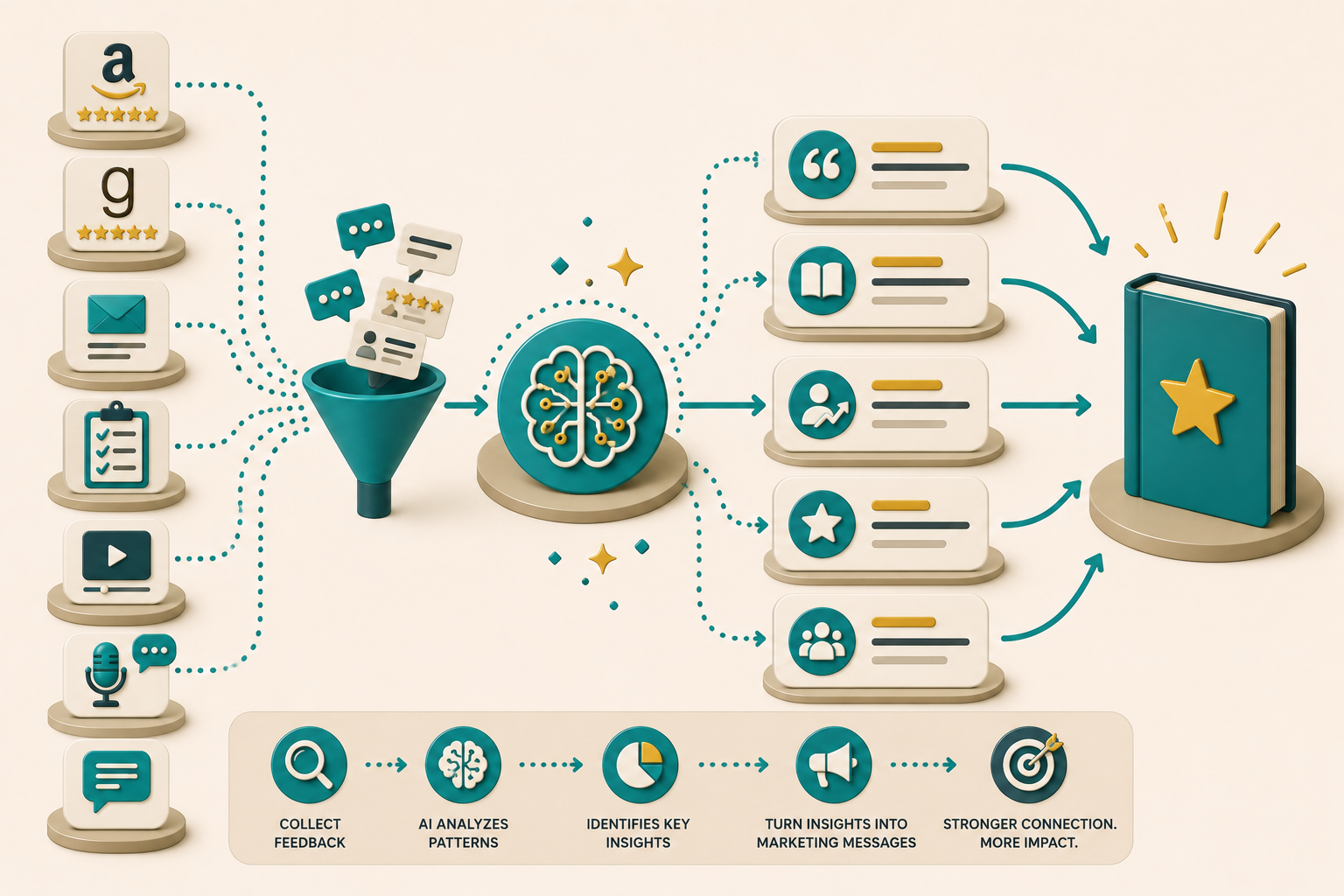
Every review, email, survey response, and chatbot conversation contains clues about what resonates most with your audience.
AI can uncover patterns you would almost certainly miss manually.
Identify Your Most Memorable Ideas
Ask AI to analyze:
- Amazon reviews
- Goodreads reviews
- emails
- survey responses
- YouTube comments
- podcast feedback
Then identify:
- the ideas readers quote most often
- the chapters readers mention repeatedly
- the biggest transformations readers experienced
- unexpected benefits
These become your future marketing messages.
Discover Hidden Objections
Sometimes people don’t buy because of concerns they never tell you directly.
AI can analyze comments and identify recurring objections such as:
- “I thought this book was only for beginners.”
- “I wasn’t sure it applied to my industry.”
- “I expected more practical examples.”
Now you know exactly what your website, book description, and landing pages should address.
Generate Better Testimonials
Not every review makes a good testimonial.
AI can identify reviews that clearly explain:
- the reader’s original problem
- what changed
- who should read the book
Those stories are significantly more persuasive than generic five-star reviews.
Find Ideas for Your Next Book
Imagine analyzing 2,000 reader questions.
AI might discover:
- one topic readers repeatedly ask about
- one chapter everyone wants expanded
- one framework readers struggle to apply
That’s often the beginning of your next bestseller.
Improve Future Editions
Instead of guessing what to update, ask AI:
- Which chapters confuse readers?
- Which examples feel outdated?
- What questions remain unanswered?
Your second edition becomes data-driven rather than opinion-driven.
Turn Reader Questions Into SEO Content
Every question readers ask is probably being searched on Google.
Instead of answering it once by email, ask AI to turn each question into:
- blog articles
- FAQs
- YouTube scripts
- LinkedIn posts
- podcast episodes
Your readers become your content strategy.
Spot Emerging Trends Before Everyone Else
If hundreds of readers suddenly begin asking similar questions, something has changed.
AI can monitor those conversations and alert you to:
- industry shifts
- new terminology
- changing reader expectations
- emerging problems
That gives you a chance to create content before your competitors do.
How to build it
Export reviews, comments, or survey responses into a spreadsheet.
Upload the file into Claude and ask it to identify recurring themes, unanswered questions, emotional language, and opportunities for new products or content.
For larger audiences, ask Claude Code or Codex to build a dashboard that automatically categorizes incoming feedback.
Don’t just collect reader feedback. Mine it for patterns. Your readers are constantly telling you what to write, build, improve, and market next.
You are a customer research analyst specializing in nonfiction books.
Analyze reader feedback about my book and identify opportunities to improve my marketing.
Reader feedback:
[paste Amazon reviews, survey responses, emails, comments, or testimonials]
Generate:
- the five biggest reader pain points
- the five biggest outcomes readers achieved
- common objections before buying
- ideas for stronger testimonials
- blog articles readers are asking for
- future lead magnets
- online course ideas
- ideas for a second book
- website improvements based on reader language
Use the exact words readers use whenever possible.
Use AI to Create Marketing Campaigns Your Competitors Can’t Copy
Most authors use AI to save time.
The more interesting opportunity is using AI to create marketing campaigns that would have been impossible—or far too expensive—just a few years ago.
Think less about writing another social media post and more about creating memorable experiences that people want to share.
Create an AI Book Challenge
Instead of asking people to read your book, invite them to complete a challenge.
Examples:
- 7-Day Productivity Challenge
- 30-Day Writing Habit Challenge
- 21-Day Financial Reset
- 14-Day Leadership Sprint
Each day, AI provides:
- one lesson from your book
- one implementation task
- one reflection question
- one personalized suggestion based on previous answers
Readers don’t simply finish the book—they experience it.
Why it works
Challenges create commitment.
Instead of consuming information passively, readers begin applying your ideas immediately.
How to build it
Ask Claude Code or Codex to build a simple dashboard that unlocks one lesson each day.
A simpler version can be delivered through your email platform by generating personalized daily emails with Claude.
Build an AI Success Score
People love discovering where they stand.
Create an assessment that measures how closely someone’s current habits match the principles in your book.
For example:
Your book teaches productivity.
Visitors answer twenty questions.
AI calculates:
- Productivity Score: 74/100
- Biggest strength
- Biggest weakness
- Three habits to improve first
- Chapters most relevant to their score
The score becomes something readers naturally share.
Why it works
People are curious about themselves.
Assessments create engagement before readers even buy the book.
How to build it
Use Typeform or Fillout for the questionnaire.
Let Claude analyze the answers and generate personalized reports.
Create an AI “What Would You Do?” Simulator
Turn your book into an interactive decision game.
Present realistic scenarios.
For example:
Your biggest client suddenly cancels their contract.
What do you do?
Readers choose an option.
AI explains the likely outcome using the principles from your book.
Instead of reading theory, visitors experience the consequences of different decisions.
Build a Book Strategy Generator
Many nonfiction books teach frameworks.
Instead of asking readers to adapt those frameworks themselves, let AI build one automatically.
Example:
Input:
- business type
- experience level
- available budget
- current challenge
Output:
- personalized strategy
- recommended chapters
- implementation timeline
- suggested resources
The strategy becomes a preview of the value inside your book.
Turn Your Book Into a Business Analyzer
Imagine a visitor describing their business.
AI analyzes:
- strengths
- weaknesses
- missed opportunities
Then explains which chapters contain the most relevant advice.
This positions your book as the solution instead of immediately trying to sell it.
Create AI Debate Content
One of the fastest ways to generate discussion is to challenge your own ideas.
Ask AI to argue against your framework.
For example:
“My book argues that publishing consistently matters more than publishing perfectly.”
Ask AI:
“What are the strongest arguments against this philosophy?”
Publish both perspectives.
Balanced discussions often generate far more engagement than simply repeating your own opinions.
Build an AI Myth Buster
Every industry has myths.
Create an interactive tool where visitors enter something they believe.
For example:
“I need thousands of followers before I publish my first book.”
AI explains:
- why the belief is inaccurate
- common exceptions
- practical alternatives
- where your book discusses the topic
Instead of simply telling readers they’re wrong, you educate them.
Create Personalized Book Comparisons
Potential readers often compare books before buying.
Help them.
Ask visitors:
“What are you trying to achieve?”
AI compares your book with other well-known titles and honestly explains the differences in focus, audience, and outcomes.
Transparency builds trust.
How to build it
Use your own positioning rather than criticizing competitors.
Focus on who each book serves best.
Generate AI Case Studies
Readers love examples.
Instead of manually creating fictional scenarios, ask AI to generate realistic case studies illustrating your framework.
For example:
- before
- challenge
- implementation
- result
- lesson
Case studies make abstract concepts easier to understand and easier to remember.
The best AI marketing doesn’t feel like marketing. It feels like helping someone solve a problem before they’ve even bought your book.
You are an AI growth strategist helping nonfiction authors create interactive marketing campaigns.
My book topic: [topic]
Audience: [target audience]
Generate 15 AI-powered marketing campaigns that encourage readers to interact with my ideas before purchasing the book.
For each campaign, include:
- campaign concept
- how readers participate
- expected outcome
- recommended AI tools
- implementation difficulty (Beginner / Intermediate / Advanced)
- estimated build time
- ways to encourage sharing and referrals
Focus on campaigns that educate first and sell second.
Turn Your Book Into a Small SaaS
Most authors think a book is the product.
Increasingly, the book is becoming the introduction.
The real value often comes from the tools readers use afterward.
You don’t need to build the next Notion or Canva.
Simple AI-powered utilities can dramatically increase the perceived value of your book while generating recurring traffic and even subscription revenue.
Build a Chapter Recommendation Engine
Instead of asking readers to browse the table of contents, let AI recommend the next chapter based on their current challenge.
Every visit reinforces the value of your book.
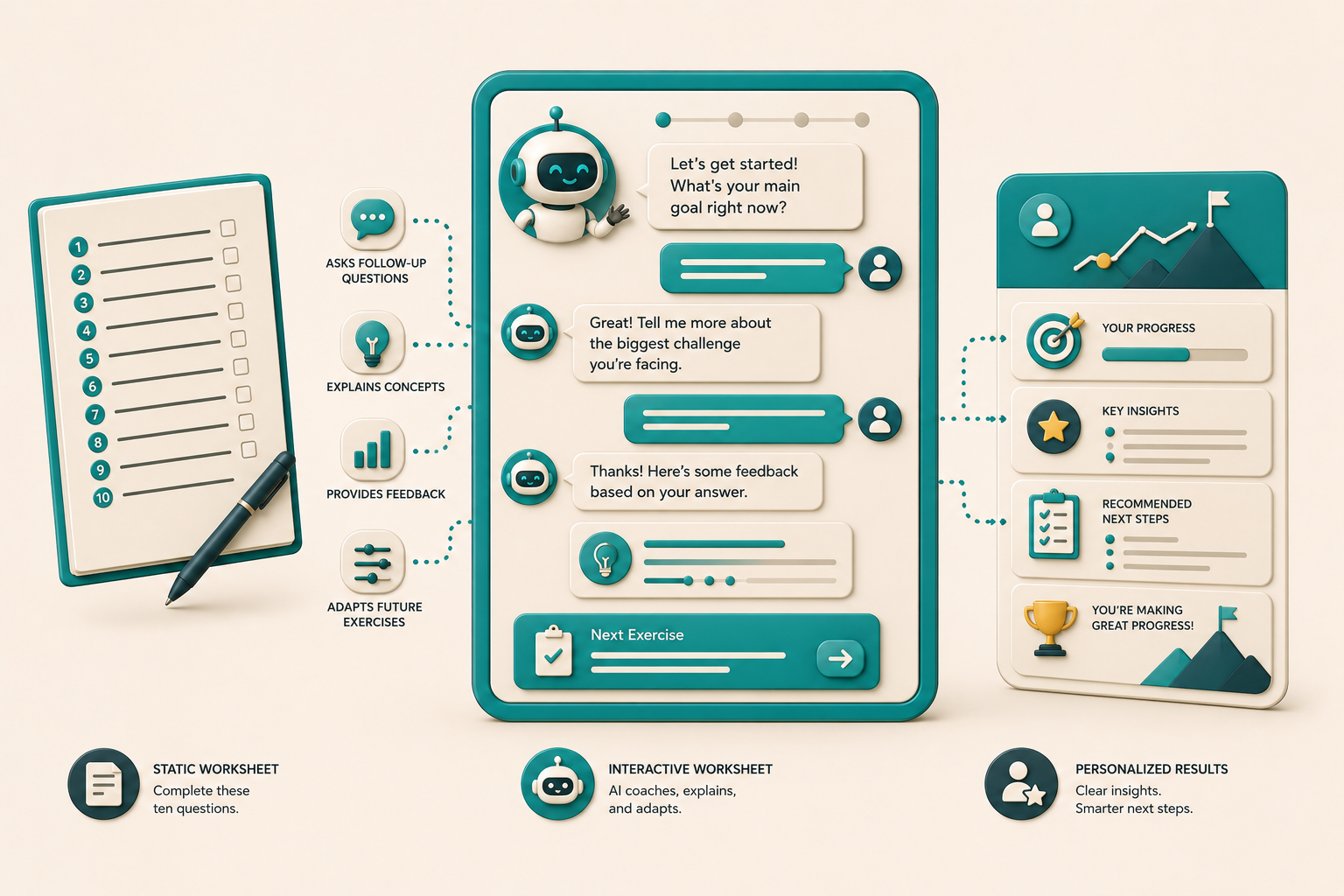
Turn Worksheets Into Interactive Tools
Static worksheet:
Complete these ten questions.
Interactive version:
AI asks follow-up questions, explains confusing concepts, provides feedback, and adapts future exercises.
Readers receive coaching instead of homework.
Build a Framework Generator
Suppose your book teaches a five-step decision framework.
Instead of explaining it once, let readers generate unlimited versions for their own situations.
Examples:
- marketing plans
- pricing strategies
- business models
- writing schedules
- hiring plans
Your framework becomes software.
Create an AI Implementation Dashboard
Imagine a private dashboard where readers can:
- track progress
- save notes
- revisit important chapters
- receive AI recommendations
- complete exercises
- measure improvement
Instead of reading your book once, they return every week.
Offer Premium AI Tools
Not every tool has to be free.
Examples of premium upgrades include:
- AI coaching
- AI planning assistants
- AI business analyzers
- AI writing companions
- AI implementation trackers
- AI feedback tools
Many readers will happily pay for software that helps them implement what they learned.
How to build it
Most of these ideas can be prototyped surprisingly quickly using:
- Claude Code
- Codex
- Cursor
- Lovable
- Bolt.new
Describe the workflow in plain English and ask the AI coding assistant to generate a working MVP.
You don’t need to become a software developer—you need to become good at describing the product you want to build.
Your book doesn’t have to compete with software. Thanks to AI, it can become software.
You are a SaaS product strategist for nonfiction authors.
My book teaches: [topic]
Generate 15 simple AI-powered tools that could be built around this book.
For each tool, explain:
- the reader problem it solves
- whether it should be free or paid
- the simplest MVP
- suggested technology stack
- monetization ideas
- estimated development effort using Claude Code or Codex
Prioritize tools that a solo creator could realistically build within a few weekends.
Use AI to Generate Publicity That Keeps Working for Months
Many authors think publicity ends after launch week.
In reality, every interview, article, podcast, webinar, and presentation becomes another way readers discover your book.
AI won’t replace good publicity.
It will help you find more opportunities, create better pitches, and repurpose every appearance into dozens of additional marketing assets.
Turn One Podcast Into Twenty Pieces of Content
Landing a podcast interview takes effort.
Don’t let that hour disappear after publication.
Ask AI to transform the transcript into:
- a blog article
- five LinkedIn posts
- ten X posts
- newsletter content
- Instagram carousel
- YouTube Shorts
- quote graphics
- FAQs
- podcast highlights
- a lead magnet
One interview can fuel your marketing for weeks.
Why it works
Most authors only promote the podcast episode once.
Repurposing multiplies its reach without requiring another interview.
How to build it
Upload the transcript into Claude and ask it to identify the strongest stories, quotes, frameworks, and actionable advice.
For videos, tools like Opus Clip, Captions, or Descript can automatically identify the best short clips.
Create AI Podcast Pitch Variations
Don’t send the same email to every podcast.
Ask AI to research each show and generate a customized pitch.
Instead of:
I’d love to discuss my new book.
Generate:
- three episode ideas
- audience-specific benefits
- reasons you’re a good guest
- suggested interview questions
Podcast hosts receive a pitch written specifically for them.
Build a Journalist Media Kit
Instead of sending a biography and book cover, create an AI-powered media page.
Include:
- interview topics
- recent statistics
- downloadable photos
- article ideas
- press quotes
- sample questions
- AI-generated summaries of your expertise
Journalists find everything they need without emailing you.
Create AI Press Releases That Don’t Sound Like Press Releases
Most press releases are ignored because they announce books.
Journalists care about stories.
Ask AI to identify:
- surprising statistics
- controversial opinions
- industry trends
- local angles
- seasonal connections
Then build the press release around that story—not your publication date.
Generate Personalized Guest Article Pitches
Instead of asking:
“Can I write for your blog?”
Ask AI to analyze the publication and suggest:
- article ideas
- headlines
- audience fit
- internal links
- examples matching their writing style
The editor receives an idea that already feels like it belongs on their website.
Build an AI Speaker Page
If your book supports your consulting or coaching business, create a speaker page that adapts to different event organizers.
For example:
A university receives educational topics.
A business conference sees leadership presentations.
A marketing summit sees AI workshops.
Same expertise.
Different positioning.
Create AI Conference Proposals
Many conferences ask for detailed speaking proposals.
Instead of writing every submission manually, ask AI to generate:
- title
- session description
- learning objectives
- audience outcomes
- speaker biography
Customize each proposal before submitting.
How to build it
Create a Claude Project containing:
- your biography
- previous talks
- book summary
- testimonials
Future proposals become dramatically faster.
The goal isn’t to appear everywhere. It’s to make every appearance continue generating value long after the event is over.
You are a PR strategist for nonfiction authors.
My book topic: [topic]
Target audience: [audience]
Generate a six-month publicity strategy.
Include:
- podcast outreach ideas
- guest article opportunities
- conference speaking ideas
- webinar topics
- local media angles
- PR story ideas
- personalized podcast pitch templates
- conference proposal ideas
- ways to repurpose every appearance into at least 20 additional marketing assets.
Prioritize free opportunities before paid publicity.
Build AI Workflows That Market Your Book Automatically
Marketing shouldn’t stop because you’re busy writing the next book.
The most successful authors gradually replace repetitive tasks with automated workflows.
AI doesn’t eliminate your involvement.
It eliminates repetitive work that doesn’t require your expertise.
Automatically Turn New Blog Posts Into Social Content
Every time you publish a new article, AI can automatically generate:
- LinkedIn posts
- X threads
- newsletter summaries
- Facebook posts
- image captions
- discussion questions
Instead of manually adapting content for every platform, you review and publish.
Generate Weekly Newsletters Automatically
Ask AI to:
- summarize your newest articles
- recommend related resources
- include one personal insight
- suggest one practical action
You still edit the newsletter, but the first draft is already prepared.
Monitor Industry News
Instead of checking dozens of websites every morning, create an AI workflow that summarizes:
- industry news
- publishing updates
- Amazon changes
- AI developments
- competitor launches
Then ask AI:
“How can I connect today’s news with my book?”
You’ll never run out of timely content ideas.
How to build it
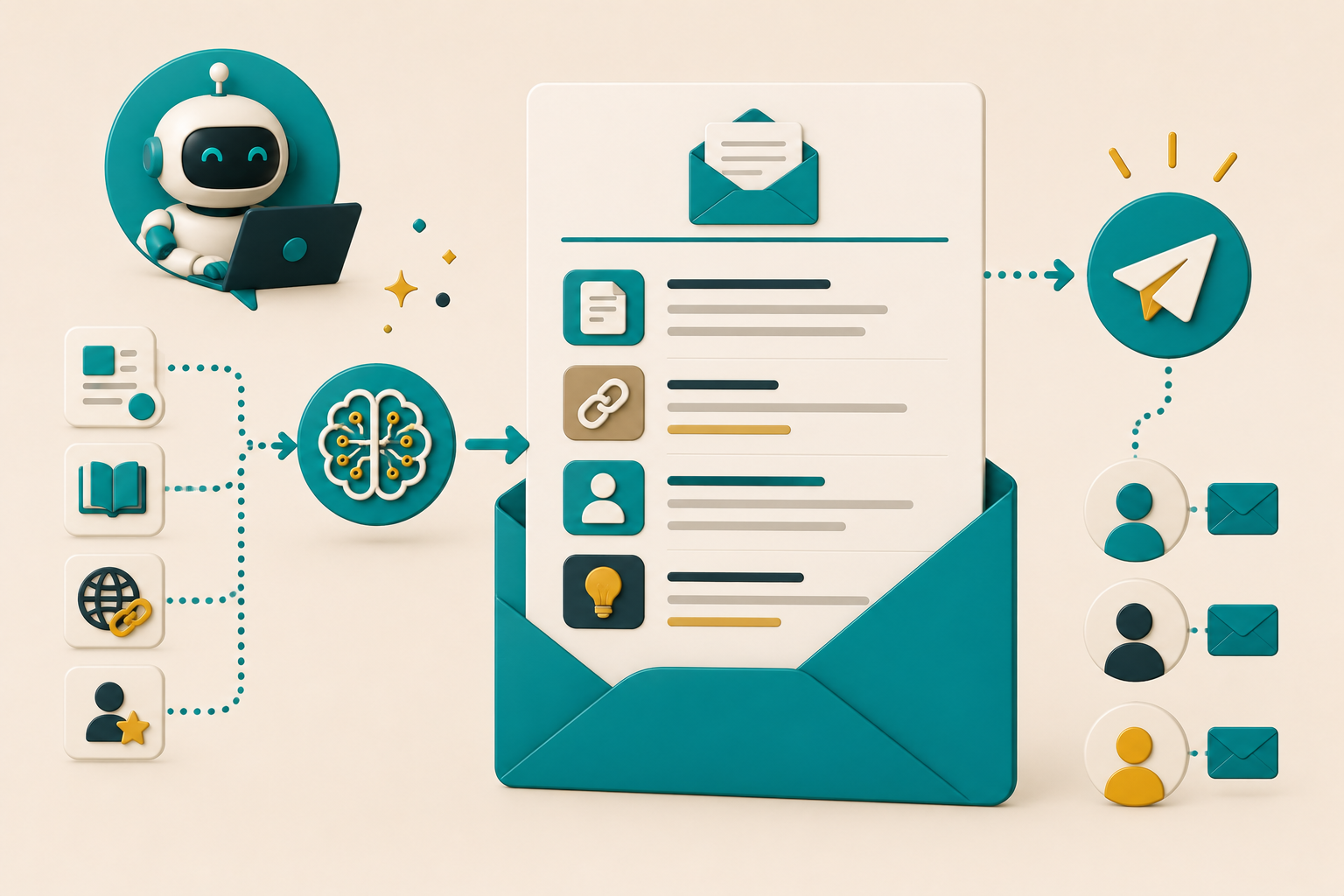
Create Google Alerts or subscribe to RSS feeds for topics such as Amazon KDP, AI writing tools, book marketing, and your competitors. Use an automation tool like Zapier or Make to send new articles to ChatGPT or Claude, which can summarize the news and suggest content ideas related to your book. Instead of checking dozens of websites every day, you’ll receive a curated digest with actionable marketing ideas in your inbox.
Automatically Generate New SEO Articles
Suppose your book is about productivity.
AI can monitor Google Trends, Reddit, Quora, and industry discussions to identify new questions readers are asking.
Then generate:
- article outlines
- keyword clusters
- FAQs
- content briefs
Your website stays relevant without constant brainstorming.
Analyze Competitor Books
Instead of simply reading competitor reviews, ask AI to analyze them.
Identify:
- common complaints
- missing topics
- unanswered questions
- opportunities for differentiation
Those insights can improve both your marketing and your next edition.
Build a Marketing Dashboard
Instead of opening ten different tools, create a single dashboard showing:
- website traffic
- newsletter growth
- Amazon ranking
- review count
- podcast appearances
- social engagement
- AI tool usage
Seeing everything together makes it much easier to identify what’s actually working.
How to build it
Claude Code, Codex, Cursor, or Lovable can build dashboards that combine information from multiple sources using APIs.
Start with simple metrics before adding more advanced automation.
Create an AI Marketing Assistant
Imagine opening one dashboard every morning and asking:
“What should I work on today?”
Your assistant reviews:
- unfinished tasks
- marketing calendar
- recent performance
- upcoming launches
- website traffic
- content opportunities
Then recommends the highest-impact activities.
Instead of replacing your judgment, it helps prioritize your time.
The biggest advantage of AI isn’t creating more content. It’s giving you more time to focus on work only you can do.
You are an automation consultant helping authors build AI-powered marketing systems.
I market my nonfiction books through:
- website
- newsletter
- social media
- YouTube
- podcasts
- Amazon
Design automated workflows that save time without sacrificing quality.
Include:
- content automation
- newsletter workflows
- SEO monitoring
- competitor research
- review monitoring
- dashboard ideas
- AI assistants
- recommended no-code tools
- recommended AI coding tools
- estimated setup time for each workflow
Prioritize systems that continue generating value with minimal maintenance.
The Future of AI Marketing for Nonfiction Books
AI book marketing is evolving much faster than most authors realize.
Just a year ago, using AI to generate blog posts or social media captions felt innovative. Today, that’s becoming the baseline.
The next generation of AI book marketing won’t be about creating more content. It will be about creating personalized experiences, intelligent automation, and software-like products that help readers long after they buy your book.
The authors who adapt early won’t simply market books more efficiently—they’ll build entire ecosystems around their expertise.
Agentic AI Will Become Your Marketing Assistant
Today’s AI waits for instructions.
Agentic AI takes initiative.
Instead of asking ChatGPT to write a newsletter every Friday, imagine an AI assistant that notices your website traffic has dropped, identifies the reason, drafts a new SEO article, prepares a newsletter, updates your content calendar, and reminds you to review everything before publishing.
Rather than replacing authors, Agentic AI will handle repetitive marketing work so you can focus on writing, teaching, and creating.
For self-published authors, this means spending less time managing marketing tasks and more time developing new books and products.
Voice AI Will Make Books Interactive
Typing questions into a chatbot already feels natural.
Talking to your book will soon feel even more natural.
Imagine finishing a chapter during your morning walk and asking:
“How would you apply this framework if I owned a small consulting business?”
Within seconds, a voice assistant trained on your book explains the concept, recommends additional chapters, and suggests practical next steps.
Voice AI could eventually become the audiobook companion readers never knew they wanted.
Personal AI Assistants Will Know Every Reader
Today’s marketing treats every visitor almost the same.
Future AI assistants will remember:
- books they’ve already read
- goals they’re working toward
- previous conversations
- completed exercises
- preferred learning style
- challenges they’ve overcome
Instead of recommending the same chapter to everyone, your assistant will recommend exactly what each reader needs next.
Book marketing becomes personal coaching.
MCP Will Connect Your Entire Author Platform
The rise of the Model Context Protocol (MCP) will make it much easier for AI assistants to work across multiple tools.
Instead of answering questions using only your manuscript, an AI assistant could securely access:
- your blog
- newsletter archive
- premium course
- podcast episodes
- resource library
- worksheets
- templates
Readers receive richer, more accurate answers because the assistant understands your entire body of work rather than a single book.
For authors with multiple books, MCP could eventually create a unified AI knowledge base covering everything they’ve published.
Books Will Become Products Instead of Endpoints
For decades, authors have thought of books as finished products.
AI changes that.
Increasingly, the book becomes the starting point.
Around it, authors will build:
- AI coaches
- interactive workbooks
- personalized planners
- implementation dashboards
- assessments
- calculators
- private communities
- subscription tools
Instead of buying a book once, readers continue interacting with your ideas for months—or years.
That’s one of the biggest opportunities in AI book marketing over the next decade.
The future of AI book marketing isn’t creating more promotional content. It’s creating smarter products and better reader experiences that continue adding value long after someone finishes your book.
Conclusion
Artificial intelligence isn’t changing book marketing because it writes faster.
It’s changing book marketing because it changes what’s possible.
For the first time, self-published authors can create personalized experiences that were once available only to large companies with dedicated software teams.
Your book no longer has to be the end of the customer journey.
It can become the foundation for AI coaches, interactive workbooks, personalized assessments, implementation tools, learning communities, and entirely new products that continue helping readers long after they finish reading.
You don’t need a development team to get started.
Choose one idea from this guide.
Build the simplest version you can.
Share it with readers.
Learn what they use.
Then improve it.
The authors who succeed with AI book marketing won’t necessarily be the ones using the newest tools.
They’ll be the ones who consistently build experiences that help readers achieve better results.
The best AI book marketing ideas don’t feel like marketing. They help readers solve real problems, and that’s what keeps people coming back, recommending your work, and buying your next book.