You’ve seen the headlines everywhere. Someone just wrote a book with AI in 30 days. Another author claims ChatGPT helped them publish three novels this month.
Let’s pause there.
Using AI to write a book isn’t magic. It’s not a shortcut to bestseller status. But it’s also not the creative apocalypse some writers fear.
Here’s what’s actually possible — and what you should know before you start.
What AI Can Really Do
AI excels at three specific tasks that bog down most writers.
First: generating ideas when you’re stuck. You can feed AI a topic like “sustainable gardening for beginners” and get dozens of chapter ideas, potential case studies, and angles you hadn’t considered. It’s like having a brainstorming partner who never gets tired.
Second: creating first drafts faster. AI can take your outline and expand it into rough chapters. The writing won’t be publication-ready, but it gives you something to work with instead of a blank page.
Third: research assistance. Tools like NotebookLM can digest dozens of sources and help you organize information. You upload your research materials, and AI helps you find connections and patterns you might have missed.
That’s useful. But it’s not the full picture.
What AI Still Gets Wrong
AI can rearrange words beautifully. What it can’t do — unless you teach it — is infuse those words with lived experience.
Your personal stories matter. The time you failed spectacularly and learned something important. The moment a concept finally clicked for you. The specific way you explain complicated ideas.
AI doesn’t have those stories. It has patterns from millions of texts, but no genuine experience to draw from.
It also struggles with consistency over long-form content. Ask AI to write a 50,000-word book, and you’ll find contradictions, repeated points, and a voice that shifts randomly between formal and casual.
Most importantly: AI can’t verify facts the way you can. It might confidently cite studies that don’t exist or statistics that are completely wrong.
A Better Way to Write a Book with AI
The smartest approach treats AI as a writing assistant, not a ghostwriter.
Start with your expertise. What do you know that others want to learn? What problems have you solved that your readers face? AI can’t generate that knowledge — but it can help you organize and expand it.
Use AI for outlining. Feed it your main topic and ask for a detailed chapter breakdown. Review the suggestions, add your own ideas, and reorganize based on how you actually want to teach the material.
Then use AI to expand specific sections. Instead of asking it to write entire chapters, give it detailed prompts about specific points you want to make. Include your own examples and ask AI to help structure them clearly.
For example: “I want to explain why most people fail at budgeting because they focus on cutting expenses instead of increasing income. Here’s my personal story about when I learned this lesson: [your story]. Help me structure this into a compelling section that includes actionable steps.”
That works because you’re providing the substance. AI just helps with the structure and clarity.
Where Human Creativity Comes In
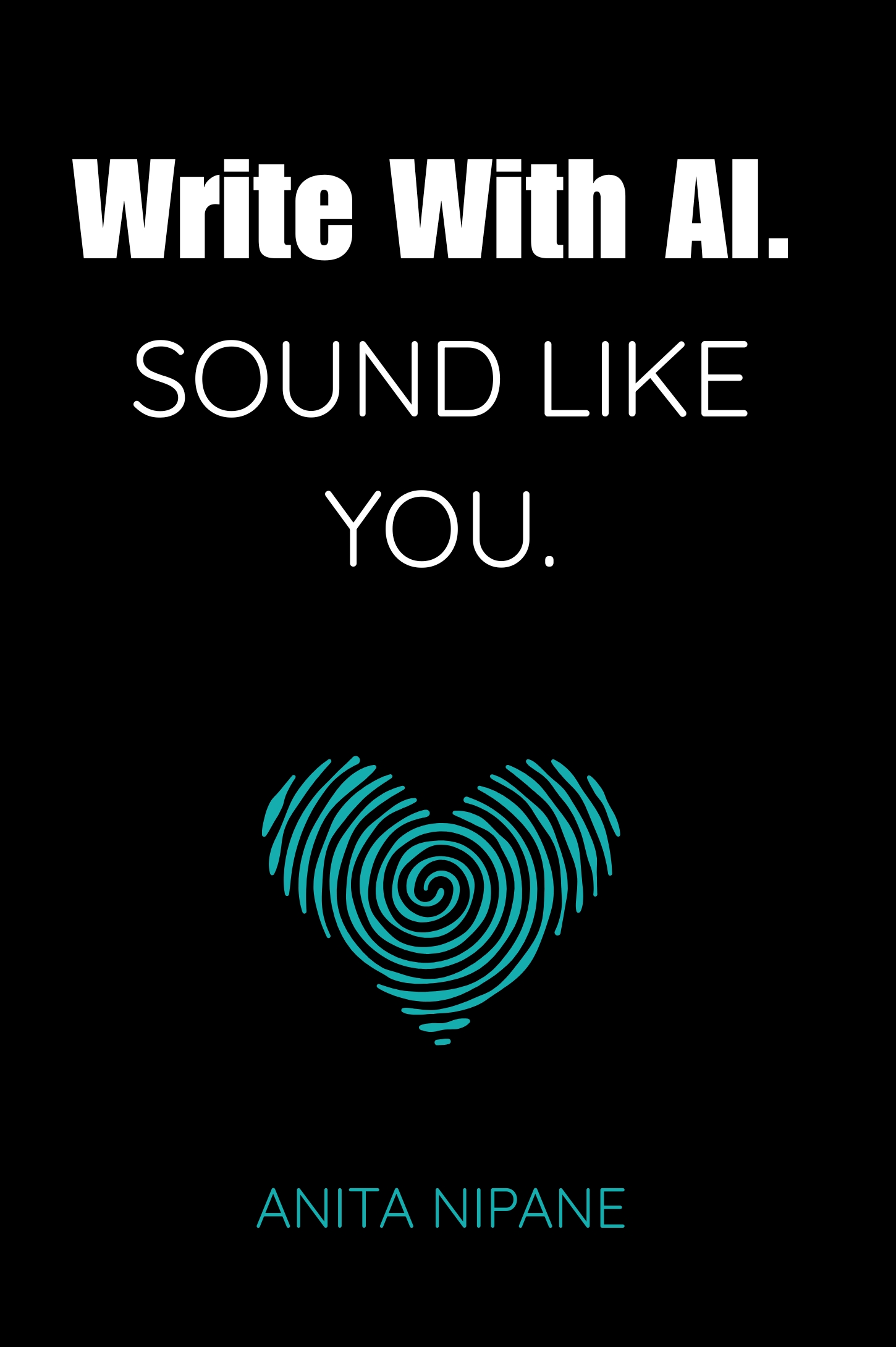
Your voice is the fingerprint on your message. It’s how you explain things, the metaphors you choose, the way you connect with readers.
AI doesn’t have a voice. It has tone presets and trained data.
When you’re editing AI-generated content, you’re not just fixing grammar. You’re adding personality. You’re replacing generic examples with specific ones. You’re adjusting the pace to match how you naturally speak.
This is where most AI-assisted books fail. Authors use the AI output with minimal editing, and readers can tell. The writing feels flat. Generic. Like it could have been written by anyone about anything.
Your job is to make it distinctly yours. Add your stories. Include your failures alongside your successes. Use the words you actually use when explaining these concepts to friends.
That’s not lazy. It’s your voice asserting itself.
Ethics and Reader Trust
Should you tell readers you used AI? That depends on how you used it.
If AI helped you brainstorm and organize your existing knowledge, that’s tool usage — like using spell check or grammar software. Most readers don’t need to know about your writing process.
If AI generated significant portions of your content, transparency becomes more important. Not because AI assistance is inherently wrong, but because readers deserve to know what they’re buying.
The bigger ethical issue is accuracy. When ChatGPT generates “facts” about your topic, you’re responsible for verifying them. Your readers trust you to get things right.
This means more work, not less. Every AI-generated claim needs fact-checking. Every statistic needs verification. Every piece of advice needs to align with your actual expertise.
What’s Possible and What’s Smart
Can you write a book with AI in 30 days? Technically, yes. Should you? Probably not.
The authors who succeed with AI assistance typically spend months on the process. They use AI to speed up research and first drafts, then invest heavily in editing, fact-checking, and personalizing the content.
Smart use looks like this: AI helps you organize your knowledge faster. It generates examples you can replace with better ones from your experience. It creates structure you can improve and personalize.
Risky use looks like this: AI writes your book while you barely participate. You publish AI-generated content without thorough review. You treat AI as a substitute for expertise rather than a tool to express it.
The best AI-assisted books feel completely human. They’re faster to produce than traditional books, but not because corners were cut. They’re faster because the author used AI to eliminate busy work and focus on the parts that matter most.
Your expertise. Your stories. Your unique way of helping readers solve problems.
AI can help you express those things more clearly and efficiently. It can’t create them for you. And that’s exactly as it should be.